The answer in 30 seconds
- A two-layer set joins two comforters togetherA summer-weight (light) comforter and an all-season (medium-weight) comforter fasten together with snaps and loops, so in winter the layered pair performs like a winter-weight comforter.
- The upside: storage and costBecause a single set adapts to the seasons, it's easier on closet space and upfront cost than buying several separate comforters.
- The downside: gaps at the join, and extra weightWarmth can be less even than with a seamless single-layer comforter, and the two layers fastened together tend to feel heavy.
- If warmth comes first, consider a single-layer comforterWhen winter warmth and light weight are your top priorities, a baffle-box quilted winter-weight comforter is another option.
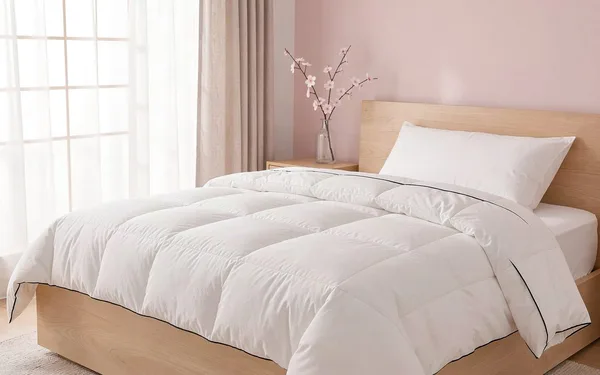
A "two-layer" down comforter consists of two thinner down comforters that connect with dedicated snaps or loops, so a single set can cover nearly every season except high summer. In winter you layer both for the warmth of a winter-weight comforter; in spring and fall you simply remove one and use the thinner layer on its own.
How a two-layer down comforter works
A typical two-layer set pairs a summer-weight (light) comforter (thin, with less down) with an all-season (medium-weight) comforter (mid-loft). Snaps, buttons or loops at the corners and along the edges hold the two together, and when connected the set handles much like a single winter-weight comforter. As the weather warms up, you unfasten them and use just the lighter layer.
Structurally, this is clearly different from a single-layer winter-weight comforter. To learn more about winter-weight comforters, see What is a winter-weight comforter? A specialist explains how it differs from all-season and summer-weight comforters, and when to use it.
Advantages: one set covers much of the year
The biggest benefit of a two-layer set is the lower up-front cost compared with buying winter-weight, all-season and summer-weight comforters separately. You only need storage space for one set, so it's worth considering if you'd rather not own several comforters or if closet space is tight.
Since each layer can also be used on its own, it's easy to adjust the loft to how warm you feel or how you're doing on a given night.
Disadvantages: gaps at the connection points, and extra weight
On the other hand, because the two layers are joined with snaps or loops, a little cold air can slip in at the connection points — something a seamless, single-layer winter-weight comforter avoids. Compared with a winter-weight comforter engineered to eliminate gaps through three-dimensional construction, warmth can be less evenly distributed. For more on this construction, see What is baffle-box quilting in a down comforter? A specialist explains the structural differences and why it resists flattening.
The two layers connected together are also simply heavier, so if light weight matters to you, a single winter-weight comforter may feel more comfortable. Over the long term, some owners also report that the hardware at the connection points wears out, and that cleaning means the extra hassle of taking the set apart and putting it back together.
Who a two-layer comforter suits — and who it doesn't
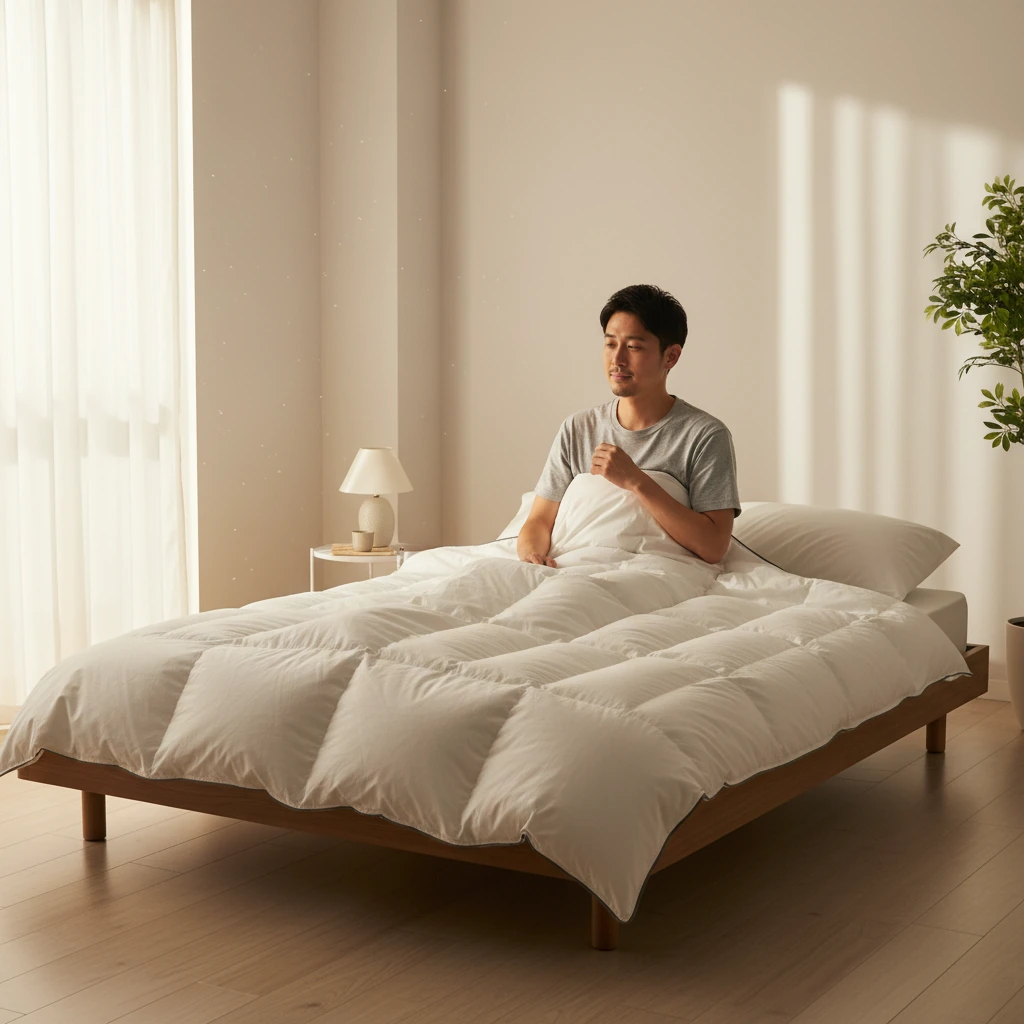
A two-layer set works well if you live alone with limited storage space, or if you want to get through the year with as few comforters as possible. If winter warmth is your top priority, however, or you want the lightest possible comforter that drapes closely around your body, a seamless single-layer winter-weight comforter tends to be more satisfying.
At our store, we offer single-layer winter-weight comforters built for serious winter warmth, such as the pinnacle of luxury down: Premium Mother Goose Sleep Down winter-weight comforter, alongside the White Goose Sleep Down all-season comforter for spring and fall, which is easy to use on its own between seasons — each sold individually so you can choose by purpose. We believe it's easier to balance warmth and light weight by choosing the one comforter that's right for the season, rather than always working around connected layers.
What to check before you buy
- The material and durability of the connecting hardware (is it rust-resistant?)
- Whether the down cluster ratio and fill weight are listed for each of the two layers
- Whether the size and weight of each layer used on its own feel right to you
- Whether the construction makes future cleaning or down comforter refurbishing straightforward
A two-layer set is a sensible answer if you want to get by with just one set. But if even warmth and light weight matter most to you, consider choosing a separate comforter for each season instead.
Frequently asked questions
Which is warmer, a two-layer set or a winter-weight comforter?
Because of how the layers connect, a seamless single-layer winter-weight comforter is generally considered better at distributing warmth evenly. A two-layer set excels in convenience and storage, but if winter warmth is your top priority, a single-layer comforter is worth considering.
Does the connecting hardware on a two-layer set break easily?
Durability depends on how often you use it and what the hardware is made of. If you plan to use it for years, we recommend checking before you buy whether the material is rust-resistant and whether the stitching around the hardware is solid.
Is a two-layer set harder to clean?
Because you have to connect and separate the layers, handling at cleaning time can be a bit more involved than with a single-layer comforter. It's worth confirming that your cleaner handles two-layer sets before you send it in.
Is a two-layer set a good choice if I live alone?
If storage space is limited, a two-layer set is worth considering, since one set covers much of the year. But if warmth and light weight are your priorities, also compare the approach of using a separate comforter for each season.