The answer in 30 seconds
- Firm and flat is the baselineJapan's Children and Families Agency recommends firm, flat bedding as a precaution against suffocation accidents.
- SIDS and suffocation are not the same thingMattress firmness addresses the risk of suffocation; it does not prevent SIDS itself.
- Mind the gap around the crib's interiorChoose a size that fits the crib's interior dimensions exactly to reduce the risk of entrapment and falls.
- The SG Mark and similar standards apply to the crib itselfThere is no numerical standard for mattress firmness, so it's important to check the actual product in person as well.
The basic guidance for a baby mattress is "firm, flat and breathable." A soft mattress lets a baby's face sink in, which can make breathing harder if the baby rolls onto their stomach. On top of that, it's worth checking whether any gap is left between the crib's inside dimensions and the mattress, and whether the bedding is breathable and washable — both for safety and for hygiene.
Why firmness matters so much
Japan's Children and Families Agency states explicitly that, as a precaution against suffocation accidents in infants, "bedding such as futons and mattresses should be firm and flat." This is based on the idea that when a baby's face sinks into soft bedding, the nose and mouth are more easily blocked if the baby ends up face down. Children and Families Agency, "Handbook for Preventing Childhood Accidents"
One important point: SIDS (sudden infant death syndrome) and suffocation accidents are not the same thing. The Children and Families Agency explains that "SIDS is a disease of unknown cause in which an infant dies with no warning signs or prior medical history, and it is different from accidents such as suffocation." Children and Families Agency, "About SIDS" Mattress firmness is a measure to reduce the risk of suffocation — it does not prevent SIDS itself. Keeping that distinction clear makes it much easier to sort through the information you'll come across.
The age at which a baby starts rolling over is a turning point: even if you put them down on their back, they can now turn onto their stomach by themselves. From this stage on especially, it's a good moment to review whether the sleep surface is still firm and flat enough that the face can't sink in.
What do the SG and PSC marks actually cover?
Cribs may carry the SG mark (certification from the Consumer Product Safety Association) or the PSC mark (a national safety standard), but these mainly cover the structure and strength of the crib itself — they do not set a numerical standard for the firmness of a mattress on its own. So "it has the mark, so a soft mattress is fine" doesn't follow. Judge firmness separately on the actual product, for example by pressing it with your hand.
Getting the size right: leave no gaps
If there is a gap between the crib and the mattress, a hand, foot or part of the body can become trapped, or the baby's body can slip into the gap while rolling over. The basic rule is to measure the inside of the crib and choose a mattress that fits as snugly as possible. Before you buy, check the manufacturer's stated inside dimensions (length and width) of the crib and compare them with the mattress size.
Breathability and washable materials
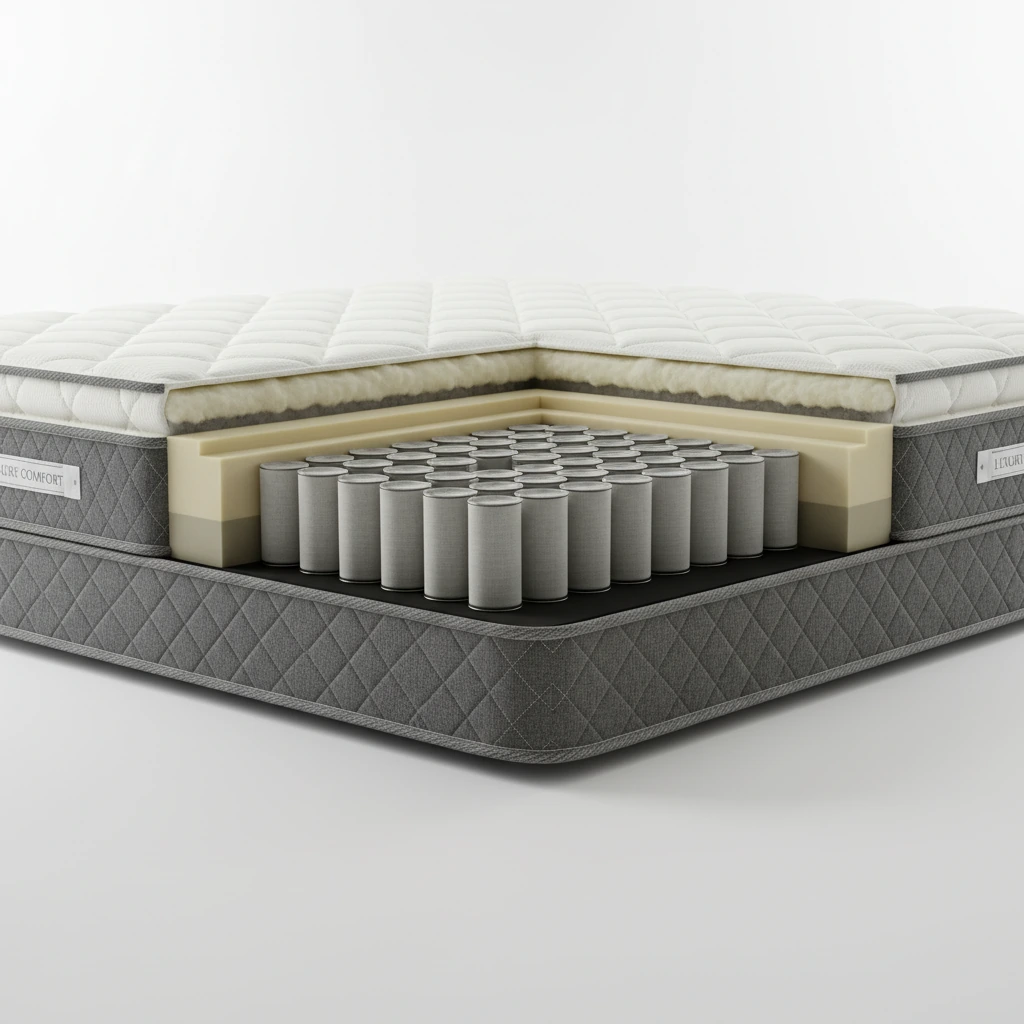
Babies sweat easily, and heat rash and stuffiness are common concerns. Many mattresses can't be fully washed, so along with a breathable construction, it matters in practice whether the sheets and pads you place on top can be laundered often. Getting into the habit of keeping covers and sheets clean helps limit how much sweat and soiling reaches the mattress itself.
Summary: when in doubt, check these three basics
When choosing a baby mattress, it's easier to decide if you focus on three things: (1) firmness and flatness, (2) gaps between the mattress and the crib's inside dimensions, and (3) breathability and whether it has a washable cover. Don't rely on a certification mark alone — checking the actual firmness and size with your own eyes and hands may feel like the long way around, but it's the surest.
At Omotesando Futonten, our baby bedding range includes the Baby Futon Starter Set and the Baby Comforter with Cover. If you'd like to know more about when to start using a comforter, see "From What Age Can a Baby Use a Down Comforter? Suffocation Risks and Safe Use." You can also read about how we keep our baby bedding clean in "Introducing Omotesando Futonten's Baby Futon."
Frequently asked questions
Is a soft mattress always a bad idea?
We can't make medical pronouncements, but Japan's Children and Families Agency recommends firm, flat bedding as a precaution against suffocation. Use that as a guide when choosing.
Is mattress firmness related to preventing SIDS?
According to the Children and Families Agency, SIDS is a disease of unknown cause and is different from accidents such as suffocation. Mattress firmness is discussed mainly as a precaution against suffocation.
If it has the SG mark, is it safe?
The SG and PSC marks mainly cover the structure and strength of the crib itself; they do not set a numerical standard for mattress firmness. Check firmness and size separately on the actual product.
Is it okay if there's a gap between the mattress and the crib?
Any gap can trap a baby's arms or legs, or let them become wedged in when they roll over, so the basic rule is to choose a size that matches the crib's interior dimensions as closely as possible.
When should I reconsider the firmness of the mattress?
The point when a baby starts rolling over is a milestone, because they can now get themselves onto their stomach. It's reassuring to recheck firmness and flatness around this time.