The answer in 30 seconds
- If the label shows it can be washed with water, you can wash it at home. Check the tub symbol on the care label. If the tub has an X through it, take the jacket to a dry cleaner.
- Use a pH-neutral detergent for delicates. Keep the water at 30°C or below, rinse at least twice, and spin for about 1 minute. No fabric softener needed.
- Most problems happen during drying. Air-dry in the shade, fluffing the jacket every 1–2 hours, and dry it completely. Use a dryer on low heat only if the care label permits it.
- As a rule, wash once per season. Every wash removes more of the down's natural oils, so wash once before you store it away.
You can wash a down jacket at home. If the care label allows washing with water, either a machine wash or a hand wash is fine. That said, nine out of ten failures come from how you dry it, not how you wash it.
When down gets wet, it bunches into clumps. Whether you can break up those clumps and dry the jacket completely is what decides the final result. In this article, a specialist store that works with down every day explains how to wash a down jacket based on how down actually behaves.
What you'll learn in this article
- Three things to check before you wash
- Step-by-step instructions for machine washing and hand washing
- How to dry it properly (the most important part)
- How to revive a jacket that has gone flat
- How often to wash, and when to use a dry cleaner instead
Three things to check before you wash
1 | The care label
Start with the care label. If you see the following symbols, the jacket can be washed at home.
- Tub symbol: can be washed with water. The number inside is the maximum water temperature (for example, 40 means up to 40°C)
- Tub with a hand: hand wash only
- Tub with an X: do not wash at home — take it to a dry cleaner
Garments labeled "dry clean only" are not designed to be washed with water at home. Forcing a wash can distort the shape and change the texture of the fabric.
2 | Fabric and down cluster ratio
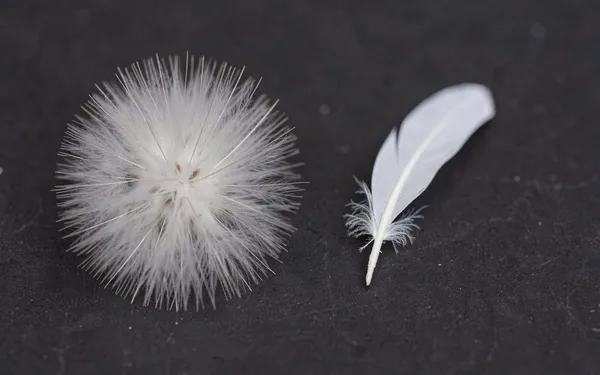
The higher the down cluster ratio (80% or more), the better the jacket springs back after washing. Jackets with a lot of feather tend to shift and clump during washing.
The shell fabric matters, too. Check whether it has a downproof finish (a tightly woven construction that keeps down from working its way out) and whether it has a water-repellent finish. Water repellency washes out over time, so plan to restore it with a water-repellent spray after laundering.
3 | Trims and soiling
- Remove the fur trim and hood if they're detachable (most are not washable)
- Empty all the pockets
- Close every zipper and fasten all buttons
- Check the cuffs, collar and other spots where body oils show
How to machine wash a down jacket
Step 1 | Prep
- Remove the fur trim and hood
- Close all zippers and buttons
- Dab soiled areas at the collar and cuffs with a cloth dipped in diluted mild detergent
- Turn the jacket inside out, fold it, and place it in a large mesh laundry bag
Turning it inside out protects the shell fabric from abrasion and fading.
Step 2 | Choose your detergent
Use a pH-neutral detergent for delicates. Standard mildly alkaline detergents clean too aggressively and strip the natural oils from the down. Once those oils are gone, the down loses its suppleness and its ability to spring back.
Skip the fabric softener — it can dull the character of the down.
Step 3 | Choose your cycle
- Hand wash, delicate/dry-clean, or wool cycle
- Water temperature at or below 30°C (lukewarm)
- Rinse at least twice (leftover detergent makes the down clump)
- Keep the spin short — about 1 minute
A long spin pushes the down to one side and leaves it unevenly distributed.
Step 4 | Reshape it the moment you take it out
Straight out of the spin cycle, the down is bunched into clumps. Gently break them up at this stage and reshape the whole jacket.
How to hand wash a down jacket
If your washer is too small, or the garment is especially delicate, hand washing is the safest bet.
- Fill a bathtub or a large basin with lukewarm water at 30°C or below
- Dissolve a mild (pH-neutral) detergent in the water
- Submerge the jacket and press-wash it (20–30 presses; don't scrub or wring)
- Rub visibly soiled areas lightly with your fingertips
- Change the water and rinse until no more suds appear (about 3 times)
- Drape it over the edge of the tub to drain, or spin it in the washer for 1 minute
Scrubbing and wringing shift the down out of place and damage the fibers. Stick to press-washing: push down from above so the water moves through the jacket.
Drying | The most important step
Almost every down jacket washing mishap happens at the drying stage.
Why drying is the tricky part
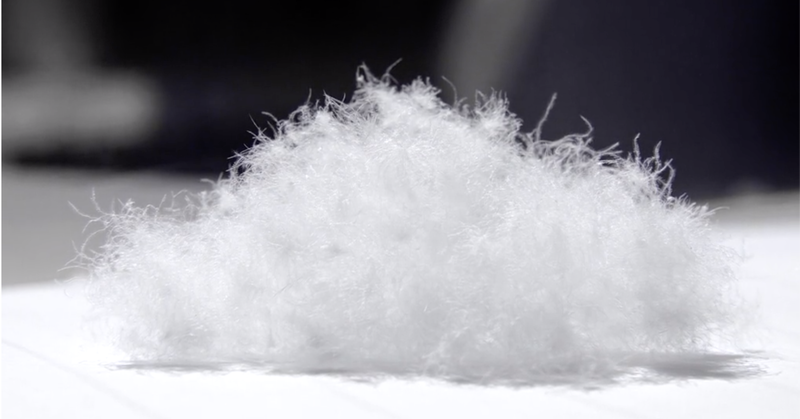
When down gets wet, the fine fibers bundle together under the surface tension of the water. If it dries in that state, it stays locked in those clumps.
To bring the loft back, you need to break up the fibers as the jacket dries. Simply hanging it up and leaving it alone means it dries clumped — and you end up with a flat, lifeless down jacket.
The right way to dry a down jacket
- Reshape and air-dry in the shade: hang on a thick, wide hanger in a well-ventilated shaded spot. Direct sunlight damages both the shell fabric and the down
- Fluff every 1–2 hours: lightly pat with both hands to break up clumped down. Don't hit it hard
- Turn it inside out: flip the jacket partway through so the inside dries too
- Let it dry completely: depending on the thickness, this can take a full day to two days
If you use a dryer
The most reliable way to bring the loft back is, in fact, a tumble dryer. As the jacket tumbles, the warm air breaks up the down while it dries.
There are conditions, though.
- The care label must allow tumble drying
- Use a low-heat setting (high heat damages the shell fabric and the down)
- Add two or three clean tennis balls or dryer balls (they help break up the down)
- Take the jacket out partway through and check its condition
If the label says do not tumble dry, a dryer is off limits. The shell fabric can melt or shrink from the heat.
How to tell when it's dry
Press your palm against the jacket and run it from corner to corner. Any area that feels cool, or hard and clumped, still holds moisture. The shoulders, collar, and the seams around the hem are especially slow to dry, so check them thoroughly.
"Cold to the touch = still damp." A fully dry down jacket feels faintly warm and light all over.
How to revive a jacket that has gone flat
If the jacket didn't dry fully and the down has clumped, these methods can often bring it back.
Method 1 | Dry it again
If it's simply moisture left inside, airing it out again until it's completely dry will restore it. The key is to fluff it as it dries.
Method 2 | Put it in the dryer
If the item is tumble-dry safe, add tennis balls and run it on low heat for 20–30 minutes. The physical tumbling breaks up the clumps and the loft comes back.
Method 3 | Break up the clumps by hand
Pinch the clumped areas between your fingers and massage them apart. It takes time, but it works. Be careful not to rub hard.
If the loft doesn't come back
If the fibers themselves are broken, they won't recover. The same goes if the jacket was already flat before washing. At that point, it's time to consider replacing it.
Spot cleaning by type of stain
Treating the most visible stains before you wash the whole jacket makes a real difference to the result. And depending on the type of stain, spot cleaning alone may be all you need.
| Stain | Location | What to do |
|---|---|---|
| Body oils and makeup | Collar and cuffs | Dilute a mild detergent, dampen a cloth with it, and blot |
| Food spills (oil-based) | Front panel | Work in a small amount of mild dish soap with your fingertip, then blot |
| Drinks (water-based) | ― | Blot with a damp cloth, then lift the moisture with a dry cloth |
| Mud splashes | Hem | Let it dry first, brush off what you can, then dab out the rest |
| Sweat stains | Underarms & back | Pinch-wash with a mild (neutral) detergent. Left alone, these stains turn yellow |
| Yellowing (over time) | All over | Check the care label to see if oxygen bleach is allowed. If not, take it to a cleaner |
Dab-washing basics
The rule is to dab, never rub. Rubbing roughs up the fibers of the shell fabric and reduces its water repellency.
- Place a towel underneath the stain
- Using a cloth moistened with detergent, dab from the outside of the stain inward
- Check that the stain is transferring onto the towel below
- Dab out the detergent with a cloth moistened with water
- Blot up the moisture with a dry cloth, then dry in the shade
Re-proofing after washing
Most down jackets have a water-repellent finish on the shell fabric. That finish wears off a little with every wash, so it needs to be restored afterward.
Why water repellency matters
When the water repellency fades, rain and snow soak into the shell fabric and the moisture reaches the down inside. Wet down clumps together and loses its loft, so warmth drops dramatically. That's exactly why "wet down feels cold."
How to use a water-repellent spray
- After washing, let the jacket dry completely
- Spray outdoors or in a well-ventilated space, holding the can 20–30cm away
- Cover the whole garment evenly, just until the surface looks lightly damp
- Give extra attention to areas that catch the rain, such as the shoulders and the outside of the sleeves
- Let it dry again
Some finishes are the type that regain their water repellency when heat is applied. In that case, press with a low-temperature iron using a pressing cloth, or use the heat of a dryer. Check the care label and the manufacturer's instructions.
How different types of down apparel compare
| Type | Ease of washing | Things to watch for |
|---|---|---|
| Down Vest | ◎ | Dries easily since there are no sleeves. Well suited to washing at home |
| Down jacket (lightweight) | ○ | Lightweight layering pieces dry quickly |
| Down jacket (heavyweight) | △ | Takes a long time to dry. Using a dryer as well is the safer route |
| Down coat (long) | △ | Heavy, and needs a large-capacity washer. Professional cleaning recommended |
| With fur trim | × (remove the fur) | Most fur trims cannot be washed in water |
| With leather panels | × | Take it to a cleaner |
The more fill weight a piece has, the harder it is to dry. It's the same principle as with a down comforter: a summer-weight (light) comforter is easy to wash, while a winter-weight comforter is difficult.
How to store down
How you store it in the off-season determines how well it lofts next winter.
Before you put it away
- Wash it, or at the very least spot-clean the collar and cuffs
- Dry completely
- Refresh the water-repellent finish
- Empty all the pockets
How to store it
- Hang it on a thick, broad hanger: this keeps the shoulders from losing their shape
- Never compress it: the down fibers break and the loft won't come back
- Don't pack it in: squeezed tightly into a closet, it gets crushed
- Use a breathable non-woven garment bag: plastic covers trap moisture
- Keep mothballs from touching it directly: the chemicals can transfer to the outer fabric
If you have to fold it
If your storage space doesn't allow hanging, fold it loosely and don't stack anything heavy on top. The key is to avoid pressing in sharp creases.
When you take it out at the start of the season
A down jacket that's been in the closet usually comes out flat. Hang it up for a day and give it a gentle shake to loosen the down. That's all it takes for the loft to return.
How often to wash, and when to use a dry cleaner instead
How often to wash
As a rule, wash a down jacket once a season, right before you store it. Washing it often strips the natural oils from the down a little more each time, and its ability to loft back up declines.
If something gets dirty mid-season, spot-clean it instead. Simply dabbing the collar and cuffs with a cloth dampened with a mild (neutral) detergent makes a visible difference.
When to take it to a professional cleaner
- The care label says "do not wash"
- Fur or leather trim that can't be removed
- An expensive jacket where you don't want to risk a mistake
- Large stains, or soiling you can't identify
- A very thick jacket you're not confident you can dry completely at home
If you do use a cleaner, choose one with experience handling down. Expect to pay roughly ¥3,000–¥8,000.
Everyday habits that make a down jacket last
- Air it out after wearing: hang it indoors for about 30 minutes before putting it back in the closet
- Don't store it compressed: it breaks the down fibers. In the off-season, hang it on a hanger or fold it loosely
- Don't overstuff the closet: pressed in tightly, the jacket loses its loft
- Dry it out if it gets rained on: left damp, the down clumps together
- Restore the water repellency: washing strips it away, so use a water-repellent spray as needed
The same principles apply to down comforters. For comforter care, see How to Care for a Down Comforter the Right Way — Washing.
Choosing a cleaner
If you're not washing it at home, the cleaner you choose will make a real difference to the results. The same points apply as with a down comforter.
4 things to check
| What to check | Why it matters |
|---|---|
| Do they offer a dedicated down program? | Treated like ordinary clothing, down tends to come back under-dried |
| Wet cleaning or dry cleaning? | Sweat residue is water-soluble, so dry cleaning won't remove it |
| Can they reapply the water-repellent finish? | Washing reduces water repellency, and reproofing is usually an extra charge |
| Turnaround | Down takes time to dry, so an unusually fast turnaround is a red flag |
Typical cost
| Item | Typical cost |
|---|---|
| Down Vest | ¥1,500–¥3,000 |
| Down jacket (lightweight) | ¥2,000–4,000 |
| Down jacket (heavyweight) | ¥3,000–¥6,000 |
| Down coat (long) | ¥4,000–¥8,000 |
| Water-repellent finish (optional) | +¥500–2,000 |
When to send it out
March to April, at the end of the season, is the ideal time. You send it in right after the last wear, so soil doesn't sit over the summer, and you avoid the busy period (November to December). You can also put the freshly cleaned jacket straight into storage.
Before you drop it off
- Empty all the pockets
- Remove any detachable parts, such as fur trim or the hood
- Point out where the stains are and what caused them
- Point out any loose seams or tears
- Let them know if you want a water-repellent finish
Frequently asked questions
Can I machine wash a down jacket?
Yes, if the care label shows that machine washing is permitted. Use a mild detergent for delicates, select the hand-wash or delicate cycle, and keep the spin cycle short.
What kind of detergent should I use?
A mild (pH-neutral) detergent for delicates. Standard mildly alkaline detergents are too aggressive and strip the natural oils from the down. No fabric softener is needed.
Can I use a tumble dryer?
Yes, if the care label permits tumble drying. Use a low-heat setting and add two or three tennis balls to help the down loft up again. If the label says do not tumble dry, don't use a dryer.
My jacket came out flat after washing
The down is still clumped because it isn't fully dry. Air it again until it is completely dry, or run it through a dryer to break up the clumps. You can also work the clumps apart gently by hand.
How often should I wash it?
Once a season, before you put it away, is the general rule. Every wash removes some of the down's natural oils, so avoid washing it frequently.
How much does professional cleaning cost?
Expect roughly ¥3,000–¥8,000. Cleaners with a dedicated down program charge more, but the results are more consistent.
Can I wash it the same way as a down comforter?
The basic principles are the same, but a down comforter has a much higher fill weight and takes far longer to dry. We don't recommend washing a winter-weight comforter at home. For details, see our complete guide to washing comforters at the laundromat.
A white, powder-like substance appeared after washing
That's fine down fiber or small fragments of quill. A small amount is nothing to worry about. If a lot comes out, the down-proof finish on the shell fabric may be breaking down.
The shell fabric shrank in the dryer
That's caused by a high-heat setting. Synthetic shell fabrics are heat-sensitive and can shrink or change in sheen. Always use low heat in the dryer, and never tumble dry a garment labeled do not tumble dry.
My jacket smells of down after washing
Wet down can give off a distinctive odor until it dries. It normally disappears once the jacket is completely dry. If the smell lingers after thorough drying, detergent may be left in the fabric from insufficient rinsing, or the down itself may not have been properly cleaned during manufacturing.
Can a down jacket be refurbished like a comforter?
Technically yes, but very few specialists offer it, because a jacket has far more panels and far more complex stitching than a comforter. If the loft has gone flat, first try tumbling it in a dryer to break up the down and airing it out.
Summary
- If the care label allows washing with water, you can wash a down jacket at home
- Use a pH-neutral detergent for delicates — regular detergent strips too much of the down's natural oils
- Spin for about 1 minute; any longer and the down shifts and clumps
- Nine out of ten failures happen at the drying stage: fluff the jacket every 1–2 hours and dry it completely
- If tumble drying is permitted, running it on low heat with tennis balls is the most reliable method
- Wash once per season — every wash removes more of the down's natural oils
As a specialist in down, Omotesando Futonten also offers down apparel.
Shop down jackets at Omotesando Futonten
How to wash a down vest: how it differs from a jacket
Because a down vest has no sleeves, it has less fabric and absorbs less water, so it dries faster than a jacket. The basic steps are the same: check the care label, wash by gentle pressing with a pH-neutral detergent or use the hand-wash cycle, and keep the spin cycle short.
Points to watch with vests
- With no sleeves, down tends to shift toward the underarm seams and front placket, so fluff the vest more often while it air-dries in the shade
- Most vests are thinner, so fluffing every 1–2 hours tends to get them dry relatively quickly
- If the vest has a hood or fur trim, remove it before washing, just as you would with a jacket
Drying faster doesn't mean you can skip the drying routine. The surface may feel dry while moisture remains inside, so press the vest with your palm and check for any coolness right up to the end.
How long to run the dryer
If the garment is approved for tumble drying, a low-heat dryer cycle is the most efficient way to restore loft. Use the guideline mentioned above — tennis balls on low heat for 20–30 minutes — and adjust as you check the results.
Thick down jackets and down coats may not dry fully within that guideline time. Rather than trying to finish in one go, take the garment out partway through, check its condition, and run an extra cycle if needed — that's the surest way to avoid problems. Drying time varies with the thickness and fill weight of the garment, so if the care label or product instructions specify a time, follow those first.
Why you shouldn't use fabric softener
Fabric softener is considered unnecessary when washing a down jacket because down naturally contains oils that keep it supple. When softener residue coats the down or the downproof shell fabric, it can change the garment's natural feel and the way it lofts.
Fabric softeners are formulated for cotton and synthetics, so by design they aren't suited to a specialized material like down. Even if you want a softer finish, skip the softener and instead focus on rinsing at least twice so no detergent is left behind.