The answer in 30 seconds
- Heaviness comes down to three main causesToo much fill weight, a heavy shell fabric, or low fill power — one of these is usually behind it.
- Low fill power tends to mean a heavier comforterDown with little loft has to make up for its warmth in sheer quantity, so the same warmth comes at a heavier weight.
- Around 1.0–1.3 kg is the benchmark for a SingleThat is the typical fill weight for a winter down comforter; the weight that feels comfortable varies with your body type and preferences.
- If light weight matters, check the fill power ratingDon't look at the fill weight figure alone — also check the fill power, which tells you the quality of the down.
There are three main reasons a down comforter feels heavy: the fill weight itself is high, the shell fabric is a heavier material, and the fill power (the loft of the down) is low, so warmth is achieved by adding volume. To choose a comforter that's light and warm, look not only at the fill weight figure but also at fill power and the weight of the shell fabric.
Why a down comforter feels heavy: the main causes
When the shell fabric or the fill weight itself is heavy
The weight of a down comforter depends not only on the down inside, but also on the shell fabric. A comforter made with a thick, crisp shell weighs more overall even at the same fill weight. And naturally, the more fill, the heavier the comforter. Comforters built for cold climates or for "maximum warmth above all" often secure their insulating power by adding fill, which makes them easier to notice on the body. For more on recommended amounts, see our guide to down comforter weight and fill weight.
When fill power is low: "heavy, but not that warm"
One factor that's easy to overlook is low fill power (the resilience and loft of the down). Down with low fill power can't trap air and expand well, so the only way to reach the same level of warmth is to add more fill. The result tends to be a comforter that feels heavy without being especially warm. By contrast, high-fill-power down — such as quality goose down — lofts up generously with less fill, delivering light weight and warmth at the same time.

When the size or the way it drapes doesn't suit your body
If the comforter size is too large for your body, more of its surface area and weight rests on your shoulders and arms, so it feels noticeably heavier. In some cases the mattress or futon underneath doesn't pair well with it, concentrating body pressure against the down comforter alone and creating a feeling of pressure. How heavy a comforter feels depends not only on its physical weight, but also on how and where you use it.
A guide to comfortable down comforter weight
For a typical Single winter down comforter, a fill weight of about 1.0kg–1.3kg is considered standard, and comforters made with high-fill-power down tend to feel lighter even within that range. Because comfortable weight varies with your build and whether you run cold or warm, don't judge by numbers alone — buying from a specialist store where you can pick the comforter up and feel its weight is another option. For selection criteria, see How to Choose a Down Comforter | 5 Criteria.
How to choose a down comforter that's light and warm
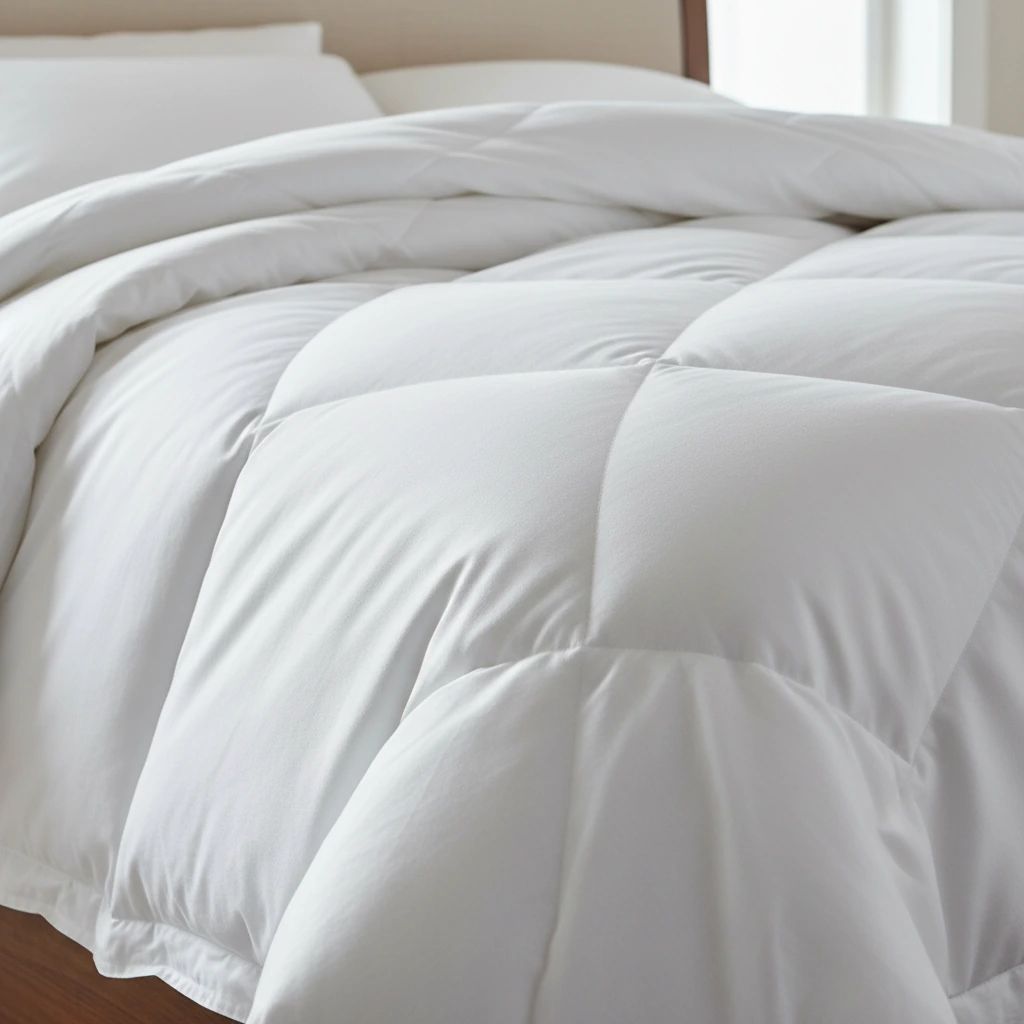
If you want real warmth without the weight, it's important to check the fill power rating, not just the fill weight figure. Even within goose down there are grades of quality, and a comforter made with good down delivers solid warmth with less fill. For example, a winter-weight comforter made with high-quality down — such as Refined Warmth. White Goose Sleep Down Winter-Weight Comforter — suits anyone who wants a balance of light weight and warmth. If you run cold and your feet never seem to warm up, choosing a down comforter when you run cold is also worth a read.
What to do if your current comforter already feels heavy
If the comforter you're using now feels heavy, start by checking the fill weight and fill power listed on the label. A comforter that has flattened over years of use may have crushed down with little loft left, so that all that remains, in effect, is the weight it carries to keep you warm. If you suspect it has gone flat, down comforter refurbishing is one option. And if you're considering a replacement, remember that perceptions of weight differ greatly from person to person — whenever possible, try one before you decide.
Frequently asked questions
Is a heavier down comforter warmer?
Not necessarily. High-fill-power, quality down lofts up and creates layers of trapped air even at a lower fill weight, making for a comforter that's light yet warm. Weight and warmth don't always go hand in hand.
What should I watch out for when choosing a lightweight down comforter?
An extremely light comforter can have too little fill weight to keep you warm enough. Check the stated fill power and choose a comforter that balances light weight with real warmth.
Does a comforter feel heavy because it has deteriorated?
After years of use, the down can flatten out and lose loft, so the comforter feels heavy for the amount of warmth it delivers. If that sounds familiar, it may be worth considering down comforter refurbishing (remaking it with cleaned, refreshed down).
Does the ideal weight change with body type?
Yes. The weight that feels comfortable varies from person to person depending on build and on whether you tend to feel cold or hot. If possible, pick up the comforter and feel its weight before you buy.