The answer in 30 seconds
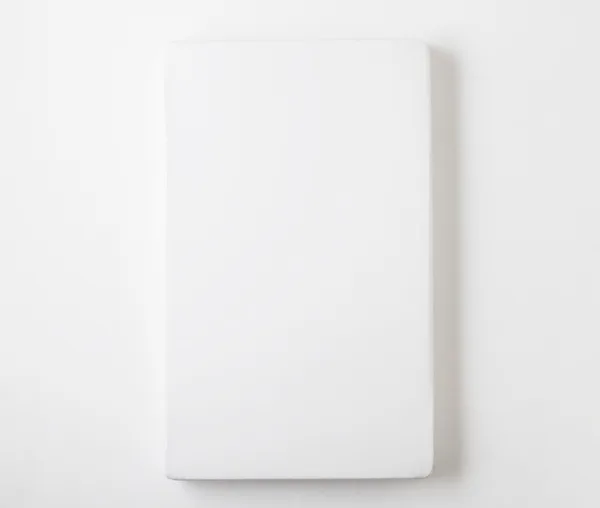
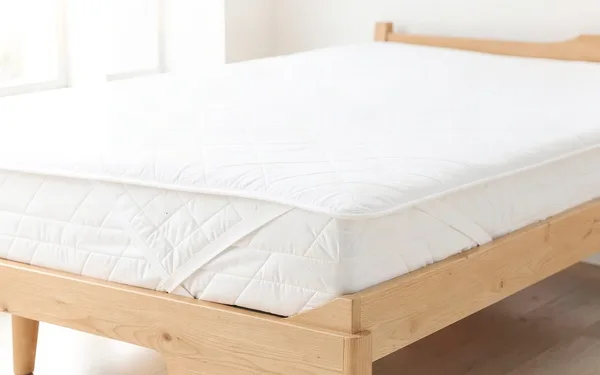
- The key difference: under the sheet, or on top of it. A bed pad goes between the mattress and the sheet, while a mattress pad goes on top, in place of the sheet.
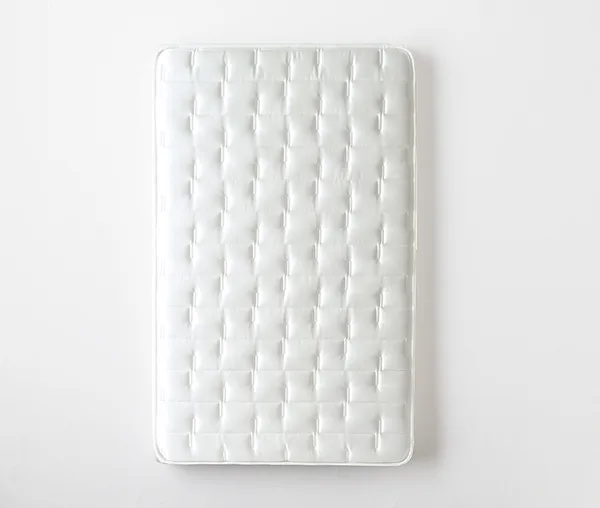
- A bed pad absorbs perspiration and protects the mattress. It has some loft, so it can also fine-tune how the bed feels.
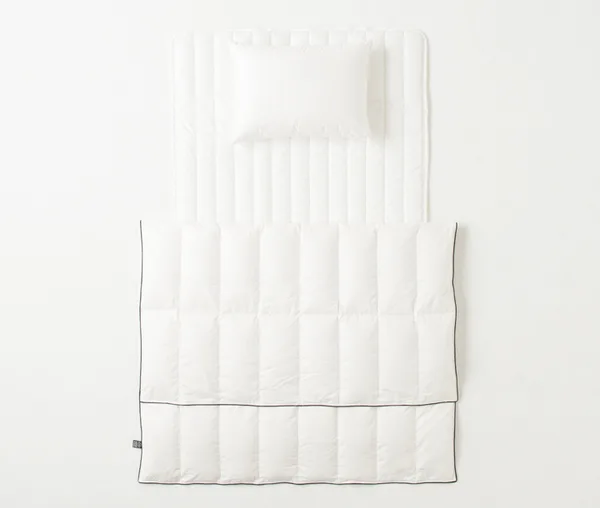
- A mattress pad touches your skin directly. Choose by season — cool-to-the-touch for summer, cozy and warm for winter.
- Not sure which to pick? Start with a bed pad plus a sheet. Then add a mattress pad on top as the season calls for it.
Contents: 1. Differences at a glance / 2. What is a bed pad? / 3. What is a pad sheet (shikipad)? / 4. The right layering order / 5. Which one should you choose? / 6. Care and washing / 7. Frequently asked questions
Walk through any bedding department and you'll find both “bed pads” and “pad sheets” (shikipad). Both go on top of the mattress, but they do different jobs and sit in different layers. Because the names are so similar, it's easy to get home and realize “I didn't need a sheet after all,” or to put a sheet over the pad sheet and end up sleeping hot.
In this guide, Omotesando Futonten, a down comforter specialist in Omotesando, Tokyo, compares bed pads and pad sheets by where they sit, what they do, what they're made of, and how to care for them — plus the correct way to layer them and how to decide which one you need.
1. Bed pad vs. pad sheet at a glance
| Bed pad | Mattress pad | |
|---|---|---|
| Where it sits | On the mattress, under the sheet | On top of the sheet (the very top layer) |
| Touches your skin? | No | Yes |
| Main role | Absorbs perspiration, protects the mattress, fine-tunes comfort | Feel against the skin and seasonal comfort (cool or warm) |
| Thickness | Thicker (generously filled) | Lighter |
| Surface fabric | Highly absorbent fabrics such as cotton | Pile, cooling fabrics, microfiber and similar |
| How it stays in place | Elastic straps at the four corners | Elastic straps at the four corners |
| Sheets | A sheet (fitted sheet) goes over the top | Takes the place of a sheet |
| Season to use | Year-Round | Usually swapped out with the seasons |
2. What is a bed pad? Absorbs perspiration and protects your mattress
A bed pad is a filled pad that goes between the mattress and the sheet. It does three main jobs.
- Absorbs perspiration: We all sweat a great deal during the night. A bed pad catches that moisture so less of it reaches the mattress.
- Protects the mattress: Most mattresses can't be washed. A bed pad blocks perspiration and body oils, keeping your mattress cleaner for longer.
- Fine-tunes comfort: The extra loft adds cushioning and softens the feel of a firm mattress.
For more on what a bed pad does and what happens if you skip one, see “Do you really need a bed pad?”; for help choosing materials, see “How to choose a cotton bed pad.”
3. What is a pad sheet (shikipad)? Skin feel and seasonal comfort
A pad sheet, or shikipad, is a pad that goes on the very top in place of a sheet. Because it touches your skin directly, people usually choose one for its feel and for season-specific performance.
| Season | Commonly used materials |
|---|---|
| Summer | Cool-touch fabrics, linen, igusa rush grass, cotton gauze |
| Winter | Microfiber, flannel, wool |
| Year-round | Cotton pile, quilted cotton |
Pad sheets are thin, easy to wash, and save you the trouble of putting on a sheet. On the other hand, because they have little loft, they absorb less perspiration than a bed pad, and with a pad sheet alone that moisture can still reach the mattress.
4. The right layering order
The basic layering order, from the bottom up, is as follows.
- Mattresses
- Bed pad
- Fitted sheets
- Pad sheet (depending on the season)
If you use a pad sheet, you can skip the sheet and go with mattress → bed pad → pad sheet. In that case, though, you'll be left without a top layer while the pad sheet is in the wash, so it's handy to keep two and rotate them.
A common mistake is putting a sheet on top of the pad sheet. The cooling or warming effect never reaches your skin, so the pad sheet loses much of its purpose.
5. Which one should you choose? Picking by purpose
| If this sounds like you | We recommend |
|---|---|
| You want to keep your mattress clean and make it last | Bed pad + sheet |
| You sweat easily | Bed pad (highly absorbent cotton) + sheet |
| You want relief from sticky summer nights and chilly winter ones | Bed pad + a seasonal mattress topper pad |
| Putting on a fitted sheet feels like a chore | Bed pad + mattress topper pad (two pads, swapped in rotation) |
| Your mattress feels too firm and you want to change the feel | A thicker bed pad |
If you only choose one, go with the bed pad — it does the most to protect your mattress — and put a sheet over it. If you sleep on a futon mattress, laying one sweat-absorbing pad on top also helps keep the futon itself clean (see How to choose a futon mattress).
At Omotesando Futonten, we offer a cotton bed pad made of 100% cotton on both sides, along with white fitted sheets to go over it. For help choosing a fitted sheet, see Why 100% cotton is best for fitted sheets.
6. How often to wash them
| Bedding | How often to wash |
|---|---|
| Sheets | Once or twice a week |
| Mattress pad | Once a week (more often in summer, when you sweat more) |
| Bed pad | 1–2 times a month |
After washing, dry the pad thoroughly all the way through the filling. Laying it down while still damp transfers moisture to the mattress and can lead to mold.
7. FAQ
Q. Do I need both a bed pad and a mattress topper pad?
A. The essential combination is a bed pad plus a sheet. A topper pad is simply a seasonal extra, used when you want added coolness in summer or extra warmth in winter.
Q. Can I put a sheet over the mattress topper pad?
A. You can, but then the pad's cooling or warming effect won't reach your skin. A topper pad works best on the very top, in place of a sheet.
Q. Can I sleep directly on a bed pad without a sheet?
A. We don't recommend it. Bed pads are thick and hard to wash frequently. Put a sheet on top so it catches sweat and body oils, and wash the sheet often.
Q. Can I use a bed pad or mattress topper pad on a futon mattress?
A. Yes. Just choose a size made for futon mattresses (Single is around 100×205 cm). Laying one sweat-absorbing pad on top means you'll need to air out or wash the futon itself far less often.
Q. What material should a bed pad be?
A. Since the job is to absorb sweat, look for a pad with a highly absorbent face fabric and filling, such as cotton or wool. Polyester is light and dries quickly, but it absorbs less moisture than cotton.