The answer in 30 seconds
- The down itself isn't always to blame. In most cases the culprits are dust mite debris and droppings, protein left in insufficiently washed down, or mold.
- Look for white down that has been washed in Japan. An anti-mite shell fabric, or a down comforter you can wash regularly, are good options too.
- See a doctor if symptoms persist or are severe. Bird-related hypersensitivity pneumonitis is known to cause shortness of breath, coughing and similar symptoms.
Sneezing, a runny nose, itchy eyes after you start using a down comforter — the "down" isn't necessarily the real cause.
In most cases, the real culprits are dust mite droppings and carcasses, or the protein residue and mold left behind in down that wasn't washed thoroughly enough. Once you pinpoint the actual cause, you can take the right steps.
In this article, we break down the causes of down allergies one by one, along with the key points for choosing bedding you can use with confidence even if you have allergies.
Down comforters are loved for their warmth and light weight, but for some people they can trigger allergies.
Here we take a closer look at the allergies a down comforter can cause and what's behind them, plus practical ways to deal with each one.
If you suffer from bird-related hypersensitivity pneumonitis or from allergies to dust mites and mold, we hope this guide helps you keep enjoying your down comforter with peace of mind.
Can you use a down comforter if you have allergies?
The warmth and light weight of a down comforter are essential to staying comfortable through the cold of winter.
For some people, though, a down comforter can be the source of an allergy.
Allergies to down and to dust mites can be especially troublesome.
Even so, by managing your symptoms and taking the right preventive steps, people with allergies can still use a down comforter.
3 reasons a down comforter can cause allergy symptoms
| # | Cause | Typical symptoms | What to do |
| ① | Dust mite debris and droppings | Gets worse with a comforter you've used for years; flares up when dust is stirred into the air | Wash regularly, use a futon dryer (60°C or higher for 50 minutes or more), and add a dust-mite-proof cover |
| ② | Proteins in the down | Symptoms appear with a brand-new comforter, usually right after you start using it | Choose thoroughly washed down (cleaned in Japan). Products made with white down tend to have less odor and fewer allergens |
| ③ | Mold and bacteria | Gets worse in humid seasons; more likely in damp environments | Keep it dry to prevent mold growth, and choose a washable comforter |
How to choose a down comforter when you have allergies
- Made with white down: white down is typically washed more thoroughly than gray down and tends to contain fewer allergens
- Choose down washed in Japan: domestic washing standards are strict, which makes it easier to remove allergens
- Anti-mite shell fabric: a high-density woven cover that blocks dust mites and boosts the effect
- Washable down comforter: regular washing removes dust mites and mold
| Worried about a down allergy? Talk to a specialist store
At Omotesando Futonten, we offer down comforters that have been thoroughly washed and cleaned with allergy sufferers in mind. We can also reset your comforter to a clean state through down comforter refurbishing (re-making). |
What causes allergy symptoms when you're using bedding
Allergic reactions to a down comforter come mainly from two sources.
One is a reaction to the proteins found in bird feathers and droppings; the other is dust mites and mold inside the comforter.
- Bird-related hypersensitivity pneumonitis
- Dust mites and mold in your bedding
Each person may react to these differently.
Bird-related hypersensitivity pneumonitis (bird fancier's lung)
Bird-related hypersensitivity pneumonitis is an allergic reaction to proteins found in bird feathers and droppings.
It can particularly affect people who use down comforters.
Symptoms include shortness of breath, coughing and chest pain, and proper medical treatment is required.
Cause
The main cause of bird-related hypersensitivity pneumonitis is a hypersensitive reaction to the proteins in bird feathers and droppings.
These particles can spread through the air and, once they enter the body through the lungs, may trigger an allergic reaction.
The main symptoms include difficulty breathing and, if acute pneumonia develops, a fever of 38°C or higher.
Fix
Having an allergic reaction doesn't necessarily mean you can't use a down comforter.
If the shell fabric is tightly woven so that down can't easily escape, allergic reactions generally aren't an issue.
To keep the down from working its way out, the shell fabric is given a special treatment called down-proofing. This construction prevents down from leaking out through the shell fabric.
If you're still concerned, we recommend consulting a medical specialist.
Dust mites and mold in your bedding
Dust mites and mold that breed inside a down comforter can also trigger allergies.
They thrive in warm, humid conditions and multiply quickly, especially when the comforter is kept shut away.
Allergies to dust mites and mold can cause symptoms such as nasal congestion, sneezing, and skin rashes.
Cause
The main cause of dust mite and mold allergies is these organisms breeding inside the comforter.
Dust mites and mold prefer warm, humid environments, and when those conditions come together they multiply rapidly.
The droppings and dead bodies of these organisms can also trigger allergic reactions.
Fix
Preventing dust mite and mold allergies starts with removing the source.
One effective step is to air your comforter regularly in the shade so it dries out thoroughly.
Direct sunlight exposes the fabric to UV rays and can damage it, so always air your comforter in the shade.
As a guideline, we recommend airing it for at least 3 hours.
One thing people often wonder about when airing a comforter is whether to beat it. Using a comforter beater isn't a problem in itself.
That said, beating it too hard damages the fabric, so we don't recommend it. Tap gently — just enough to shake off the dust.
Another option is a futon dryer (a warm-air bedding dryer), which is also effective against dust mites and mold.
Humidity is high in summer, so storing your down comforter properly during the months you don't use it is essential.
Dry it out regularly to keep dust mites and mold at bay.
Related reading: How to care for and maintain your down comforter — airing it out to prevent mold

What to do when allergy symptoms appear
If you experience allergy symptoms while using a down comforter, there are several things you can do.
- Send it in for down comforter refurbishing (re-making)
- Choose a comforter with a down-proof shell fabric
- Use a duvet cover
- Wash your duvet cover and sheets once a week
- Air it in the shade
- Replace it with a new one
Allergy symptoms are uncomfortable and can lower your quality of life, but the right measures can go a long way toward easing them.
Solution 1: Have your down comforter refurbished (re-made)
Refurbishing (re-making) your down comforter is one effective way to tackle allergies.
At a specialist store, the comforter is completely taken apart, the down is thoroughly washed clean, and it is then refilled into a brand-new shell fabric.
This dramatically reduces dust mites and mold inside the comforter, helping to ease allergy symptoms.
Solution 2: Choose a comforter with a down-proof finish
A down comforter with a down-proof finish helps keep the down from working its way out through the shell.
That makes it effective at keeping your exposure to allergens carried in the down to a minimum.
For this reason, choosing a down comforter with a downproof finish is said to help prevent allergy symptoms.
Looking for a luxury comforter? Take a look below.
Related article: Luxury comforter lineup
Solution 3: Always use a duvet cover
Using a duvet cover is another effective way to keep allergy symptoms in check.
A duvet cover blocks dust mites and mold from getting in, and also blocks allergens coming from the down.
And washing it regularly reduces dust mites and mold even further.
→ Shop the crisp white duvet covers from Omotesando Futonten here
Solution 4: Wash your duvet cover and sheets once a week
Washing your duvet cover and sheets once a week is an important step in preventing allergy symptoms.
It removes dust mites, mold and other allergens on a regular basis.
Wash at an appropriate temperature and dry thoroughly — both matter.
Solution 5: Air it out in the shade
Airing your down comforter in the shade is also an effective allergy measure.
Releasing moisture from inside the comforter makes it harder for dust mites and mold to thrive. Direct sunlight damages the shell fabric and strips the natural oils from the down, so air it for 1–2 hours in a well-ventilated shaded spot.
We recommend airing it regularly on clear, dry days.
Related reading: Down comforter allergies: causes and what you can do
Solution 6: Replace it with a new one
In a down comforter that has been used for many years, dust mites and mold can build up, and allergens can accumulate along with them.
That's why it's worth considering replacing it with a new comforter once a certain amount of time has passed.
Doing so helps keep allergy symptoms at bay.
Frequently Asked Questions
Q1. I sneeze when I use my down comforter. Does that mean I'm allergic to down?
- Not necessarily — the down itself isn't always the culprit. In most cases, the cause is dust mite debris and droppings, or protein residue left in down that wasn't washed thoroughly. Start by having the comforter fully washed to get it clean again, then see how you feel. If your symptoms don't improve, we recommend seeing an allergy specialist.
Q2. Can I use a down comforter if I have allergies?
- In many cases, yes — as long as you choose the right product. The keys are white down washed in Japan, anti-mite shell fabric and covers, and regular washing. If your symptoms are severe, talk to your doctor first.
Down comforter allergies can be managed
Down comforters can trigger allergy symptoms, but the right measures can greatly reduce them.
Bird-related hypersensitivity pneumonitis and allergies caused by dust mites and mold are certainly challenging — but with refurbishing (re-making), a downproof finish, regular washing and airing in the shade, and timely replacement, you can enjoy your down comforter with peace of mind.
At Omotesando Futonten, sustainability is at the heart of how we make things, and we use high-quality recycled down carefully selected from around the world. Our hand-picked down is thoroughly washed and tested by an independent third party, the Japan Textile Center. Every product also receives an anti-dust-mite and anti-allergy treatment, so even those who worry about allergies can use our comforters with confidence.
If you're looking for a down comforter (duvet) that combines Japan's finest quality with a refined design that complements your interior, do take a look at the Omotesando Futonten collection.
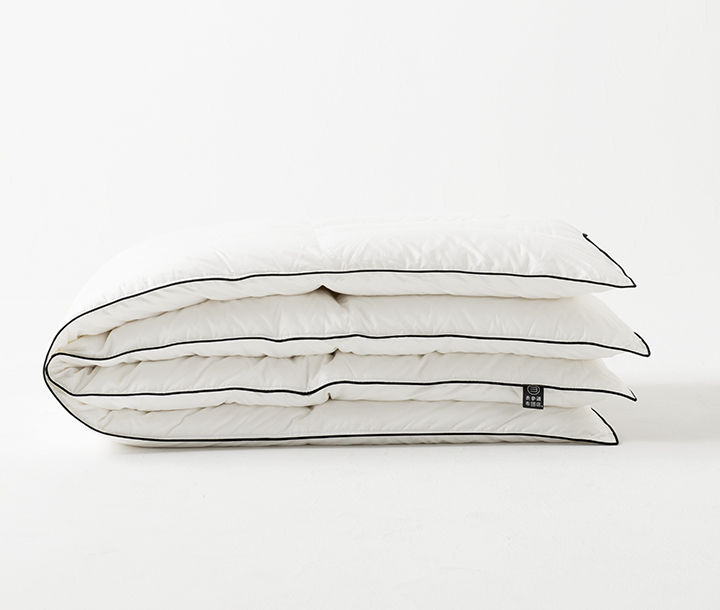
For high-quality Japanese-made premium down comforters (duvets), choose Omotesando Futonten
| Related articles
・Can a Down Comforter Cause Asthma? The Real Causes and What to Do About Them ・How to Choose a Comforter (2026): A Specialist's Complete Guide by Material, Season, Size and Budget |
What is a down allergy?
A down allergy refers to symptoms such as sneezing, a runny nose, itchy eyes and coughing that appear when using a down comforter. As explained in this article, however, in many cases the cause is not the down itself but dust mite carcasses and droppings clinging to the comforter, proteins left behind in insufficiently washed down, or mold caused by moisture. Identifying the real cause, then choosing the right comforter and caring for it properly, is what leads to fewer symptoms.
If itching or rashes from dust mites in your down comforter are a concern
When your skin itches or breaks out in a rash while using a down comforter, the cause is often not the down itself but skin contact with dust mite carcasses and droppings. Dust mites multiply easily in humid conditions, so keeping your comforter clean goes a long way toward easing symptoms.
Dust mite control basics
- Use a futon dryer to kill dust mites (aim for 60°C or higher for 50 minutes or longer)
- Use shell fabrics and covers with an anti-dust-mite treatment
- Wash duvet covers and sheets regularly
- Air it in the shade and keep air moving around it so moisture doesn't build up
If itching or rashes persist, don't stop at caring for your bedding — consider seeing a dermatologist or allergist as well.