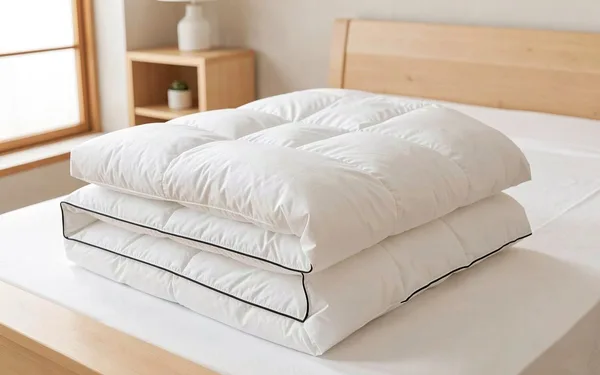
The answer in 30 seconds
- For a comforter, down is the first choice. It leads on lightness, warmth and moisture control alike. If it fits your budget, there's nothing to debate.
- On a budget, go with feather or synthetic. Feather's drawback is weight; synthetic's is trapped heat and humidity.
- Choose a futon mattress by pressure distribution. If your hips sink in or you wake up sore, the firmness isn't right for you.
- Rotate three comforters through the year: a winter-weight comforter, an all-season (medium-weight) comforter for spring and fall, and a summer-weight (light) comforter. One comforter for all four seasons always means a compromise.
Contents: 1. The two categories / 2. Comforter materials compared / 3. Futon mattresses / 4. By season and body type / 5. Frequently asked questions
What you'll learn in this article
- The types of comforters and futon mattresses, and how their materials differ
- What down, feather, cotton, synthetic and wool fills are like — and who each one suits
- How to choose the right futon for your season, body type and budget
- A specialist's tips for taking your futon choice one step further
If you've ever thought there are simply too many types of futon to choose from, this guide is for you. Omotesando Futonten, with more than 25 years in bedding, covers every type in one place. Organized by material, purpose and season, so you can find the one that's right for you.
1. Types of futon: two main categories
Futon bedding falls into two broad categories: comforters and futon mattresses. Each is made with several different materials.
| Category | Role | Main materials |
|---|---|---|
| Comforters | Goes over you — warmth, moisture absorption and release | Down, feather, cotton, synthetic fill, wool |
| Futon mattress | Goes under you — pressure distribution, sleeping-posture support | Cotton, wool, urethane foam, fiber fill |
2. Types of comforter and the characteristics of each material
Comforter comparison by fill material
| Material | Warmth | Weight | Moisture absorption and release | Ease of washing | Price range | If this sounds like you |
|---|---|---|---|---|---|---|
| Down | ◎ Excellent | ◎ Ultra-light | ◎ Excellent | △ Specialist care recommended | ¥10,000–200,000 | Those who prioritize quality and restful sleep |
| Feather | ○ High | △ Slightly heavy | ○ High | △ | ¥5,000–¥20,000 | Best value for money |
| Cotton | ○ Average | × Heavy | ○ Average | ○ | ¥5,000–¥10,000 | Natural materials first |
| Synthetic (polyester) | ○ Average | ○ Light | △ Low | ◎ Washable | ¥3,000–8,000 | Lowest price above all |
| Wool | ○ Average | ○ | ○ Average | △ | ¥10,000–30,000 | If static electricity bothers you |
| Silk | ○ Average | ◎ Lightweight | ◎ High | × Delicate | ¥30,000–¥100,000 | Soft feel / luxury-minded |
Types of down comforters (by fill weight)
With a down comforter, the fill weight determines which season it's best suited for.
| Type | Fill weight (Single) | Season | Characteristics |
|---|---|---|---|
| Summer-weight (light) comforter (down blanket) | 200〜400g | June–September (summer) | Thin, light and breathable |
| All-season (medium-weight) comforter | 500〜800g | April–June & October–November (spring/fall) | Medium loft |
| Winter-weight comforter (for winter) | 1.2〜1.3kg | November–March (winter) | Serious warmth |
| 4-season 2-in-1 comforter | 1.2–1.5kg total | Year-round | One set covers all four seasons |
Specialist tip: Choose a 4-season 2-in-1 comforter and you can use the summer-weight layer alone in summer and snap both together in winter — one set covers the whole year, so it's excellent value.
3. Types of futon mattresses and how to choose
| Material | Pressure relief | Breathability | Durability | Price range | Characteristics |
|---|---|---|---|---|---|
| Cotton | ○ | ○ | ○ | ¥5,000–¥30,000 | The traditional classic. Can be brought back to life with down comforter refurbishing |
| Wool | ○ | ◎ High | ○ | ¥10,000–¥50,000 | Absorbs and releases moisture. Warm in winter, cool in summer |
| Memory foam (low-resilience urethane) | ◎ High | △ Low | △ 3–5 years | ¥5,000–¥20,000 | Excellent pressure relief. Downside: it can trap heat and moisture |
| High-resilience foam (high-rebound urethane) | ◎ High | △ Low | △ 5–8 years | ¥10,000–¥50,000 | Easy to turn over on. Popular for back-pain relief |
| Fiber (Airweave and similar) | ○ | ◎ Excellent | ○ | ¥30,000–¥100,000 | Washable with water. Cool in summer |
4. Recommended bedding by season and body type
Recommendations by body type and concern
| Concern / body type | Recommended material | Why |
|---|---|---|
| Sleeps hot / sweats at night | Down (goose down) or wool | Excellent moisture absorption and release for a dry, fresh feel |
| Gets cold easily | Down (higher fill weight — 1.2kg or more) | Outstanding warmth with very little weight |
| Allergies / asthma | Anti-dust-mite treated down or high-quality goose down | Down resists dust mites |
| Sensitive or easily irritated skin | Organic cotton or silk | Few chemicals, gentle on skin |
| Back pain & stiff shoulders | High-resilience foam futon mattress | Firm support that keeps your spine aligned |
| Shopping on a budget | Duck down 80% or higher, or synthetic fill | Great value for the money |
5. Frequently asked questions
Q. What's the difference between a down comforter and a feather comforter?
A. The fill is different. A down comforter is filled mainly with down (the round, fluffy clusters), making it light with excellent warmth and moisture control. A feather comforter contains a high proportion of feathers (the quilled kind), so it feels heavier. Check the down cluster ratio to judge quality — we recommend 90% or higher.
Q. How do I choose the right type of futon?
A. Decide on three points and you won't go wrong: ① season (summer / winter / year-round), ② how you sleep (run hot, feel the cold, allergies), and ③ budget. The best balance of quality and price is a down comforter with 90% or more goose down and a fill power of 350dp or higher.
Q. How long does a futon last?
A. A high-quality down comforter will last 15–20 years or more with proper care. Cotton futons average 5–10 years. Once yours starts to flatten, down comforter refurbishing (remaking it with refreshed down) can bring it back to like-new condition.
6. Summary
- Futons fall into two broad categories: comforters and futon mattresses
- Comforters come in six fill types: down, feather, cotton, synthetic, wool and silk
- Down comforters come out on top for warmth, light weight and moisture control
- Fill weight sets the season: 200–400g (summer) / 500–800g (spring & fall) / 1.0kg and up (winter)
- For futon mattresses, choose high-resilience foam for back pain, or fiber fill for breathability