For 14 years now, I have kept making the trip to Fujiyoshida.
About two hours from Tokyo. It isn't exactly close. Even so, I make the time to go.
There is just one reason: I believe the down comforter we are striving to make can only be made at this factory.
Omotesando Futonten's down comforters are made at a small workshop in Fujiyoshida, a town known for its weaving, by a team of about ten craftspeople. In my 25 years in this industry, it is the very first workshop I ever worked with.
Fourteen years ago, when we first opened the store, we placed our orders with all kinds of factories. A large plant that could handle mass production. A nimble contract workshop in Gamagori. I wanted shorter lead times, and I wanted to hold stock and produce efficiently. That was how I thought back then.
But as time went on, I began to notice that the quality was uneven. It was not easy to get every factory to understand, in exactly the same way, the fine details we care so much about.
The turning point came the day a finished shipment arrived from the factory we had asked to handle our mass production.
The first thing I look at is the corners.
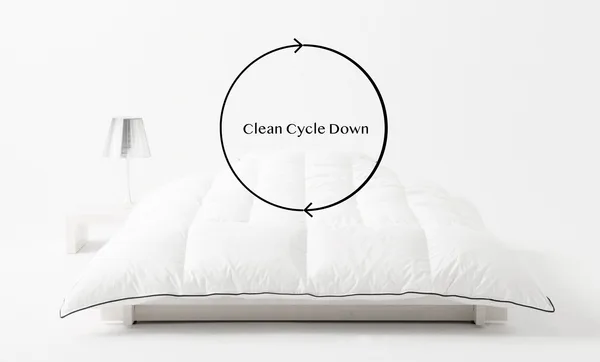
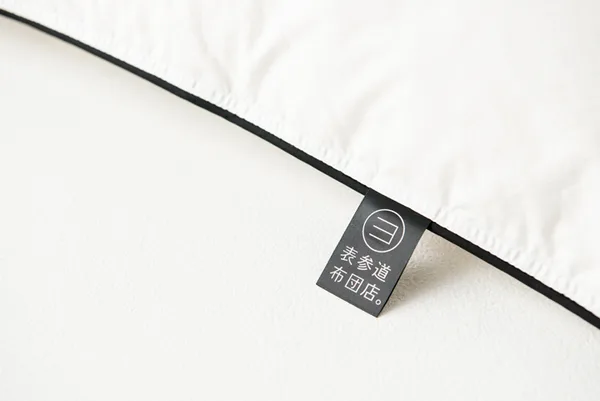
Every Omotesando Futonten down comforter has black or white piping running all the way around the edge. The corners especially: unless you guide the sewing machine slowly and carefully, the fabric puckers immediately. It is the place where the sewer's hands show through.
On the comforter that arrived, the piping at the corner was puckered. One look told me this was a factory that does not take care over that detail.
I am confident about the down inside.
But I could not put the Omotesando Futonten tag on that corner.
Above: the mass-production factory. Below: the Fujiyoshida workshop. The same corner, and this much difference in the finish.
It was our busiest season. We had already received more than 30 orders.
Halting that factory's production meant remaking every single one at the small Fujiyoshida workshop. Our customers would have to wait more than 60 days. I had to be prepared for cancellations and complaints.
That night, I truly agonized over it.
Even so, I could not send those comforters out.
Quality over sales. It was about three years after we founded the store. From then on, we decided to make everything at a single workshop: the one in Fujiyoshida we had worked with from the very beginning.
It costs more. The number we can make in a day is limited. We decided to do it anyway.
Because this small-town workshop is small, they take in every last detail we care about.
They work on old sewing machines made by a company called JUKI. I am no expert on sewing machines. Even so, when I entrust someone with making something, a workshop with these old machines in it somehow puts me at ease.
One comforter at a time, the craftspeople guide the fabric through those machines by hand and sew each one with care. The corner piping above all: that is where a person's hands show the most.
Corners sewn cleanly mean the down will not leak out, even after years of use. This is not a question of how it looks. These are stitches made to last 10 or 20 years.
Happily, not one customer has ever told us that down has leaked out.
Eleven years have passed since that decision. We are still making the same down comforters with the same craftspeople. Their skills have been honed little by little, and returns and complaints have all but disappeared.
I still travel to the workshop today, and not only to check the quality.
Seeing the craftspeople at those old machines, sewing one comforter at a time, reminds me all over again that on that night 11 years ago, I was right not to ship them.