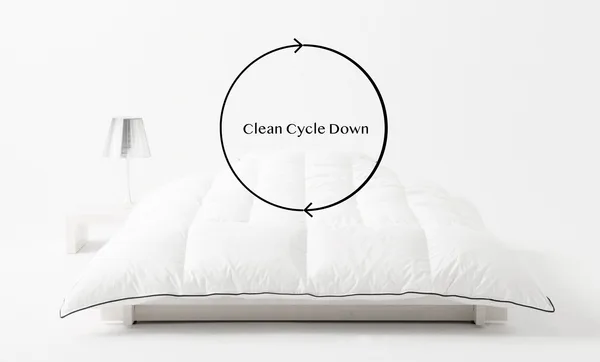
A down comforter is a little like wine. I've written about this before.
What kind of down is actually inside? From the outside, you can hardly tell.
And yet prices range from a few tens of thousands of yen to several hundred thousand.
At Omotesando Futonten, every down comforter is now made one at a time, only after an order comes in.
We call this making it “by order.”
Why go to that trouble?
The quality of the down itself matters, of course: fill power, origin, and whether it's goose or mother goose down.
But after many years of working with down comforters, I've come to believe that isn't the whole story.
The other thing I care about is the “freshness” of the down.
There is no official quality standard with a line item called “freshness,” but that is how I see it.
A single piece of down is a tiny, sphere-like cluster called a down ball. When those balls open up softly, the down lofts — light and warm.
The trouble is that down is extremely vulnerable to moisture.
Left for a long time in a humid environment, down balls gradually take on moisture and open less readily. The loft itself — the fill power — quietly declines.
For down raised in the dry lands of Europe, Japan's humidity is anything but a gentle environment.
That is precisely why we don't want finished down comforters sitting in stock for years.
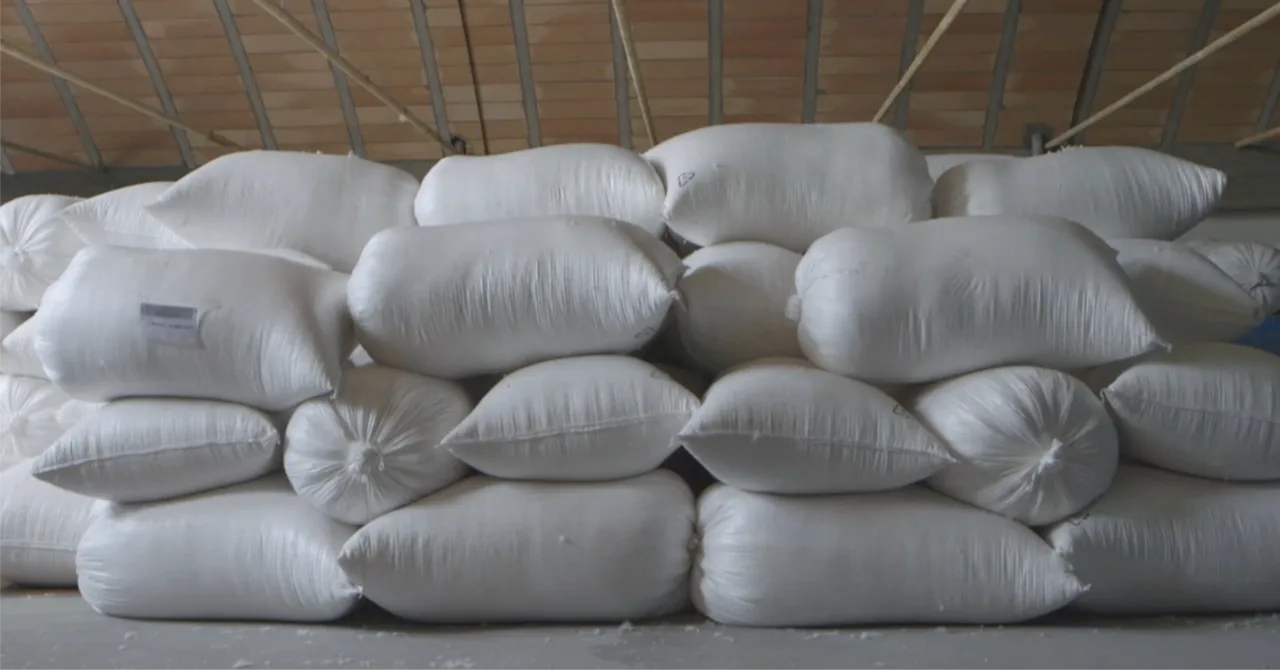
(Photo) Fresh down washed in Hakushu, packed and stored one bale (about 60kg) at a time.
In fact, over 25 years in this industry, I have seen plenty of down comforters that sat in inventory for a very long time.
The shell fabric is the same, the quality label is the same — but when it was actually made is something a customer can rarely tell.
So at Omotesando Futonten, we don't make comforters in advance and line them up on the shelf.
We prepare everything up to the sewing of the shell fabric ahead of time. Then, once an order comes in, we blow in the fresh down we have on hand at that moment and complete the final finishing.
If efficiency were all that mattered, it would probably be easier to produce finished comforters in batches and keep them in stock.
Even so, it is simply not something we want to do.
If we're going to use good down, we want to deliver it to our customers in the best condition possible.
It's a very simple idea, but it is the reason we keep making every comforter to order.