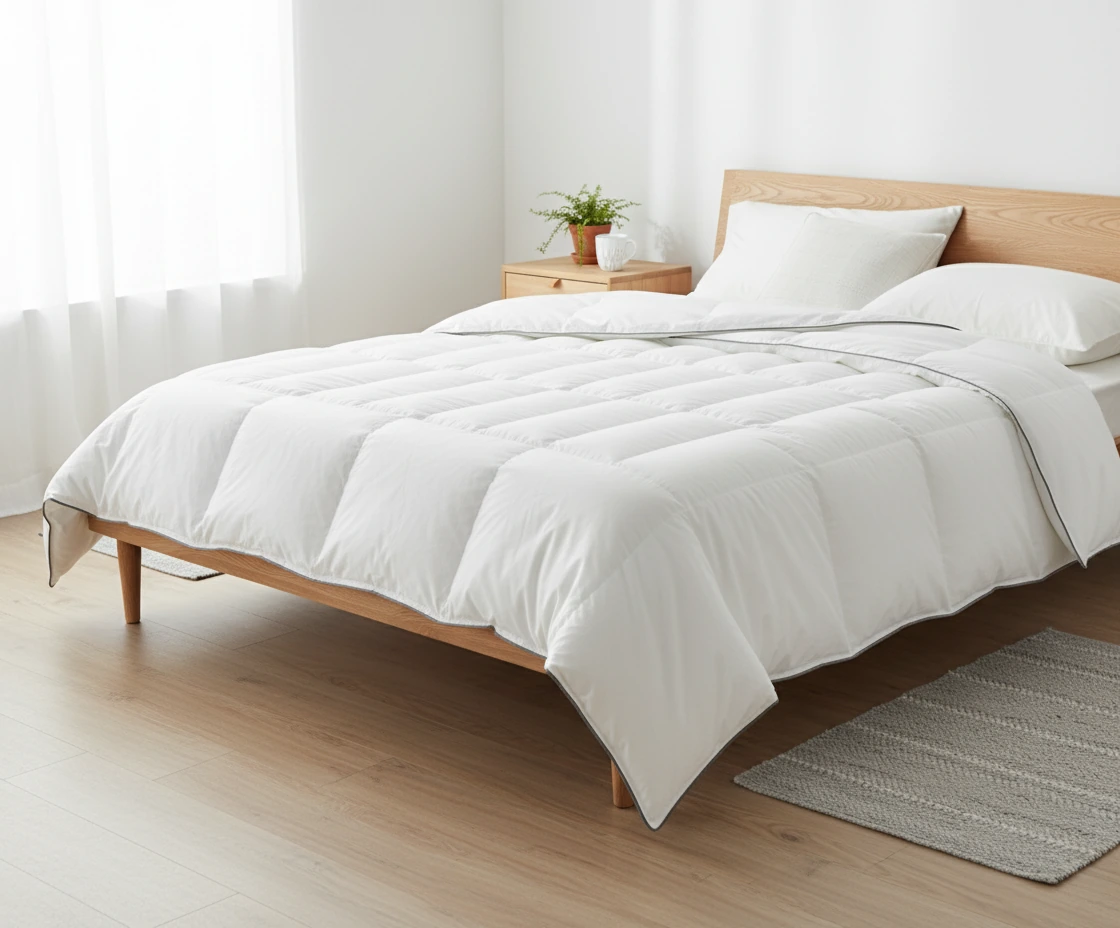
Your down comforter spins around inside the cover, or you wake up to find it on the floor beside the bed. In most cases there are just two causes: the cover's fasteners aren't being used properly, or the comforter doesn't match the size of your bed and mattress. The short answer: tie the four corner loops and ties correctly inside the cover, and rethink your size and sleeping position to stop it falling off the bed. That solves it most of the time.
Below, we look separately at "shifting inside the cover" and "sliding off the bed," with specific causes and solutions for each.
Why a down comforter shifts inside the duvet cover, and how to stop it
Duvet covers made for down comforters have fabric loops at the four inner corners (or at eight points), designed to be tied to the ties on the corners of the comforter itself. If you simply slip the comforter inside without tying these loops and ties together, it will gradually bunch up to one side or rotate inside the cover as you use it.

The basic fix is to tie each of the comforter's four corner ties securely to the matching loop in the cover. Even if it feels like a chore, tying at least the four corners makes a noticeable difference. If a tie has snapped or a loop has come off, don't just skip it — repair it, or consider replacing the comforter or rethinking your cover; you'll be more comfortable in the long run. Sometimes the cover and the comforter size simply don't match, so if you're unsure how to choose, see How to choose a duvet cover: premium duvet covers come down to material, yarn count and weave as well.
When the duvet cover and comforter sizes don't match
If the cover is too large for the comforter, the comforter floats around inside and shifts easily. If it's too small, tying the ties puts strain on the comforter and can damage the fabric. As a rule, match your comforter and cover by the same size label (Single, Semi-double, and so on) — but actual dimensions vary by maker, so it's worth checking the exact measurements before you buy.
Why your down comforter slides off the bed
Separate from shifting inside the cover, another common complaint is the comforter itself sliding off or hanging over the edge of the bed. Usually several factors are at work at once.
The comforter is too small for the bed
If the comforter is small relative to the bed, there's little overhang on either side, and even a small movement sends the edge of the comforter past the mattress. As a guide, choose a comforter one size larger than the width of your mattress — that way it won't reach the floor even if it shifts left or right. You'll find specific dimensions for Single, Semi-double, Double and more in our comforter size chart: Single, Semi-double and Double dimensions, which is handy when you're shopping for a replacement.

It shifts as you turn over in your sleep
How often and how much you move in your sleep varies from person to person, but the comforter shifts a little with every turn, and by morning it can be hanging well off the bed. That's perfectly natural, and not unique to down comforters. If it bothers you, tuck the sides lightly under the mattress, or place a bed guard or cushion along the outside edge — both help keep it from sliding off.
Mattress thickness and edge shape
The thicker the mattress, the steeper the slope the comforter has to drape over, and the more easily it slides off. Mattresses with rounded corners, or a bare, slick mattress used without a fitted sheet, also make the comforter more likely to slip. Using a sheet that hugs the mattress closely — like a crisp white fitted sheet — creates a little friction against the comforter and can help keep it in place.
Quick fixes you can try today
- Always tie the four corner loops inside the cover to the comforter's ties
- Match comforter and cover by size, and check the actual dimensions
- Choose a comforter one size wider than your mattress
- Tuck the edges of the comforter lightly under the mattress
- Use a snug-fitting sheet to reduce slipping
Rather than relying on just one fix, review how the cover is secured, the size you've chosen, and how your bedding works together — do all three and the frustration of a shifting, sliding comforter largely disappears. If you're thinking about replacing the comforter itself, it's a good opportunity to rethink the whole set, sizing included.
Frequently asked questions
Do I really have to tie all the cover ties?
If you don't tie the loops inside the cover to the comforter's ties, the comforter will bunch to one side or rotate inside the cover. Even if it feels fussy, tying at least the four corners makes a noticeable difference. If a tie or loop is broken, consider having it repaired.
Should the duvet cover be the same size as the comforter?
As a rule, yes — match the comforter and cover by the same size label. A cover that's too large lets the comforter float around and shift; one that's too small strains the comforter and damages the fabric. Actual dimensions vary by maker, so check the exact measurements before you buy.
Why is my comforter on the floor every morning?
It's usually a combination of factors: the comforter is small relative to the bed, it shifts little by little as you turn over, and a thick mattress creates a steep drop at the edge. Choose a comforter one size wider than your mattress and tuck the edges lightly under it, and it will stay put far better.