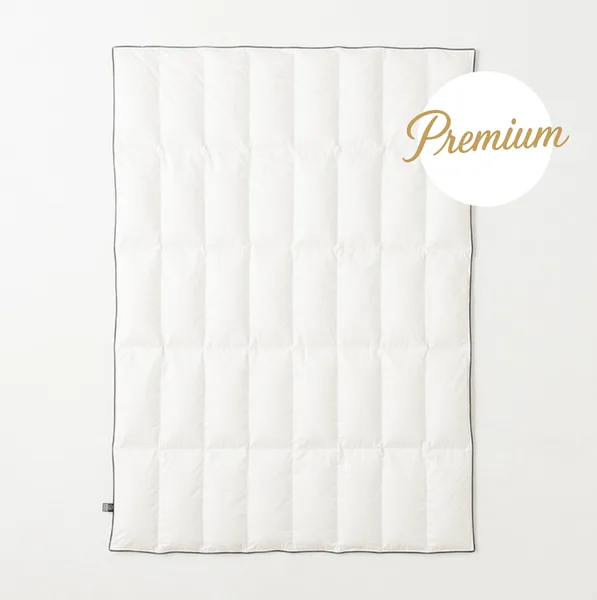
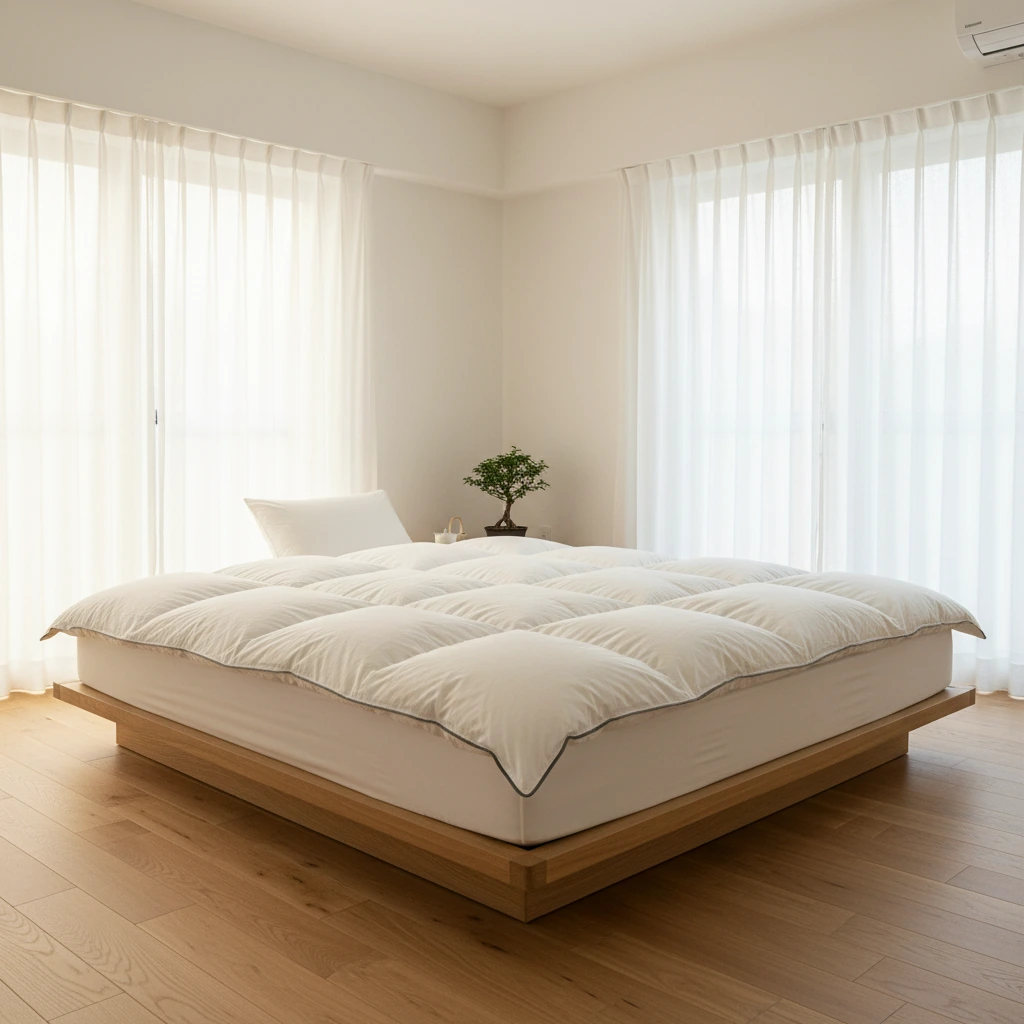
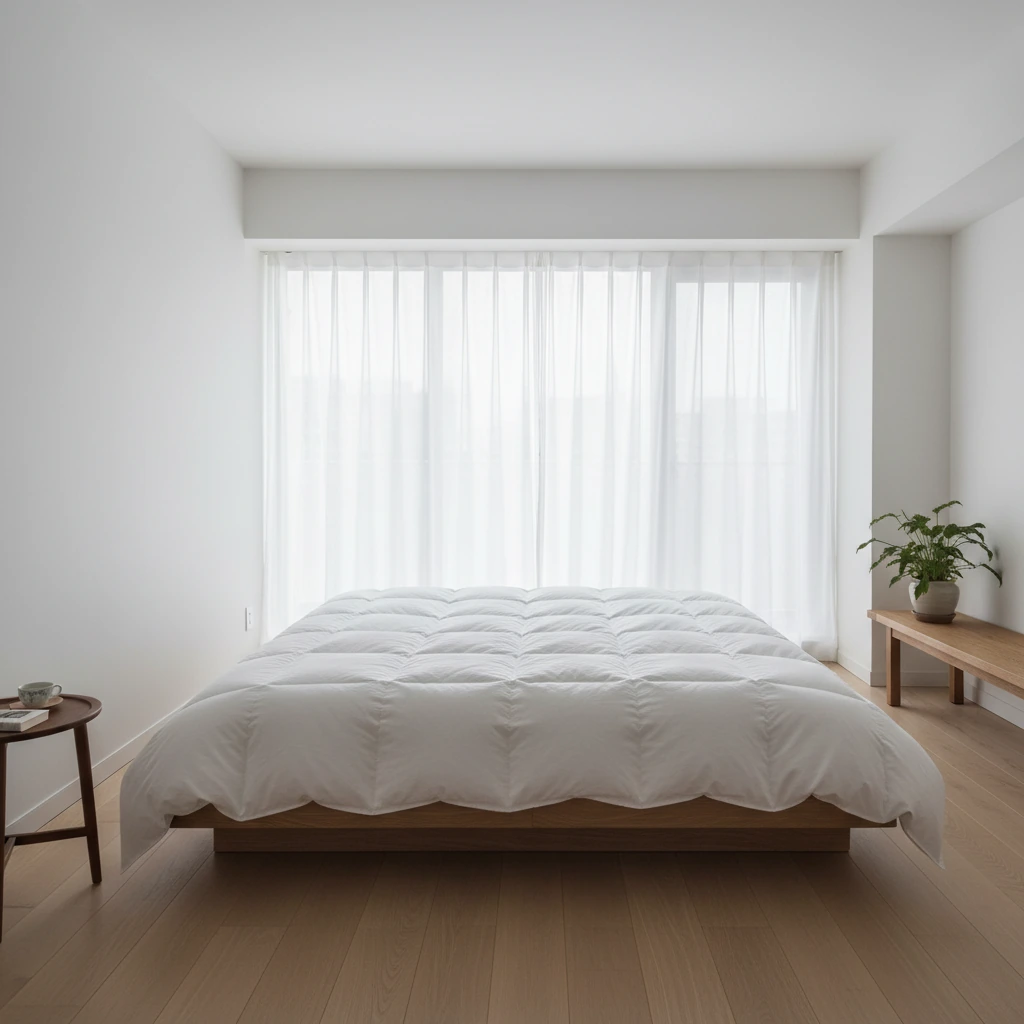
The short answer: an all-season (medium-weight) comforter is a mid-loft down comforter for the changing seasons — April to June and September to November — and you choose it on three things: down cluster ratio, fill weight (around 0.6–0.8kg for a Single) and shell fabric.
Recommended by Omotesando Futonten
- Flower Sleep Down All-Season Comforter (Spring/Fall) ¥35,000 (tax incl.) — recycled down. Light and easy to live with.
- Clean Cycle Sleep Down All-Season Comforter (Spring/Fall) ¥48,000 (tax incl.) — regenerated down, Clean Cycle Down
- White Goose Sleep Down All-Season Comforter (Spring/Fall) ¥88,000 (tax incl.) — Polish white goose down. Our No. 1 seller in September.
- Mother Goose Sleep Down All-Season Comforter (Spring/Fall) ¥168,000 (tax incl.) — our top grade
Every Omotesando Futonten down comforter is made to order, sewn one at a time by artisans in Fujiyoshida, Yamanashi. The down is washed in Hakushu groundwater to twice the JIS cleanliness standard. We use RDS-certified down and publish performance results from independent Japanese testing laboratories. Free shipping nationwide, plus rental from ¥3,960/month and down comforter refurbishing (remaking) for ¥45,800.
What you'll learn in this article
- What an all-season comforter is, and how it differs from a summer-weight one
- When to use an all-season comforter in spring and fall
- How to choose: fill weight, down cluster ratio and materials
- Why a 4-season 2-in-1 comforter covers you year-round
“A down comforter feels too warm in spring and fall, but a cotton blanket leaves me cold.” An all-season comforter solves exactly that between-seasons problem. Here our specialists explain the mid-weight comforter that may well get more use than any other bedding you own.
1. What is an all-season comforter?
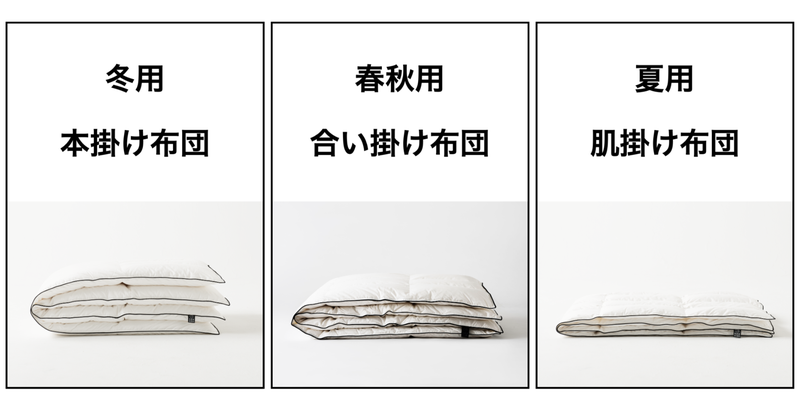
An all-season (medium-weight) comforter is a mid-weight comforter for the transitional months of spring and fall. It is warmer than a summer-weight (light) comforter and thinner than a winter-weight comforter — a “just right” loft.
| Type | Fill weight (Single) | Season | Target room temperature |
|---|---|---|---|
| Summer-weight (light) comforter | 200〜400g | June to September | Room temperature 22°C and above |
| All-season (medium-weight) comforter (spring & fall) | 500〜800g | April–June and October–November | Room temperature 15–22°C |
| Winter-weight comforter (for winter) | 1.2〜1.3kg | November–March | Room temperature 15°C and below |
When do you start using it? A good cue is when mornings and evenings first feel chilly. In the Kanto region, all-season comforter weather runs from early April to early June, and from October to mid-November.
2. How to choose an all-season comforter
Choosing by fill weight
| Fill weight (Single) | Warmth | Best for |
|---|---|---|
| 500g or less | Lighter | People who sleep hot, or rooms with strong air conditioning |
| 500〜700g | Standard (most popular) | Handles typical spring and fall temperatures |
| 700〜800g | Slightly warmer | People who feel the cold, or regions with chilly mornings and evenings |
Choosing by down cluster ratio and fabric
| What to look for | Guideline | Why |
|---|---|---|
| Down cluster ratio | 80% or higher (90% or higher recommended) | Light and breathable is what matters most in an all-season comforter |
| Material | Goose down recommended | Absorbs and releases moisture well, making temperature easy to regulate |
| Shell fabric | 100% cotton, or 60-count sateen or finer | Spring and fall bring big temperature swings, so moisture control is key |
3. The advantages of a 4-season 2-in-1 comforter
Instead of buying an all-season (medium-weight) comforter on its own, choose a "4-season 2-in-1 comforter" (a summer-weight comforter plus a winter-weight comforter) and you're covered all year round.
| How to use it | Season | Warmth |
|---|---|---|
| Summer-weight comforter only | Summer (June–September) | Lightweight |
| Summer-weight and winter-weight snapped together | Spring and fall (April–June, October–November) | Equivalent to an all-season comforter |
| Winter-weight comforter only | Winter (November–March) | Warm |
| Both layers combined (maximum) | Midwinter and cold climates | Maximum warmth |
Choosing a 4-season 2-in-1 comforter also saves storage space and spares you the hassle of keeping a separate comforter for every season.
4. Frequently asked questions
Q. When should I use an all-season (medium-weight) comforter?
A. As a rule of thumb, whenever room temperature sits between 15 and 22°C. In the Kanto region, that means roughly early April to early June and October to mid-November. It's the perfect comforter for those weeks when mornings feel a little chilly but you still wake up warm at night.
Q. What's the difference between an all-season comforter and a summer-weight comforter?
A. It comes down to fill weight. A summer-weight (light) comforter holds 200–400g (thin, for summer), while an all-season (medium-weight) comforter holds 500–800g (medium loft, for spring and fall). Use the summer-weight one in summer and the all-season one in spring and fall.
5. Summary
- An all-season (medium-weight) comforter is a mid-loft comforter for spring and fall, when room temperature is 15–22°C
- A fill weight of 500–700g (Single) is the standard benchmark for an all-season comforter
- A down cluster ratio of 90% or higher in goose down offers excellent moisture absorption and release — ideal for spring and fall
- A 4-season 2-in-1 comforter covers all four seasons in one set, making it great value
▶ Shop all-season down comforters at Omotesando Futonten
FAQs about this article
When should I use an all-season comforter?
In the Kanto region, April to June and September to November are the usual windows. If you feel the cold easily, switching between a winter-weight comforter and an all-season comforter by season keeps you comfortable year-round.
Which all-season comforter do you recommend?
Omotesando Futonten offers all-season comforters in four grades: Flower (¥35,000), Clean Cycle (¥48,000), White Goose (¥88,000) and Mother Goose (¥168,000). The perennial favorite is the White Goose Sleep Down all-season comforter for spring and fall.
What's the difference between an all-season comforter and a summer-weight comforter?
Fill weight. A summer-weight (light) comforter is thin and made for summer (around 0.3kg), an all-season comforter is mid-loft for spring and fall (0.6–0.8kg), and a winter-weight comforter is made for winter (1.2–1.3kg).
6. How does it differ from an "aibuton" or "ai no futon"?
You may see the terms "aibuton," "ai no futon" or "aigake futon" used in searches, but they all refer to the same thing covered in this article: the all-season (medium-weight) comforter used during the spring and fall transitions between seasons.
7. Why down is the go-to fill for an all-season comforter
All-season comforters are sometimes made with fills other than down, but down — goose down in particular — absorbs and releases moisture exceptionally well and copes easily with the temperature swings of changing seasons, which is why it tends to be the fill of choice.
- A down cluster ratio of 90% or higher means a light comforter that resists stuffiness
- Goose down absorbs and releases moisture well, making temperature easy to regulate
- A shell fabric of 100% cotton, or 60-count sateen or finer, handles spring and fall temperature changes with ease