The answer in 30 seconds
- Bedding that goes on top of the mattress, underneath the sheet. It shields the mattress from sweat, stains and dust mites while making the bed more comfortable.
- Cotton strikes the best balance between moisture absorption and easy washing. A great choice if you sweat at night, have sensitive skin, or have a baby at home.
- A medium thickness of 2–3cm is the standard. It balances mattress protection with sleeping comfort. Choose a size that matches your mattress exactly.
- Wash once or twice a month as a guide. Every two weeks in sweaty summer months. A normal wash at 30–40°C is fine.
What you'll learn in this article
- What a bed pad is, and how it differs from a shiki pad (thin top pad)
- Why choose a cotton bed pad: key features
- Material comparison: cotton, wool and polyester
- How to choose: size, thickness and washing
“I want my mattress to last longer.” “I sweat in my sleep.” “I want bedding that feels good against the skin so I sleep well.” A bed pad answers all three. Cotton in particular is a popular choice because it balances moisture absorption, skin-friendly safety and easy washing.
1. What is a bed pad?
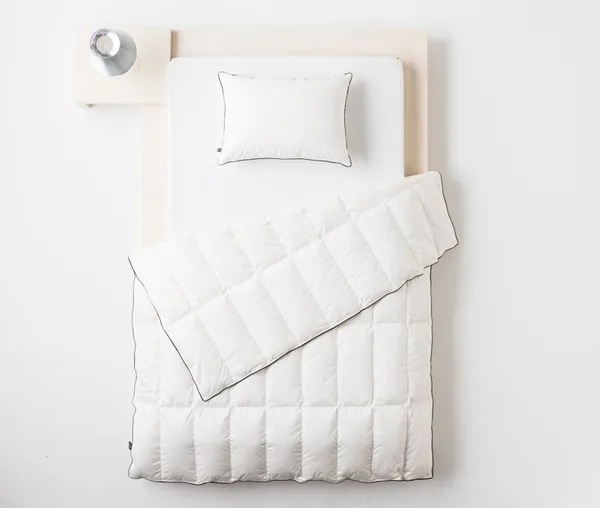
A bed pad (mattress pad) is bedding laid on top of the mattress and under the sheet. It protects the mattress from stains, perspiration and dust mites while making the bed more comfortable to sleep on.
| Items | Where it goes | Main role | Thickness |
|---|---|---|---|
| Sheets | On top of the bed pad (in direct contact with the skin) | Absorbs perspiration and protects the skin directly | Thin |
| Bed pad | On top of the mattress, under the sheet | Protects the mattress, improves comfort, absorbs moisture | 1〜5cm |
| Mattresses | Bottom layer | Distributes body pressure and supports the body | 10〜30cm |
Bed pad vs. shiki pad: the two terms are used almost interchangeably. Generally, a "bed pad" is the thicker, cushioned type, while a "shiki pad" is thinner and seasonal (cooling-touch, brushed fleece and so on) — but there is no strict definition.
2. Why choose a cotton bed pad
| Material | Moisture absorption | Feel | Ease of washing | Durability | Price range | Best for |
|---|---|---|---|---|---|---|
| 100% cotton | ◎ High | ○ Crisp and dry | ◎ Washable | ◎ Long-lasting | ¥3,000–¥20,000 | Heavy sweaters, sensitive skin, babies |
| Wool | ◎ High | ○ | △ Somewhat difficult | ◎ | ¥10,000–¥50,000 | Anyone who wants to sleep warm in winter |
| Polyester | △ Low | ○ | ◎ Easy | ○ | ¥1,000–¥5,000 | Lowest price above all |
| Organic cotton | ◎ High | ◎ Very soft | ◎ Washable | ◎ | ¥5,000–¥30,000 | Babies and allergy-prone sleepers |
Why cotton is the best all-rounder: it balances four things — moisture absorption, easy washing, durability and price. It's especially well suited to night sweaters, people with sensitive skin, and households with a baby.
3. How to choose a cotton bed pad
Choosing by thickness
| Thickness | Cushioning | Best suited for |
|---|---|---|
| Up to 1 cm (lightweight) | None to minimal | Using it like a sheet; easy washing is the priority |
| 2–3 cm (medium) | Moderate | A balance of mattress protection and sleeping comfort |
| 4–5 cm (thick) | High | Compensating for an aging mattress and adding softness |
Choosing by size
| Size | Dimensions (approx.) | Mattress it fits |
|---|---|---|
| Single | 100×200cm | Single bed (width 97 cm or less) |
| Semi-double | 120×200cm | Semi-double bed (width 120 cm) |
| Double | 140×200cm | Double bed (width 140 cm) |
| Queen | 160×200cm | Queen bed (160 cm wide) |
A note on sizing: a bed pad should match your mattress exactly. Unlike sheets, it doesn't need any extra room. Measure the width and length of your mattress before you buy.
4. How to wash a cotton bed pad
- Washing frequency: once or twice a month (every two weeks in sweaty summer months)
- Water temperature: normal wash at 30–40°C
- Spin cycle: normal (use a shorter spin if you want to avoid creasing)
- Drying: direct sunlight is fine (sunlight has a natural sanitizing effect on cotton)
- Storage: fold and store only once completely dry
5. Frequently asked questions
Q. Do I really need a bed pad?
A. Yes, if you want your mattress to last. When a sheet goes straight onto the mattress, sweat, body oils and dust mites soak in easily. Adding a single bed pad in between can extend the life of your mattress dramatically.
Q. Cotton or wool bed pad — which is better?
A. Choose cotton for year-round use, or wool if winter warmth is your priority. Cotton is easy to wash and highly absorbent, making it ideal for hot sleepers, households with babies, and anyone who wants one pad for all seasons.
6. Summary
- A bed pad goes on top of the mattress and under the sheet to protect the mattress & improve comfort
- Cotton offers the best all-round balance of moisture absorption, easy washing and durability
- A thickness of 2–3 cm (medium) strikes the best balance between mattress protection and comfort
- Choose a bed pad that matches your mattress size exactly
- Washing once or twice a month keeps it fresh and your sleep environment healthy