The answer in 30 seconds
- Dust mites love heat, humidity and body oils. At 25–30°C and 60–80% humidity, bedding carrying skin oils and flakes is the perfect breeding ground.
- Dust mites die at 50°C or higher after 20–30 minutes of heat. High-heat drying is the most reliable way to kill them. Check the care label to see whether your bedding is dryer-safe.
- After killing them, vacuum up the dead mites and droppings. Dead mites and their droppings are allergens too.
- Prevention comes down to washing covers and controlling moisture. Wash sheets and covers once a week and keep humidity below 60%.
| What you'll learn in this article
・The temperature that kills dust mites in bedding, and the right way to do it ・Dryer vs. laundromat (coin laundry) vs. sun-drying: how the results compare ・Why dust mites struggle to multiply in a down comforter (a specialist's view) ・How to choose bedding for dust mite allergies, and tips for prevention |
"There might be dust mites in my bedding." "I'm worried about allergies." Because dust mites are invisible, many people assume there's little they can do — but with the right methods, you can get rid of them and keep them away.
In this article, we explain the temperature that kills dust mites, the correct way to eliminate them, and how likely different materials are to attract them — all from the perspective of Omotesando Futonten, with more than 25 years in bedding.
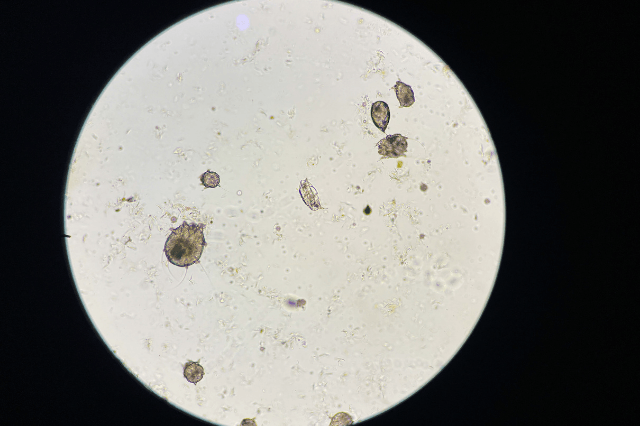
Microscope image of a dust mite (magnified). At around 0.3mm long, dust mites are invisible to the naked eye. They thrive at 25–30°C and 60–80% humidity.
What Lets Dust Mites Multiply in Bedding — and the Problems They Cause
The Environment Dust Mites Love
| Factor | What dust mites prefer | What happens inside bedding |
| Temperature | 25〜30℃ | Easily maintained by your own body heat |
| Humidity | 60〜80% | Night sweat and condensation push humidity up fast |
| Food source | Human skin oils and flakes | Supplied in large amounts every single night |
| Material | Natural fibers (cotton and wool) | Cotton and wool harbor more dust mites than down |
Common Symptoms of a Dust Mite Allergy
- Sneezing, runny nose, stuffy nose (allergic rhinitis)
- Itchy, red eyes (allergic conjunctivitis)
- Itchy skin and eczema
- Asthma, coughing, difficulty breathing
How Easily Dust Mites Multiply, by Fill Material

Horizontal axis: material (cotton, wool, synthetic fiber, down); vertical axis: dust mite growth (relative values). The chart shows that down harbors the fewest dust mites
| Material | How easily dust mites multiply | Why |
| Cotton futon | ★★★★ (high) | Highly absorbent, so moisture tends to build up |
| Wool futon | ★★★★★ (highest) | The fiber structure makes an ideal nest for dust mites |
| Synthetic (polyester) comforter | ★★ (low) | Dries quickly, so little moisture is left behind |
| Down comforter | ★ (lowest) | The structure of down is a poor environment for dust mites |
| Down is the fill in which dust mites multiply the least. Down naturally absorbs and releases moisture, so it is far less likely to create the high-humidity environment mites thrive in. That is why more and more allergy-conscious shoppers choose a down comforter. |
How to Get Rid of Dust Mites the Right Way
Method 1: Heated dryer (the most effective)
Dust mites die at 50°C or higher after 20–30 minutes. High-heat drying at a laundromat (coin laundry) or in a home dryer is the most reliable way to eliminate them.
For the step-by-step process, typical costs, and the pitfalls to avoid when washing a comforter at a laundromat, see our complete guide to washing a comforter at the laundromat.
- Set the dryer to high heat, 60–70°C
- Tumble dry a Single-size comforter for 30–60 minutes
- After drying, vacuum up the dead dust mites and their droppings
| Important: don't forget to vacuum after drying. Dead mites and their droppings are allergens too. |
Method 2: Laundromat (coin laundry) — washing plus drying for a double effect
Washing plus machine drying at a laundromat (coin-operated self-service laundry) is the single best way to deal with dust mites. It kills the mites and washes away the carcasses and droppings as well.
- Washing: water at 40°C or above kills off nearly all dust mites
- Dryer: high heat finishes the job for good
- Rinsing away: unlike airing in the sun, washing also removes carcasses and droppings
Method 3: Airing in the sun (a supplementary step)
Airing in the sun won't kill dust mites completely, but drawing out moisture does help keep them from multiplying. Just remember that airing always needs to be paired with vacuuming afterward.
- Effectiveness: hard to kill dust mites completely (only some on the surface)
- Added benefit: reduces moisture, which slows dust mite growth
- Frequency: once or twice a month is a good guide
- Note: airing alone is not enough — always pair it with vacuuming
Method 4: Anti-mite sprays and mite-proof covers
- Anti-mite sprays: effective for a while, but need to be reapplied regularly
- Anti-mite covers: physically seal dust mites in. Use one underneath your duvet cover
- Best combination: regular washing plus an anti-mite cover
Key Points for Preventing Dust Mites
Everyday Dust Mite Prevention
- Air things out once or twice a week (hang the comforter out and let fresh air into the room)
- Wash sheets and duvet covers once a week
- Keep humidity at 60% or below (use a dehumidifier or your air conditioner's dry mode)
- Instead of folding the comforter up tightly each morning, fold it back loosely so moisture can escape
- Wash it at the laundromat regularly (once or twice a year)
Choosing Bedding That Helps Keep Dust Mites Away
- Fill: a down comforter (the hardest type for dust mites to thrive in)
- Shell fabric: a high-density weave (hard for dust mites to get through)
- Washing: choosing a machine-washable model makes it much easier to keep clean
- Cover: use a duvet cover with an anti-mite finish
Frequently Asked Questions
- At what temperature do dust mites in bedding die?
- Dust mites die within 20–30 minutes at 50°C or above. Running your comforter through a laundromat dryer (set to 60–70°C) for 30–60 minutes will reliably kill them. Airing in the sun rarely brings the comforter's surface up to 50°C, so we recommend using a dryer.
- Is it true that down comforters have fewer dust mites?
- Yes. Down naturally absorbs and releases moisture, so it's harder for the humid conditions dust mites love to build up — meaning fewer mites than in cotton or wool bedding. That's exactly why people with allergies often choose a down comforter. It doesn't mean there are no mites at all, though, so regular care is still necessary.
- Do anti-mite sprays really work?
- They do repel and kill to some degree, but the effect is short-lived and they need to be reapplied regularly. For real, lasting dust mite control, the most effective approach is washing and high-heat drying at the laundromat combined with an anti-mite cover.
Summary
- Dust mites die at 50°C or higher after 20–30 minutes of heat
- A tumble dryer (60–70°C) is the most reliable way to kill dust mites
- After drying, always vacuum to remove dead mites and their droppings
- Of all bedding materials, down comforters are the least hospitable to dust mites
- Wash sheets and covers once a week and keep humidity below 60% — that's the foundation of prevention
| ▶ Browse all down comforters (duvets) at Omotesando Futonten |
Key points to keep in mind when protecting a down comforter from dust mites
A down comforter isn't completely mite-free
Down comforters absorb and release moisture well, so dust mites multiply less readily in them than in cotton or wool bedding. That doesn't mean the mite count drops to zero, though. Body oils and skin flakes that settle into the bedding become food for mites, so even with a down comforter you still need to wash the cover regularly and air out the room.
Care tips for down comforters
Whether a down comforter can go in a home washing machine or dryer depends on the shell fabric and the condition of the down inside. Check the care label, and if full washing or high-heat drying at home isn't an option, don't force it — consider professional cleaning instead. For everyday care, the practical approach is to use a mite-proof cover and wash your covers frequently.
What to watch for when killing dust mites in cotton futons
Cotton futons are highly absorbent, which means moisture builds up easily and dust mites thrive. High-heat drying works well if the futon is dryer-safe, but some cotton futons aren't recommended for home dryers, so always check the care label. If a dryer isn't an option, combine sun-drying with vacuuming, and add a periodic full wash at the laundromat (coin laundry) to help keep mite populations down.