The answer in 30 seconds
- A comforter with polyester fillA synthetic down comforter contains no natural down; instead, it uses man-made fibers engineered to mimic down as the fill.
- Tends to be heavier and less warmBecause it lacks the three-dimensional structure of natural down, it generally has to be heavier to deliver the same level of warmth.
- Easy to wash and affordableMany are fully machine-washable at home, making them a good fit for people watching their budget or concerned about allergies.
- Shorter lifespan than natural downThe fill flattens relatively easily, so the replacement cycle tends to be shorter than with a natural down comforter.
A synthetic down comforter uses no natural waterfowl down. Instead, it is filled with man-made fibers such as polyester, packed in loosely so they feel like down. Compared with a natural down comforter, it is easier to wash and easier on the budget, though it differs in weight, warmth and lifespan. Neither is simply better or worse — the key is choosing the one that fits your lifestyle.
What is a synthetic down comforter?
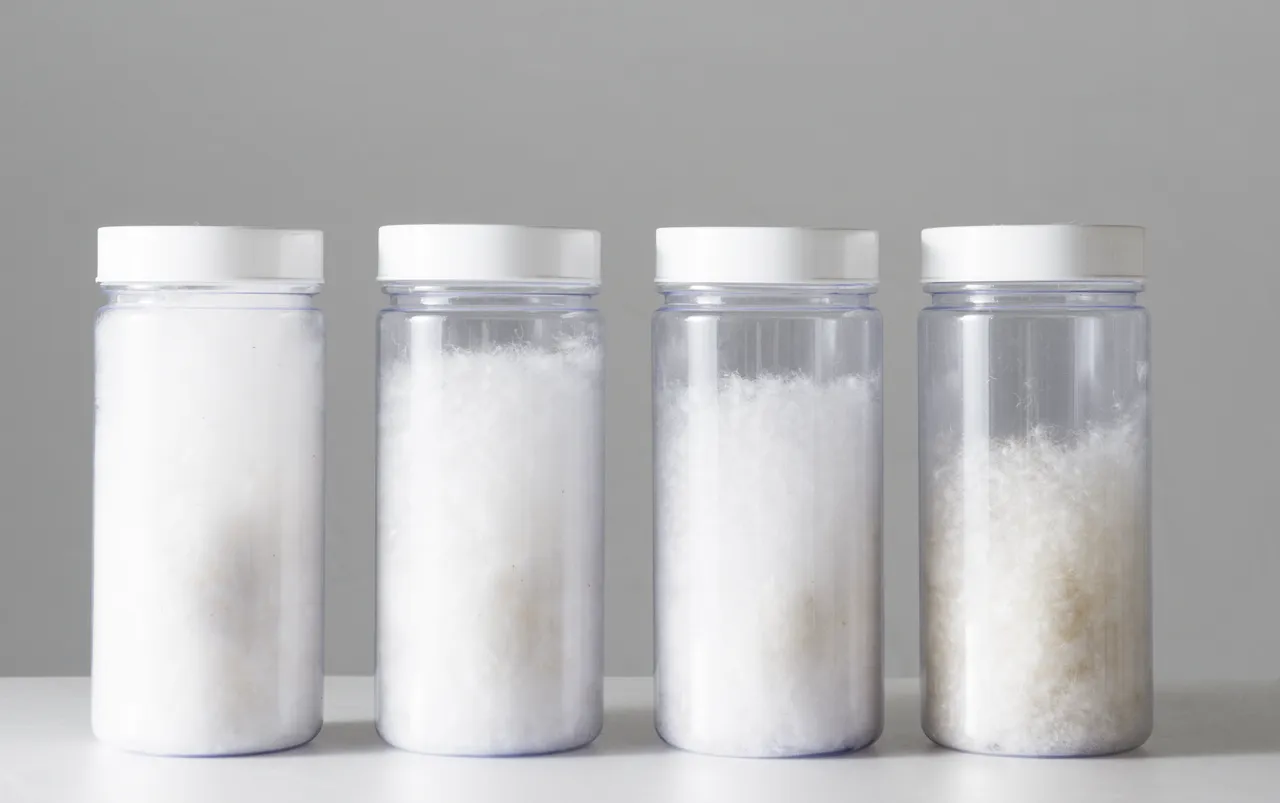
"Synthetic down" has no single legal definition; it is a product category that manufacturers often sell under names like "down-like" or "feather-like." The fill is made of fine polyester fibers formed into clusters so they trap air in a way that approaches natural down. Depending on the fiber structure, you'll see different names and textures — "microfiber fill," "down-like fill" and so on — so even products labeled "synthetic down" vary from one to the next in loft and feel.
How it differs from a natural down comforter
Natural down is the breast plumage of waterfowl. Each cluster has a core with fine filaments radiating outward in three dimensions, so it traps a great deal of air for very little weight. That structural difference is what drives the gaps in lightness, warmth and moisture handling.
| Category | Synthetic down comforter | Natural down comforter |
|---|---|---|
| Lightness | Tends to be heavier for the same level of warmth | Lightweight, with little pressure on the body |
| Moisture absorption and release | Tends to trap humidity | Readily absorbs and releases perspiration and humidity |
| Ease of washing | Many products can be machine-washed whole at home | Most products cannot be washed at home |
| Typical lifespan | Fiberfill flattens more easily; replacement may be needed within a few years | Often lasts 10 years or more with proper care |
| Price range | Relatively affordable | Varies widely by material and origin |
For more on moisture absorption and release, see Comforter Fill Materials Compared: Down, Cotton, Synthetic and Wool — and How to Choose, where we break down the tendencies of each material.
Who synthetic down comforters suit best
- People who worry about allergies and want to machine-wash their comforter at home frequently
- People looking for an affordable guest or second comforter
- People using it in places like a child's room, where spills need washing right away
That said, when it comes to the comforter you use every night, many people report greater satisfaction with a natural down comforter for its light weight, warmth and long-term value. For details on how down grades differ, see Down Comforter Grades and Ranks: What's the Difference?
Know the differences between fill materials
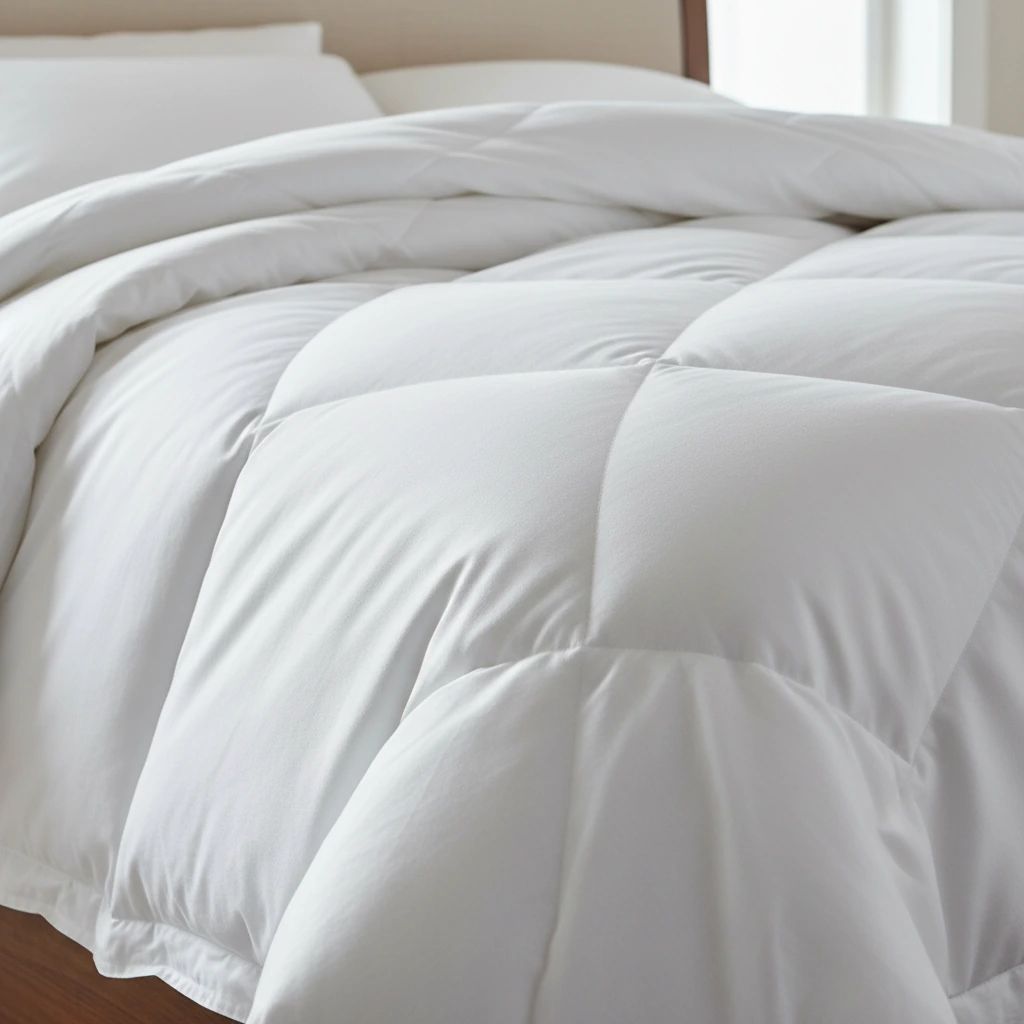
Not all "synthetic down" is the same — loft and resilience vary with how the fill is engineered. Standard polyester fill tends to flatten as the fibers break down with repeated washing, and the loft becomes harder to recover. When shopping, look beyond the phrase "down-like" and check whether the specific fill material and processing method are clearly stated; that makes quality much easier to judge.
What to watch for when you see the label "synthetic down"
For down products, industry bodies set standards for down cluster ratio and fill power. Selling a product that contains no natural down as a "down comforter" can be misleading, so we recommend checking that the packaging or product description clearly states the materials — for example, "Fill: polyester." If the labeling leaves you unsure, the surest step is to ask the retailer directly about the fill material and its exact blend ratio.
Another option if you're working to a budget
If your thinking is "as light as possible, with the feel of natural down, but easier on the wallet," a recycled down comforter made with reclaimed down is another option worth considering. See What Is Recycled Down? How It Differs from New Down and How to Choose for details, and Down Comforter Price Guide for typical price ranges — both useful when weighing it up against a synthetic down comforter.
Summary
Synthetic down comforters appeal through easy washing and an affordable price. Compared with natural down comforters, they differ in weight, moisture handling and lifespan — but the best choice depends on how you'll use it and what matters most to you. Understand the strengths of each, then choose the comforter that fits the way you live.
Frequently asked questions
What is the difference between a synthetic down comforter and a natural down comforter?
A synthetic down comforter uses man-made fibers such as polyester as the fill and contains no natural down. A natural down comforter uses the breast down of waterfowl and excels in light weight and moisture absorption and release, while a synthetic down comforter stands out for easy washing and an affordable price.
If I have allergies, is a synthetic down comforter a safe choice?
If you're concerned about an animal-based down allergy, a synthetic down comforter with no natural down is one option. Keep in mind, though, that allergies to dust mites and dust can occur regardless of the material, so regular washing and care are still necessary.
Can a synthetic down comforter go in the washing machine?
It depends on the product, but many synthetic down comforters on the market can be fully machine-washed at home. Always check the care label, and confirm in advance whether sun-drying or tumble drying is allowed.
How long does a synthetic down comforter last?
It depends on the fill material and how often you use it, but polyester fill flattens relatively easily, so the replacement cycle tends to be shorter than for a natural down comforter. When the loft no longer bounces back, it's time for a new one.
Is there any problem with the label "synthetic down"?
Casually labeling a product with no natural down as a "down comforter" can be misleading. Before you buy, check that the fill material and blend ratio are clearly and correctly stated on the packaging or in the product description.