The answer in 30 seconds
- Down is light because it holds so much airSpherical down clusters trap air in the spaces between them, creating an insulating layer with very little weight
- Warmth comes from air layers, not weightInsulation depends far more on the volume of air the down traps than on how much the fill weighs
- Fill power and down cluster ratio are the keysThe higher these numbers, the easier it is to stay warm at a light weight — and the better the quality
- Too light can mean not warm enoughAn extremely light comforter may be short on fill, so make sure it matches the season you'll use it in
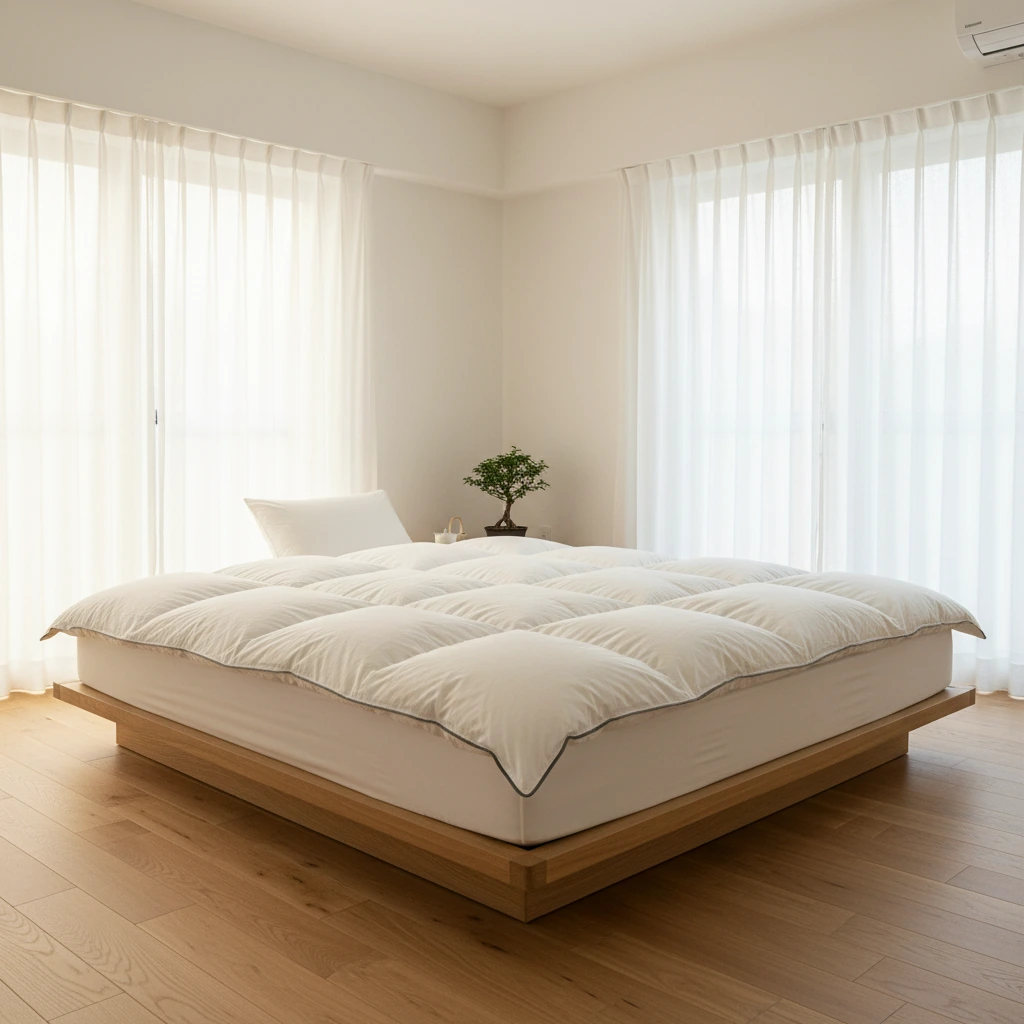
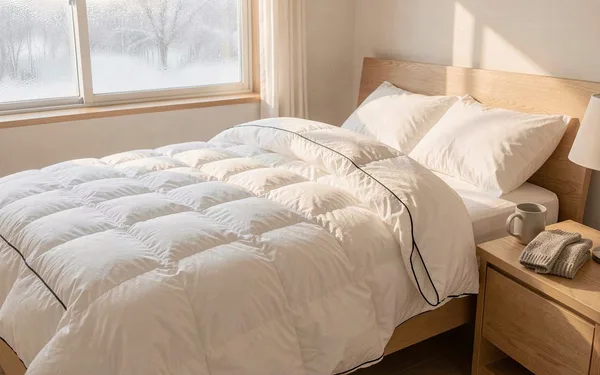
A down comforter is light because down — the filling inside — holds far more air per gram than cotton or synthetic fibers. Down is the chest plumage of waterfowl, and each cluster opens into a tiny ball that traps plenty of air in the spaces between its fibers. These air layers keep heat from escaping, so even a modest fill weight stays warm while putting very little weight on your body.
The reason down comforters are light lies in the structure of down
The fill in a down comforter falls into two broad categories: down and feather. Down clusters are spherical and have no quill, so they hold air exceptionally well and need far less weight than feather to deliver the same warmth. The better the down, the more air each gram holds (greater loft), so a smaller fill weight still lofts beautifully — and the comforter as a whole comes out lighter.

Why is it so warm despite being light? Air layers are the key
A comforter's warmth isn't determined by the weight of the fill itself, but by how many layers of air that fill can create. Air conducts heat poorly, so the countless tiny air pockets formed by down act as insulation, keeping your body heat from escaping. In other words, a down comforter warms you with layers of air, not with weight — and that's how it manages to be light and warm at the same time. For more on the relationship between fill weight and warmth, see Down comforter weight and fill weight guidelines.

What to look for when choosing a lightweight down comforter
When you shop for a "lightweight down comforter," judging by the stated weight alone can leave you with too little warmth on cold winter nights. Check these points together and you're far less likely to be disappointed.
- Is the fill power (loft value) high? The higher the number, the more warmth you get from less fill.
- Is the down cluster ratio high? A higher ratio means fewer feathers mixed in, so the comforter tends to loft up well even when it's lightweight.
- The weight of the shell fabric. If the fabric itself is heavy, the comforter won't feel light even when the fill is light.
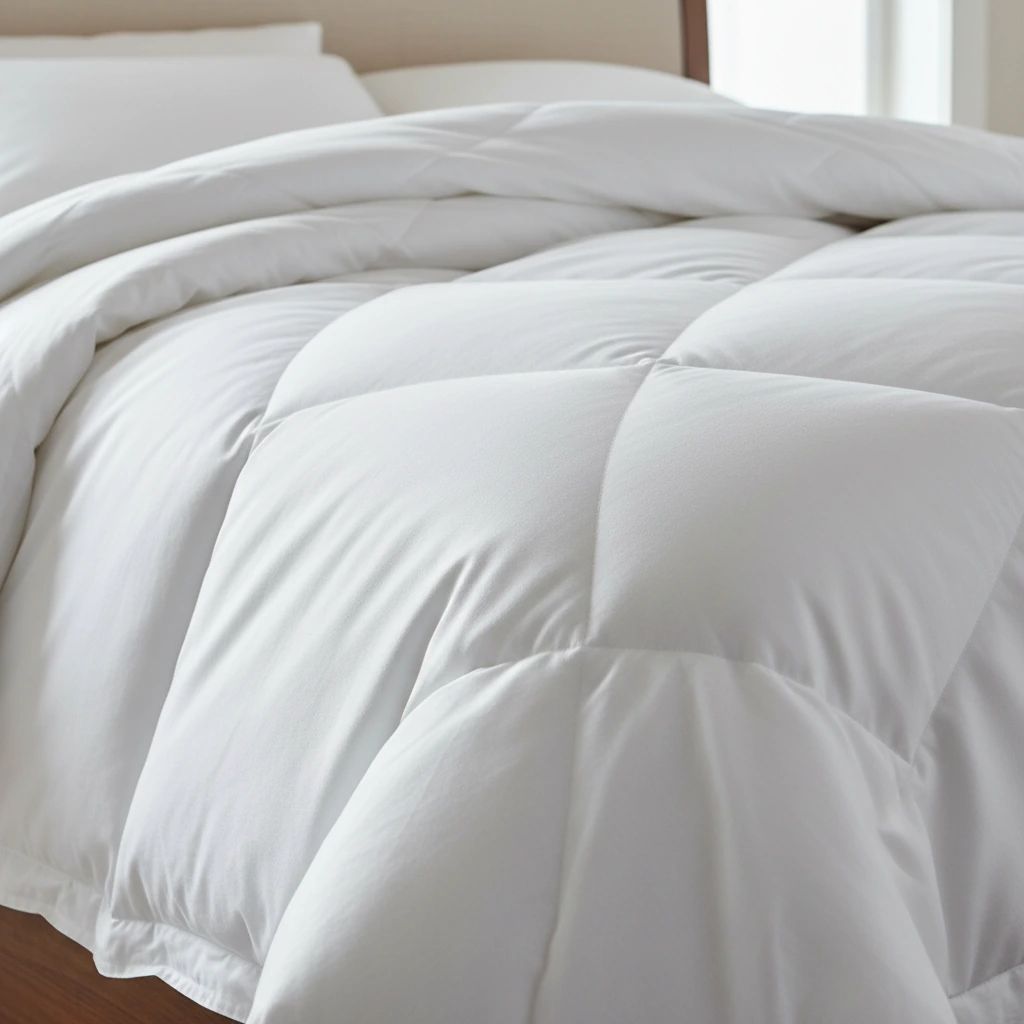
- Quilt construction. Two-layer and baffle-box quilting keep the down from shifting while helping the comforter stay light.
For what the down cluster ratio means and how to read it, see What is down cluster ratio? A key quality indicator for down comforters, and for how the quality grades differ, see Down comforter grades and quality levels explained — both are worth a look.
Who a lightweight down comforter suits best
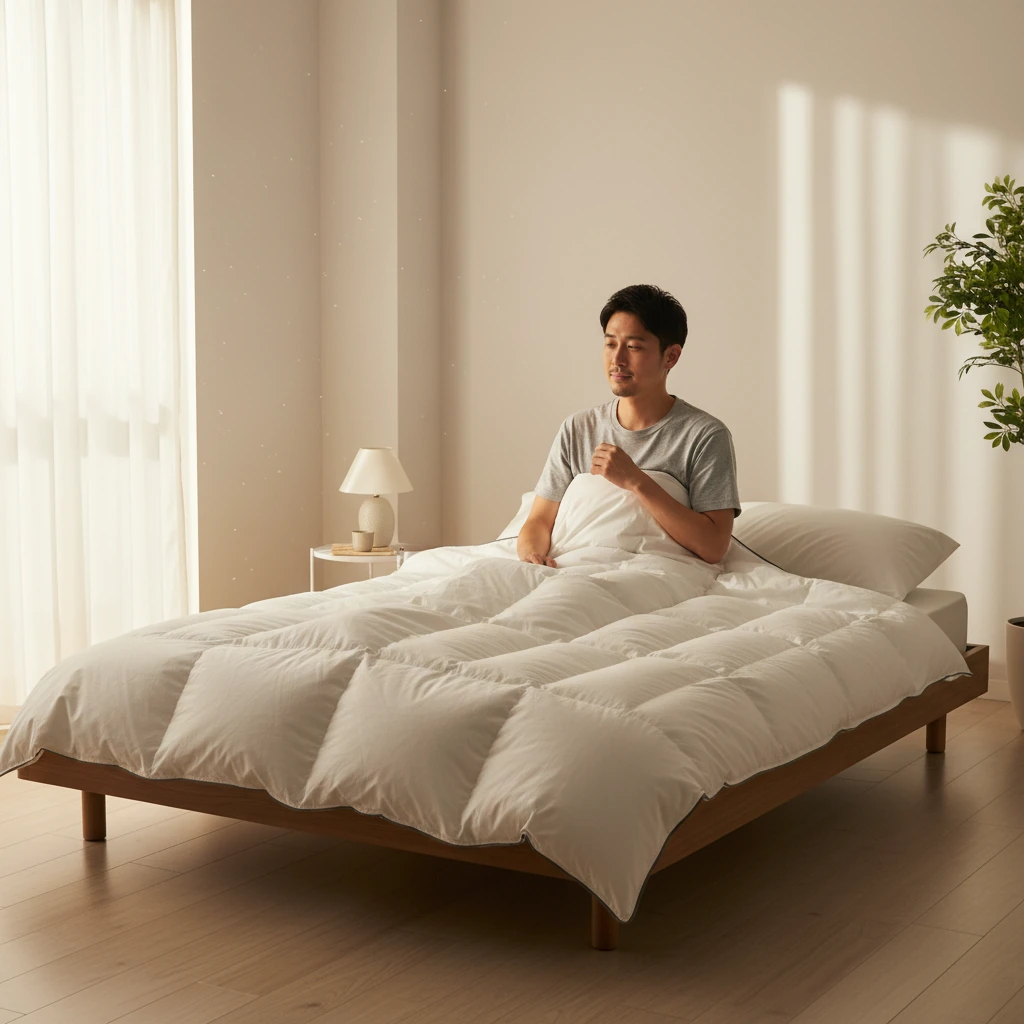
If you dislike the feeling of weight pressing on your body, want to turn over easily in your sleep, or are older and want to avoid strain on your back and shoulders, a lightweight down comforter is well worth considering. Comforters made with high-quality white goose down deliver plenty of warmth even with a modest fill weight, making them ideal if you want the right balance of light weight and warmth.
Our Premium Warmth: White Goose Sleep Down Winter-Weight Comforter uses the air-trapping power of high-grade down to combine light weight with real warmth in a single comforter. If you tend to feel the cold, see Choosing a down comforter when you're always cold as well.
Why light weight alone shouldn't be your only measure
That said, a down comforter with an extremely low fill weight chosen purely for lightness can leave you cold in winter. Conversely, if a down comforter feels heavy, it's usually because the feather content is high, the shell fabric is thick, or the down has absorbed moisture and lost its loft — so both lightness and heaviness are clues to quality. We cover the causes in detail in Why does my down comforter feel heavy?, so be sure to take a look.
Whether to prioritize light weight or warmth depends on the season you'll use it, how warm you feel at night, and how much weight your body can comfortably take. Picking one up to feel the weight for yourself — while also checking the quality numbers like fill power and down cluster ratio — is the surest way to choose a comforter you won't regret.
Frequently asked questions
Why are down comforters lighter than other types of bedding?
Because down clusters expand into tiny spheres that trap a large volume of air for very little weight. Those air pockets act as insulation, so you get real warmth at a very light weight.
What should I look at when choosing a lightweight down comforter?
Check the fill power (loft) and the down cluster ratio. The higher these numbers, the more warmth you get from less fill — making it easier to find a lightweight comforter that's genuinely high quality.
What should I do if my down comforter is so light that I feel cold?
The fill weight or fill power may simply be insufficient. Try adding a blanket, or consider switching to a winter-weight comforter.
Do lightweight down comforters lose their shape easily?
With a construction that keeps the down from shifting — such as two-layer or baffle-box quilting — a lightweight comforter tends to hold its shape well. Checking the construction before you buy gives you peace of mind.