What you'll learn in this article
- What a comforter is: its role and the basics of using one
- How down comforters and comforters relate — and how they differ
- Types of comforters and what each fill material is like
- How to choose the right comforter for you
Wondering "What's the difference between a comforter and a down comforter?" or "Which comforter should I buy?" Our bedding specialists explain the basics in plain language.
1. What is a comforter?
A comforter is the bedding you lay over your body when you sleep. It does three main jobs: (1) keeping you warm, (2) absorbing and releasing moisture, and (3) protecting your body.
Definition: A comforter is the general term for any futon you lay over your body when you sleep. It covers everything used that way, regardless of material, thickness, or season.
| Role | Details |
|---|---|
| Warmth | Holds in the heat your body gives off so your temperature stays steady |
| Moisture absorption & release | Absorbs the perspiration you give off while sleeping and releases it outside the comforter |
| Body protection | Shields you from changes in room temperature so you don't get chilled overnight |
2. Comforter vs. down comforter
In short: a down comforter is one kind of comforter. "Comforter" is a classification by use (something you lay over you), while "down comforter" is a classification by material (one filled with down). In other words, down comforters are one category within comforters.
| Category | Comforter (general term) | Down comforter (a type of comforter) |
|---|---|---|
| Definition | Any bedding laid over your body | A comforter filled with down |
| Material | Down, feather, cotton, synthetic fiber, wool and more | Down (50% or more) + feather |
| Warmth | Depends on the material | ◎ Top class |
| Moisture absorption & release | Depends on the material | ◎ Top class |
| Relationship | Comforters ⊃ down comforters (down comforters are the top-quality category within comforters) | |
3. Types of comforters at a glance
| Type | Material | Characteristics | Best season |
|---|---|---|---|
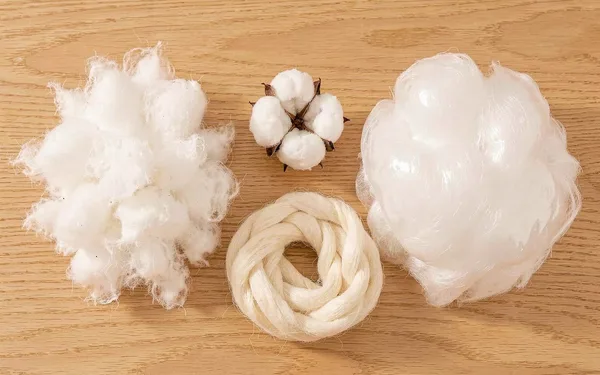
| Down comforter (duvet) | Down | Lightest of all, maximum warmth, excellent moisture absorption and release | Year-round (adjust by fill weight) |
| Feather comforter | Feather | Heavier than down. Great value for money | Fall through spring |
| Cotton futon | Cotton | Natural material, heavy, easy to care for | Year-round |
| Synthetic-fill comforter | Polyester | Easy to wash, inexpensive, can sleep warm and clammy | Summer; budget-friendly choice |
| Wool comforter | Wool | Regulates temperature naturally. Resists static cling | Fall through spring |
4. How to choose your comforter size
| Size | Dimensions (width × length) | Matching bed size | Number of sleepers |
|---|---|---|---|
| Single | 150×210cm | Single bed (width 97 cm or less) | 1 adult |
| Semi-double | 170×210cm | Semi-double bed (width 120 cm) | One adult (with room to spare) |
| Double | 190×210cm | Double bed (width 140 cm) | 2 adults |
| Queen | 210×210cm | Queen bed (160 cm wide) | Two adults (with room to spare) |
| King | 230×210cm | King bed (180 cm or wider) | Two adults, plus extra coverage |
As a rule, choose a comforter with the same size name as your bed. Even at the same size name, the comforter is about 50 cm wider, so it drapes over both sides and blocks drafts. If two people share the bed, or if you have a larger build, going one size up — a Queen comforter on a Double bed, for example — keeps cold air from sneaking in at the sides.
5. Frequently asked questions
Q. What is a kakebuton called in English?
A. A kakebuton is called a “comforter” in American English, or a “duvet” (when it's down-filled) in British and European English. Hotel bedding descriptions most often use the word “duvet.”
Q. Should I buy a down comforter or a regular comforter?
A. Choose a down comforter and you're getting the highest-quality comforter there is. Pick your grade of down cluster ratio and fill power to suit your budget and you won't go wrong. If you want one that lasts for years, aim for a down cluster ratio of 90% or higher and a fill power of 350 dp or higher.
6. Summary
- “Kakebuton” is the general term for any quilt you lay over your body
- Down comforters are the highest-quality category of comforter
- Five fill materials: down, feather, cotton, synthetic fiber and wool
- As a rule, match the size name to your bed (go one size up for two sleepers or a larger build)
▶ Browse comforters and down comforters at Omotesando Futonten
7. “Futon” vs. “kakebuton”: what's the difference?
“Futon” is an umbrella term covering comforters, mattresses (shikibuton), bed pads, blankets and more. “Kakebuton,” on the other hand, refers only to the piece you lay over your body. In other words, the kakebuton is one part of the broader futon family.
- Futon: a word covering bedding as a whole — futon mattresses, comforters, blankets, mattress pads, and more
- Comforter: a word for only those futons used over the body
8. Comforter vs. duvet: what's the difference?
In English-speaking countries, two words are used for bedding close to the Japanese kakebuton: “comforter” and “duvet.” Both correspond to a kakebuton, but they're used differently.
- Comforter: the fill and the shell fabric are stitched together into one finished piece. It is usually used as-is, without a separate cover.
- Duvet: the filled insert and the changeable cover (duvet cover) are separate — much the way a Japanese down comforter is used.
Because Japanese comforters and down comforters are used with a cover, they're closer in style to a duvet.
9. How to choose a comforter (beyond size)
When choosing a comforter, check these points as well as size and you're far less likely to regret your pick.
- Choose by season and when you'll use it: synthetic or lightweight options for summer; down or feather and other high-insulation options for winter.
- Choose by material: down for lightness and warmth, synthetic to keep costs down, and synthetic or wool if easy care matters most.
- Choose by weight and feel: if you dislike the sensation of a comforter pressing down on you, a lightweight down comforter or a thin synthetic one is a good fit.
- Choose by how you want to care for it: if you want to wash it at home, a synthetic-fill comforter is the way to go; if you're happy to have it professionally cleaned, down, feather and wool comforters are all good options.
For the full lineup and details on each material, please see the product pages.
Choosing the right comforter for each season
Comforters are classified not only by material but also by loft (fill weight). With down comforters, the very same down and the very same construction come in three versions, depending on how much down goes inside.
| Type | Fill weight (Single) | When to use it | Suitable room temperature |
|---|---|---|---|
| Summer-weight (light) comforter (down blanket) | 0.3〜0.4kg | June to September | Approx. 23°C and above |
| All-season (medium-weight) comforter | Around 0.8 kg | April to June / September to November | Approx. 15–23°C |
| Winter-weight comforter (for winter) | 1.2〜1.3kg | November to March | Around 15°C or below |
When you set out to buy a comforter, narrowing down which season you need it for makes the choice much easier. For your first one, we recommend a winter-weight comforter, since it can be used over a longer stretch of the year. Getting through midwinter with an all-season (medium-weight) comforter is tough, whereas if a winter-weight feels too warm in early fall, you can simply fold it back to adjust.
We cover each of these in detail in the following articles.
- What Is a Winter-Weight Comforter? How It Differs from All-Season and Summer-Weight Comforters, and When to Use It — Explained by a Specialist Store
- How to Choose an All-Season (Medium-Weight) Comforter|The Best Down Comforters for Spring and Fall, Explained by a Specialist Store
- What Is a Lightweight or Summer-Weight Down Comforter? How to Choose for Summer and How It Differs from an All-Season Comforter — Explained by a Specialist Store
How many to own
Taking budget and storage space into account, these are the realistic combinations.
- Two comforters (summer-weight + winter-weight): the minimum setup. In early fall, pair the summer-weight comforter with a cotton blanket or wool blanket to fine-tune warmth
- Two layers (summer-weight + all-season): for homes that regularly use heating, or milder climates
- Three layers (summer-weight + all-season + winter-weight): the ideal setup — the perfect loft for every season
Choosing everything from the same series keeps the feel consistent as the seasons change. When the down quality and shell fabric are the same, the only thing that changes is the loft.
When to replace your comforter
A comforter's lifespan varies widely depending on the material.
| Material | Typical lifespan | Signs it's time to replace |
|---|---|---|
| Down | 10–15 years | Won't loft up after airing, feathers poking through, feels heavy |
| Wool | 5–7 years | Becomes stiff, loses loft, and odors won't come out |
| Cotton | 3–5 years | Becomes stiff and heavy; refurbishing (re-fluffing) can extend its life |
| Synthetic (polyester) | 3–5 years | Goes flat, loft doesn't come back |
Down lasts far longer than anything else because washing restores its performance. The main reason down deteriorates is soil buildup, so once it is washed, the loft comes back.
Down can be renewed through refurbishing
If your down comforter has lost its loft, down comforter refurbishing (re-making) is an option worth considering before you replace it. The down is taken out, washed, topped up where it has thinned, and rebuilt into a brand-new shell fabric.
If the down was good quality to begin with, this costs less than buying new. Omotesando Futonten's down comforter refurbishing / Clean Cycle Reform starts at ¥45,800 for Single.
For guidance on which way to go, see How Long Does a Down Comforter Last? A Specialist Explains When to Replace and When to Refurbish.
How to get the most out of your comforter
Even the best comforter may deliver only half its performance depending on how you use it. With down comforters in particular, these points make a real difference.
Put blankets on top of the comforter
Down lofts up in response to your body heat and moisture. Sandwiching a blanket in between blocks that warmth, so the down never fully expands. Always lay the blanket over the down comforter. For details, see The Right Order for a Down Comforter and Blanket: A Pro's Answer.
Fasten every tie on the duvet cover
If you don't, the comforter shifts inside the cover, leaving thin spots that let the cold in. Fasten all of them — the four corners and the ties in between.
Fold the comforter back in the morning
Making the bed the moment you get up traps a whole night's worth of moisture inside. Simply folding the comforter back for 10–15 minutes lets that moisture escape.
Take another look at what's under you
Body heat escapes downward more than anywhere else. If you still feel cold even with a thicker comforter, the culprit is often the mattress or futon beneath you. Adding a single moisture-absorbing pad can change how warm you feel.