The answer in 30 seconds
- Judge by build and sleeping independence, not ageUse a baby-specific comforter during infancy, and consider moving to a children's down comforter from around age 3, once your child sleeps on their own reliably.
- Aim for height + 30–40 cmToo large and turning over becomes difficult; too small and feet get cold — so match the size to your child's build.
- Light weight, just the right warmth and easy care are keyChildren move a lot in their sleep and sweat easily, so focusing on these three points keeps the strain to a minimum.
- Choose with a few years' use in mindChildren grow quickly, so rather than a lifetime purchase, it's realistic to review bedding at milestones such as starting a new school.
Many families start considering a children's down comforter around ages 3 to 4, once a child turns over steadily in their sleep and can handle the bedding themselves — but there's no fixed age limit. What matters more than age is your child's build and whether they can pull the comforter back over themselves. This article covers age guidelines, how to choose the right size, and the points that matter most for children.
Age guidelines for starting a down comforter with children
During infancy, light comforters or baby-specific futons are the standard because of suffocation risk. We cover the precautions for babies in detail in a separate article (From what age can babies use a down comforter? Suffocation risks and safe use explained), so please read that too if your child is still an infant or toddler.
The "children's down comforter" discussed here is intended for roughly age 3, when children start sleeping on their own, through the early elementary school years. At this stage a child's body is still too small for adult sizes, and active sleepers push the bedding out of place easily — so you need to consider both size and light weight.
Readiness checkpoints
- Has moved on from the crib and sleeps in a junior bed or on a futon
- Can control their own turning over in bed
- Can straighten the comforter themselves if it slips, or a parent will notice right away
Once these boxes are ticked, it's a good time to move on from a lightweight baby comforter (baby comforter with duvet cover) to a down comforter sized to your child's build.
Choosing the right size of children's down comforter
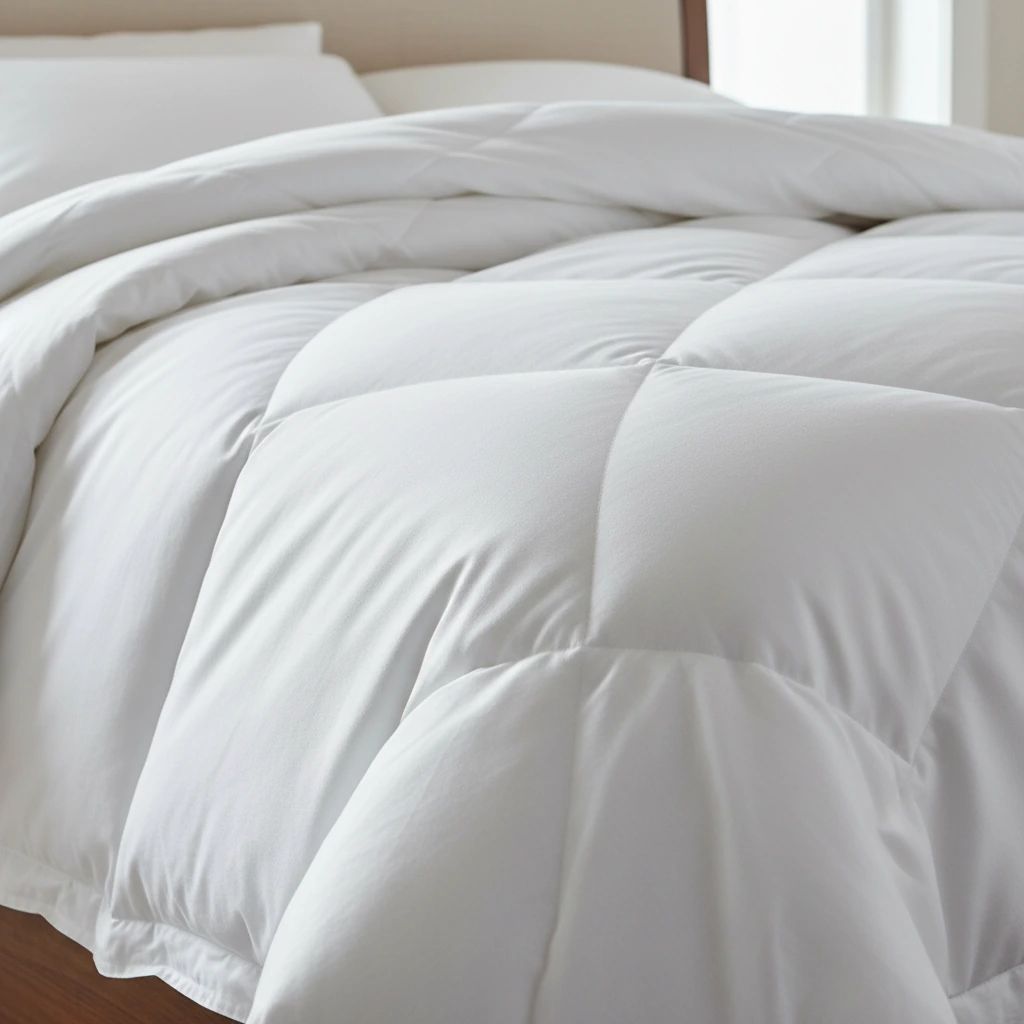
Down comforter sizes most commonly start at Single (around 150×210 cm / approx. 59×83 in), but that can be a little large for a small child's build. If the comforter is too big, its weight can make turning over harder, and the edges may trail on the floor and pick up dirt. If it's too small, feet end up uncovered and the comforter can't keep your child properly warm.
As a rule of thumb, your child's height plus 30–40cm strikes a good balance: room to grow without feeling cramped. For standard bedding dimensions overall, see our futon size chart | Single, Semi-double and Double dimensions.
Allow room to grow, or go for an exact fit?
The basic approach: if you want the same comforter to last for years, choose a slightly roomier Single; if you want it to fit their current build, choose a smaller, junior-size comforter. Each has its trade-offs, so weigh your bedroom setup too — bed or futon, and whether you co-sleep.
Three points that matter most for children
1. Light weight
Children are sensitive to the weight of their bedding, and a heavy comforter can make sleep uncomfortable and turning over difficult. A down comforter is already light compared with a cotton-filled futon, but choosing a winter-weight comforter with a more modest fill weight and down cluster ratio puts even less strain on a child's body.
2. Just the right warmth
Children have a fast metabolism and tend to run warmer than adults, so a comforter with the same insulating power an adult uses can leave them too hot. It helps to switch between winter-weight, all-season (medium-weight) and summer-weight (light) comforters as the seasons change.
3. Easy care
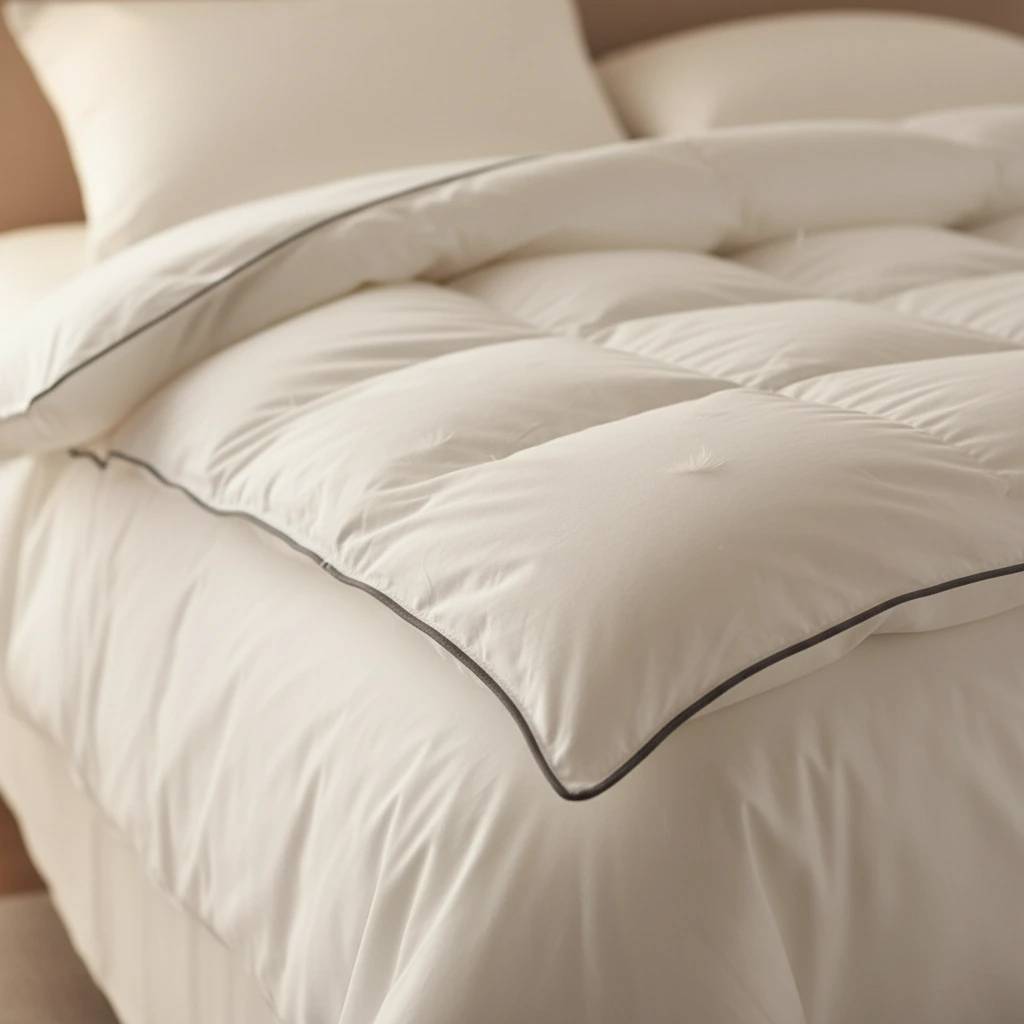
Children sweat in their sleep, spill drinks and have the occasional accident. Pairing the comforter with a washable cover, or choosing one on the assumption that it will be professionally cleaned from time to time, makes day-to-day care far easier. If you want easy care and a lighter environmental footprint, an option such as the Sustainable warmth: Clean Cycle Sleep Down Winter-Weight Comforter, made with recycled down, is also worth considering.
How to think about replacing bedding as children grow — and for siblings
Children grow fast, so there's no need to treat a down comforter as a lifetime purchase. It's more realistic to assume they'll outgrow it within a few years, choose a comforter in a sensible price range, and move up to an adult size as they grow or start a new school. If you have a younger child, whether the comforter can be handed down is another useful factor when deciding on size.
If you'd like to put together a complete set of baby bedding for the infant years, we also offer the Baby Bedding Starter Set — a helpful reference when you're planning bedding for a younger child.
Summary
When choosing a children's down comforter, build and sleeping independence matter more than age itself. Allow a little extra length beyond your child's height, and focus on three things — light weight, just the right warmth and easy care — and you'll find a comforter that puts minimal strain on your child. Plan on reviewing the size every few years as they grow, and keep your budget comfortable.
Frequently asked questions
From what age can a child use a down comforter?
There's no strict age limit, but around age 3 — once a child sleeps on their own reliably and can control turning over — is a useful guide. During infancy, suffocation risk needs to be considered, so a lightweight comforter made specifically for babies is the standard choice.
Should I choose a Single size or a junior size?
If you want it to last, go with a Single; if you want a close fit for your child's current build, a smaller comforter closer to junior size is a better match. It's also worth considering the layout of your bedroom at home.
Can a children's down comforter be washed?
Some comforters are difficult to fully wash at home, so the easiest approach is to use a washable cover and have the comforter itself professionally cleaned on a regular basis.
Can siblings share the same comforter?
Yes — if the size and condition suit, it can be handed down. If you're concerned about soiling or wear, consider professional cleaning or refurbishing (re-making).