The answer in 30 seconds
- For back sleeping, a height that preserves the S-curve of the neckNot too high, not too low: the basic guide is a height that lets your neck keep its natural curve.
- For side sleeping, add a little height for shoulder widthIf you spend a lot of the night on your side, a pillow slightly taller than your back-sleeping height tends to suit you better.
- You can do a quick check with towelsStack bath towels and see how your head and neck settle on your back and on your side to get a sense of the right height.
- Consider it together with mattress firmnessA soft mattress lets your body sink in, which changes how the pillow height feels.
A pillow that doesn't fit can leave you with a stiff neck and shoulders in the morning, and can make snoring worse. The short answer: the ideal height is one that lets your cervical spine keep its gentle S-curve when you're lying on your back — but if you sleep mostly on your side, you need to add height to account for your shoulder width. On top of that, mattress firmness and even the thickness of your pillowcase change how high the pillow actually feels, so the trick is to think about your bedding as a whole rather than the pillow on its own.
The "ideal height" differs for back and side sleeping
When you sleep on your back, the benchmark is a height that lets the bones of your neck (the cervical spine) keep their natural curve. Too high and your chin tucks in, which can narrow the airway; too low and your head tips back, putting strain on the neck. If you spend most of the night on your side, on the other hand, you need a height that keeps your spine in a straight line — and that is generally higher than for back sleeping, by roughly the width of your shoulders. Work out which position you spend the most time in first, and the right height range becomes much clearer.
A simple at-home fitting, step by step
The cm figures in an online size chart alone make it hard to tell whether a pillow will really suit you. To get a rough idea before you buy, a quick check using bath towels or books is surprisingly useful.
- Lie on your back with your head toward the wall and adjust the number of stacked towels until the back of your head, neck and back rest against the floor without strain
- Roll onto your side and, in the same way, find the height at which your neck stays straight in line with your spine
- Take a figure between the two heights — or slightly higher — as your cm guideline when shopping for a ready-made pillow
This is only a rough guide, but it will steer you wrong far less often than judging by the cm figures in a catalog alone.
The easily overlooked "+1–2 cm" factors
How a pillow feels can change with the season, your hairstyle, and even the thickness of your pillowcase. The back of your head settles differently when your hair is tied up in winter than when you have short hair in summer. Simply switching to a pillowcase made from thicker fabric can alter the effective height by anywhere from a few millimeters to about 1cm. If you want to dial in the height precisely, factor in the thickness of the pillowcase you use — it will reduce the margin of error in the final result.
Consider pillow height together with the firmness of your mattress or futon
It's easy to overlook, but the right pillow height is determined together with the firmness of your mattress or futon. A soft mattress lets your body sink in, lowering your shoulders and back, so the same pillow can feel relatively high. Conversely, on a firmer futon your body doesn't sink, so you may need a slightly taller pillow. Before you reassess the pillow on its own, take a moment to check how much your current bedding as a whole lets you sink in.
Think dynamically: how easily can you turn over?
It's tempting to judge height while lying still on your back, but in real sleep you turn over many times a night. An equally important question is whether the height lets your shoulder settle smoothly and keeps your head from tilting sharply as you roll. If the pillow is too narrow, or the fill has shifted and flattened, your head can slide off every time you turn over — putting the same strain on your neck as a pillow that's the wrong height.
Consider a pillow with adjustable height
If you're not confident about the right height for you, a practical option is a pillow with an adjustable fill that you can add to or remove. Buckwheat hulls and plastic pipe beads are relatively easy to adjust, while down and memory foam produce height according to the nature of the material itself. We cover the characteristics of down pillows in more detail in Down Pillows: Pros and Cons, so do use it as a reference when choosing a material.
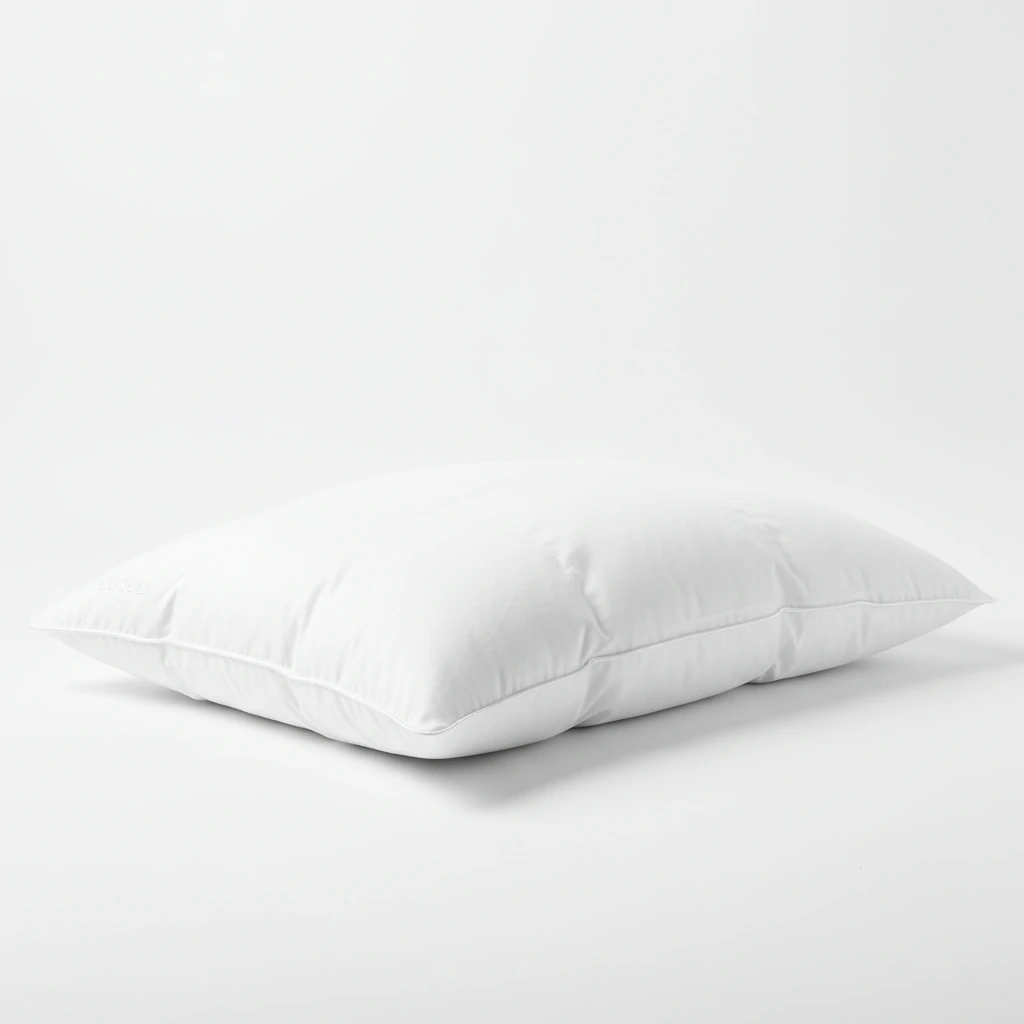
Our Clean Cycle Down Pillow uses recycled down in a design that pays close attention to the loft of the fill, striking a balance between the soft give only down can offer and genuine support. You can read more about the thinking behind the down pillows used in hotels in What Are Down Pillows and Hotel Pillows?
Checklist: what to do if the height isn't right after purchase
When buying a pillow online, it's worth checking in advance whether you can adjust the height or return it after purchase.
- Can the fill be added to or removed later?
- What are the conditions and deadlines for exchanges and returns?
- Can you fine-tune the height to some degree by changing the pillowcase?
Thinking through "what if it doesn't suit me when it arrives?" in advance makes a disappointing online pillow purchase far less likely.
Frequently asked questions
How many cm should a pillow be?
There's no single answer in cm — it varies widely with your build and sleeping position. We recommend doing a quick towel test on your back and on your side, and using the height at which your neck rests comfortably as your guide.
Should I choose my pillow height for back sleeping or side sleeping?
Base it on the position you spend the most time in. If you turn over often, choosing an in-between height that works reasonably well in both positions makes it easier to strike a balance.
What happens if a pillow is too low?
Your head tends to tip backward, which can strain the neck and shoulders. If snoring is a concern, it's worth reviewing whether your pillow height is right for you.
Do I need to change my pillow height if I have a soft mattress?
A soft mattress lets your body sink in, lowering your shoulders and back, so the pillow can feel slightly high. We recommend reassessing the height with your mattress firmness in mind.
Should I choose an adjustable pillow or a fixed-height one?
If you're not confident about the right height for you, an adjustable pillow that lets you add or remove fill tends to make a disappointing purchase less likely.