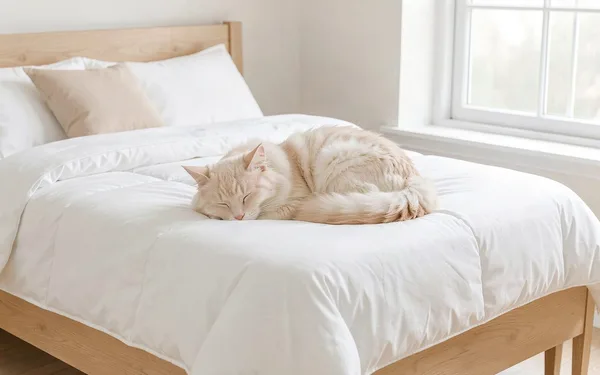
We often hear from customers that every time they roll over, their down comforter makes a crinkly, rustling sound that keeps their sleep shallow. The short answer: most of that noise doesn't come from the down itself, but from the material, weave and finishing of the shell fabric (the outer fabric). Thin, high-density fabrics blended with synthetic fibers, and fabrics with a heavy down-proof finish (a sealing treatment that keeps down from escaping), tend to produce friction noise. By contrast, 100% cotton sateen in a high yarn count is supple and far less prone to rustling.
The real source of the rustling: fabric friction
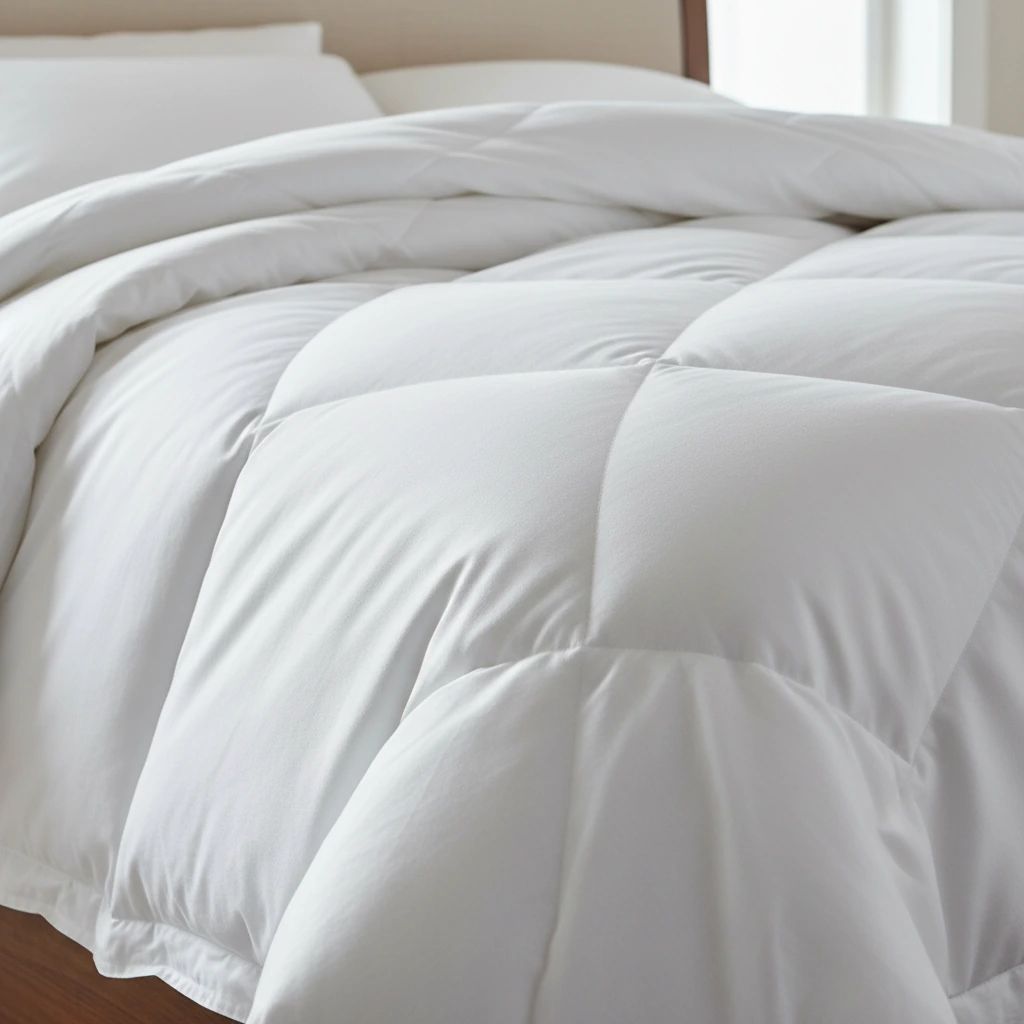
A down comforter is made by encasing the down in a bag-like shell fabric. As your body moves, the shell fabric rubs against itself, creating that distinctive friction noise. Loudness has almost nothing to do with the amount or quality of the down — it's determined almost entirely by three things: the shell fabric's fiber, weave density and surface finish.
Synthetic blends and high-density weaves are noisier
To keep down from escaping, the weave has to be very tight. When cotton alone can't deliver enough down-proofing, synthetic fibers such as polyester are often blended in and woven at high density. This approach keeps costs down, but the fibers are stiffer and crisper, so rubbing produces that dry, papery rustle.
100% cotton sateen in a high yarn count is quiet
Sateen woven from finely spun cotton in a high yarn count (the unit measuring yarn fineness) is more supple and softer against the skin than synthetic blends, and far less likely to make noise when it rubs. High-count cotton sateens such as 60s and 80s sateen offer more than luster and a beautiful hand — they also help create a quieter sleep environment. For more on shell fabric materials and weaves, see What Is a Down Comforter Shell Fabric? Choosing Materials, Yarn Counts and Weaves.
How down-proof finishing affects noise
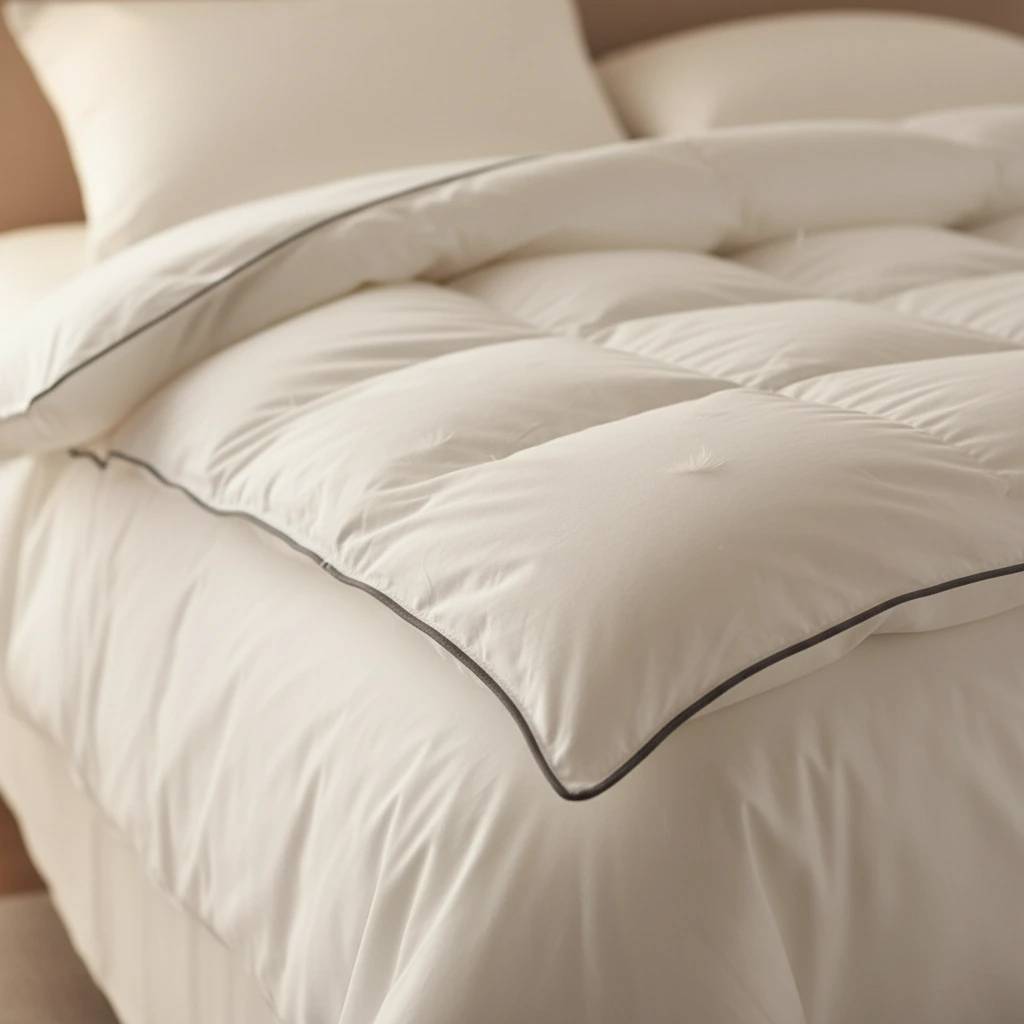
A "down-proof finish" prevents down from working its way out by filling the gaps between fibers with resin or a similar treatment. Fabrics with a heavy finish feel somewhat stiffer to the touch, and friction noise can become more noticeable. Quality labels and product descriptions rarely tell you how heavy the finish is, so whenever possible, the surest check is to feel the fabric yourself.
Quilting (stitch) density matters, too
It isn't only the shell fabric: the spacing of the quilting stitches that keep the down evenly distributed also affects how freely the fabric moves. When the stitching is too dense, the fabric has less give, and friction tends to concentrate in certain spots.
A duvet cover softens the sound
You can't change the shell fabric itself, but putting on a duvet cover can reduce the rustling noise considerably. The cover fabric shields the surface of the comforter, so the shell no longer rubs directly against itself. When choosing a cover, look for a supple 100% cotton fabric in a high yarn count — it's effective for both quietness and comfort.
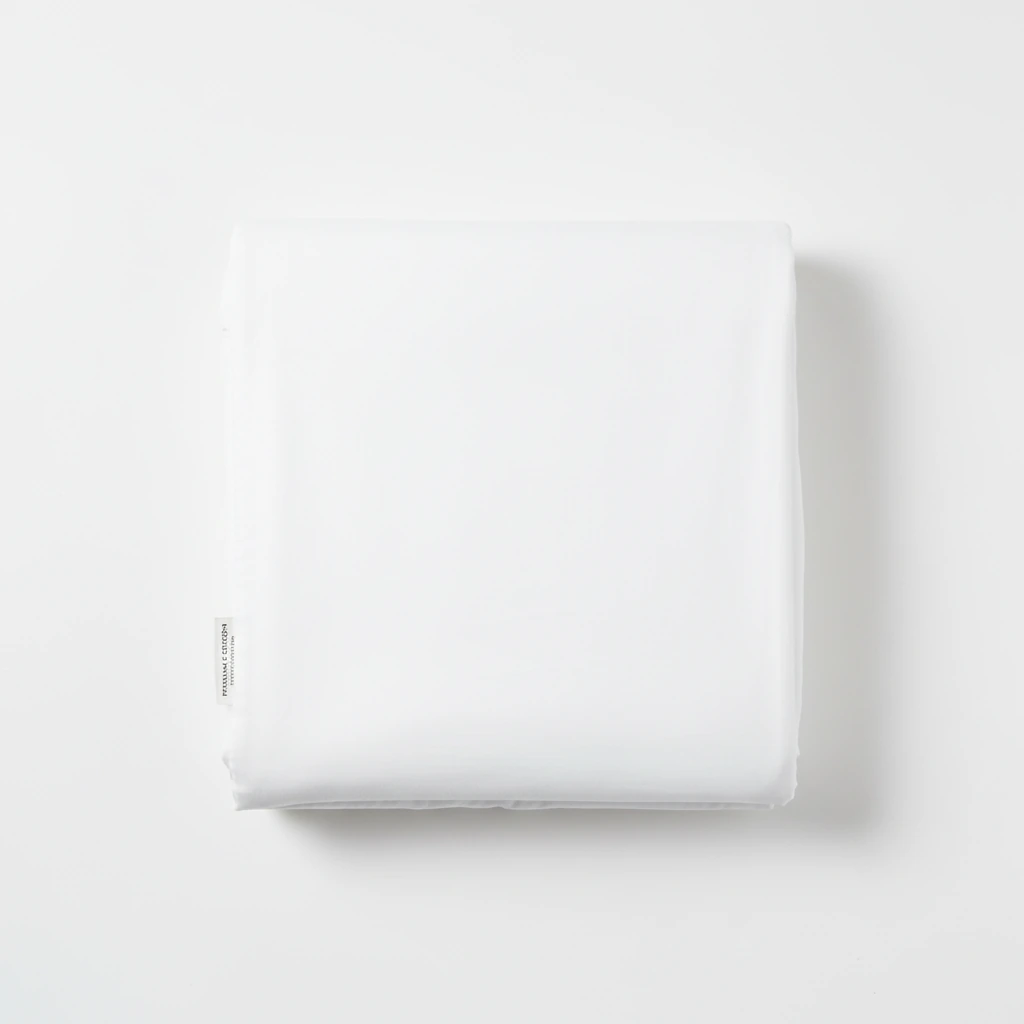
Our crisp white duvet covers are made from fabric that brings out cotton's natural suppleness, so adding one to your down comforter improves both the feel against your skin and the quietness. And if you're looking for a down comforter with a carefully chosen shell fabric, we also recommend models made with high-count sateen, such as the White Goose Sleep Down Winter-Weight Comforter.
Summary: If the noise bothers you, start with the fabric
In almost every case, the rustling sound of a down comforter comes not from the down inside but from the material, weave and finish of the shell fabric. If the noise bothers you with the comforter you already own, start by adding a duvet cover and see how it goes; if you're thinking about replacing it, look for a 100% cotton sateen shell in a high yarn count. For more on reading the details, see How to read a down comforter quality label.
Frequently asked questions
Is the rustling sound caused by the down?
Usually not. It's the friction noise of the shell fabric rubbing against itself. The volume has almost nothing to do with the amount or quality of the down; it is determined mainly by three things — the fiber content, the weave density and the surface finish of the shell fabric.
Which shell fabrics are the quietest?
High-count 100% cotton sateen is supple, so it rubs quietly. By contrast, densely woven fabrics with synthetic blends, or fabrics with a heavy downproof finish, tend to feel stiff and crisp, which makes the friction noise more noticeable.
How can I quiet down the comforter I already have?
Put a duvet cover on it. The cover shields the surface of the comforter so the shell doesn't rub directly against itself, which reduces the rustling noise considerably. Choosing a supple, high-count 100% cotton cover works best.