The answer in 30 seconds
- An international standard guaranteeing animal welfare in down sourcing. It excludes down from live plucking and force-feeding, and makes the down traceable from farm to finished product.
- Quality factors such as warmth are not covered. Check fill power, down cluster ratio and the degree of washing separately, as numbers.
- Every stage of the supply chain is audited by a third party. Certified and non-certified down must be kept separate and documented so the two never mix.
- Look for the certification by name on the label. Phrases like "animal-friendly" or "sustainable" have no clear standard behind them.
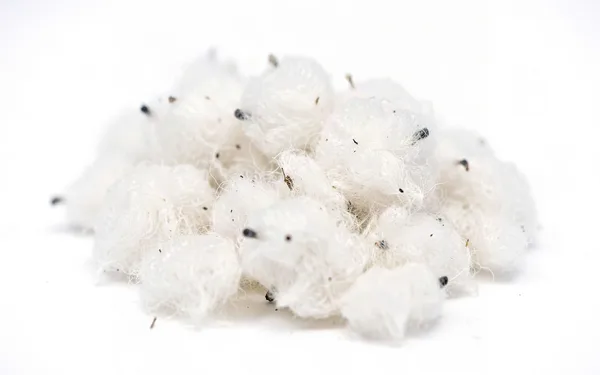
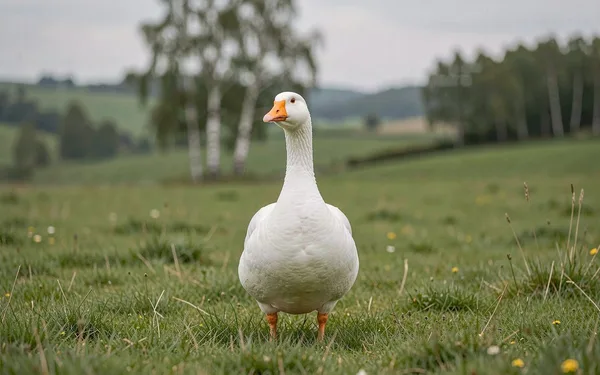
RDS (Responsible Down Standard) certification is an international certification program that guarantees animal welfare in the way down is collected. It excludes down obtained through “live-plucking” — tearing feathers from living waterfowl — and down that comes from force-feeding (foie gras production), and it ensures traceability from the farm all the way to the finished product.
In this article, we explain what RDS certification actually guarantees and why it matters in the bedding industry, from the perspective of a specialty store that works with down every day.
What you'll learn in this article
- What RDS certification prohibits, and what it guarantees
- Why live-plucking is a problem
- RDS certification and quality (does certification mean it's warm?)
- How RDS differs from other down certifications
- How to verify certification
What RDS certification means
RDS (Responsible Down Standard) is an international certification standard established in 2014. It is currently administered by the non-profit organization Textile Exchange.
Down is a natural material taken from waterfowl. That inevitably raises the question of how the birds were raised and how the down was collected. RDS certification sets standards for this process and backs them up with audits by independent third parties.
What RDS certification prohibits
| Prohibited practice | Details |
|---|---|
| Live-plucking | Tearing down and feathers from living waterfowl |
| Force-feeding | Force-feeding birds for foie gras production, and the use of down obtained as a by-product of it |
| Inadequate living conditions | Raising birds without meeting standards for access to water, feeding, hygiene, health care and more |
What RDS certification requires
- Traceability: the flow of down can be tracked from the farm to the finished product
- Third-party audits: every stage of the supply chain is audited by an independent organization
- Contamination prevention: systems that keep certified and non-certified down from mixing
- The Five Freedoms of animal welfare: freedom from hunger, discomfort, pain and fear, plus the freedom to express normal behavior
Why live-plucking is a problem
Live-plucking is a harvesting method in which down is pulled by hand from living waterfowl. Because waterfowl go through molting periods, plucking them repeatedly during those periods allows several harvests from a single bird. In terms of production efficiency, it is a rational method.
But having their down pulled out causes the birds severe pain, and can leave injuries such as torn skin. When the process is repeated, the birds are subjected to suffering throughout their lives.
Down is, by nature, a material obtained as a by-product of meat processing. When it is taken from birds that have already been processed for meat, no additional suffering is caused. RDS certification can be seen as the mechanism that guarantees this premise of “down as a by-product.”
Choosing a down comforter also means choosing how that down was obtained. Because it's a part you can't see as the user, certification exists to fill that gap.
Does RDS certification mean it's warm?
This point needs to be clear: RDS certification is not a quality certification.
What RDS certification guarantees is animal welfare and traceability. Quality metrics such as fill power, down cluster ratio and degree of washing are not covered by the certification.
| Item | Guaranteed by RDS certification? |
|---|---|
| No live-plucking | Yes |
| Not sourced from force-feeding | Yes |
| Farming conditions meet the standard | Yes |
| Traceability | Yes |
| Fill power (warmth) | Not covered |
| Down cluster ratio | Not covered |
| How thoroughly the down is washed | Not covered |
| Quality of the shell fabric and stitching | Not covered |
So when you choose a down comforter, check RDS certification and quality metrics such as fill power and down cluster ratio as two separate criteria. The ideal product meets both.
For more on quality metrics, see What Is Down Cluster Ratio? A Clear Guide to Down Comforter Quality Metrics and Loft (Fill Power) vs. Japanese Fill Power: Meanings, Differences and Benchmarks, Explained by a Specialist Store.
How RDS differs from other down-related certifications and standards
| Scheme | What it guarantees |
|---|---|
| RDS certification | Animal welfare and traceability (international standard) |
| Gold Label (Japan Down Products Cooperative Association) | Minimum fill power and composition (a guide to quality) |
| Quality labeling (Household Goods Quality Labeling Act) | Mandatory disclosure of down cluster ratio, fill weight and materials (required by law) |
| OEKO-TEX | Freedom from harmful substances (safety for people) |
Each scheme has a different purpose, so no single one tells you everything. The right way to read them is separately: RDS for animal welfare, fill power for warmth, and the washing description for cleanliness.
For the Gold Label, see our product pages and related articles as well.
How to check for RDS certification
Checking the product
Products that have earned RDS certification carry a statement or tag to that effect. Labeling rules vary from product to product, however, so check whether it is clearly stated in the product description.
Wording to watch out for
Phrases like "animal-friendly" and "sustainable" have no clear standard behind them. Check whether a specific certification is named.
Also, "made with RDS-certified down" and "RDS-certified product" can mean different things. The former means certified down was used as the raw material; the latter means the entire supply chain is certified.
Where does down come from? The supply chain at a glance
To understand what RDS certification means, it helps to know the route down takes before it becomes a comforter.
- Raising: waterfowl (geese and ducks) are raised for meat
- Slaughter and meat processing: the main purpose is meat; down is a by-product of this process
- Down collection: the down is gathered from the processing plant
- Initial sorting and washing: roughly washed and dried in the country of origin
- Export and import: traded internationally as a raw material
- Secondary washing and refining: thorough washing, dust removal and sorting in the country of manufacture
- Filling and sewing: made up into a finished comforter
Within this chain, the only stage consumers ever see is the last one. And the animal welfare issues arise at stages 1 through 3.
RDS certification requires certification and auditing across every one of these stages, with controls to keep certified down from being mixed with non-certified down. That is exactly why traceability sits at the heart of the standard.
Why tracing down is so difficult
In producing regions, down from multiple farms is commonly blended together. Once it is mixed like a powder, there is no way to identify afterward which farm it came from.
That is why the answer is not testing after the fact, but a system that keeps the down separated and controlled from the very beginning. This is precisely why certification programs include audits.
How certification audits are carried out
Under RDS certification, every business in the supply chain is audited by an independent third-party certification body.
| Stage | What the audit covers |
|---|---|
| Farm | Living conditions, feeding, access to water, hygiene, health management, and collection methods |
| Slaughter and processing facility | Handling procedures and segregated control of the down |
| Processor | Separation of certified and non-certified down, and record keeping |
| Manufacturer | Reconciliation of input and output volumes, and accuracy of labeling |
Records are kept at each stage and the quantities are checked for consistency. In other words, a company that buys in 100 kg of certified down cannot turn around and produce 200 kg of certified product.
The Five Freedoms of animal welfare
Many animal welfare standards, RDS among them, are built on the following five principles.
- Freedom from hunger and thirst: proper feed and water
- Freedom from discomfort: a suitable environment (temperature, space, resting areas)
- Freedom from pain, injury and disease: prevention and proper treatment
- Freedom to express normal behavior: enough space and contact with other birds
- Freedom from fear and distress: handling that avoids mental suffering
Live plucking is considered unacceptable because it clearly violates principles 3 and 5.
Long-standing challenges in the down industry
Misrepresented origin
Down is a material whose origin becomes very hard to identify once it has been blended. In the past, the industry has faced problems with origin being misrepresented by taking advantage of this very characteristic.
In other words, a label may say "Polish" or "Hungarian" when only part of the fill actually comes from there, or when down from another origin has been blended in.
We discuss this background in Down origin mislabeling in the bedding industry as well.
Why third-party testing matters
Just like origin, down cluster ratio and fill power can't be judged by looking at a comforter. When the only figures available are the company's own claims, there is no way to verify them.
That's why whether test results from an independent laboratory are made public is one good measure of trustworthiness. This is precisely why Omotesando Futonten commissions third-party performance testing and publishes the results.
You can read more about our approach in Why we test down performance.
Sustainability and down
Alongside animal welfare, resource circularity has become a major focus in recent years.
Down is a by-product to begin with
Down is a by-product of meat processing. Because it makes use of material that would otherwise be discarded, it is inherently a resource-efficient raw material.
Down can be regenerated
Even more important is the fact that down is a renewable material. Take the down out of a used comforter, wash it, top it up where it has thinned, and it comes back to life as a new comforter. This is called uchinaoshi (down comforter refurbishing, or re-making).
When a synthetic-fill comforter goes flat, there's nothing to do but throw it away. Down, cared for properly, can keep going for decades.
Recycled down as an option
"Recycled down" — down collected in Japan, then washed and regenerated — follows exactly the same logic. When it has been properly cleaned, there is virtually no functional difference from brand-new down.
At Omotesando Futonten, we gather high-quality recycled down available in Japan and select only down with a down cluster ratio of 93% or higher and a fill power of 400 cm³/g or higher for use as "Clean Cycle Down." Washing is done with natural underground water from Hakushu, Yamanashi Prefecture, without detergent, and rinsed to twice the JIS standard.
For details on this initiative, see Clean Cycle Down — Beauty Beyond New Down and Sustainability, for down comforters too.
Omotesando Futonten and RDS certification
At Omotesando Futonten, our flagship products made with new down use RDS-certified down.
- White Goose Sleep Down Winter-Weight Comforter: 93% Polish white goose down, fill power 400㎤/g
- Mother Goose Sleep Down Winter-Weight Comforter: 93% premium Polish RDS down, fill power 450㎤/g
Unlike most down comforter makers, we place animal welfare and sustainability at the center of how we make our comforters. You can read our thinking on RDS down in RDS down: toward lower-impact down sourcing.
We also commission independent laboratories to test the performance of our down, and we publish the results. For the thinking behind this, see Why we test down performance.
What you can do as a shopper
Buyers can't see how down is sourced. Even so, the choices you make send a signal to the market.
1 | Look for a specific certification by name
Phrases like "animal-friendly" or "sustainable" have no defined standard behind them. Check whether RDS — or another named, specific certification — is actually stated.
2 | Choose retailers that disclose figures and information
Down cluster ratio, fill power, origin, washing method. A shop that publishes these is a shop in a position to disclose them. If shoppers keep buying from retailers that disclose nothing, there's no incentive to start.
3 | Use it for a long time
This is the most direct contribution you can make. A down comforter lasts 10–15 years, and refurbishing can extend its life further. The less often you replace it, the less new down needs to be sourced.
Everyday care makes all the difference here. Use a duvet cover, air out moisture in the morning, don't dry it in direct sunlight, don't beat it with a futon paddle, and don't store it long-term in a vacuum compression bag. Following just these five rules dramatically changes how long it lasts.
4 | Consider refurbishing before discarding
A down comforter that has lost its loft can often regain performance simply by being washed. Consider refurbishing as an option. We've summarized how to decide in How long does a down comforter last? A specialist explains when to replace and when to refurbish.
Even if you do replace it, sending the down for collection means it becomes a product again as recycled down. Discarding and regenerating treat the resource in completely different ways.
5 | Own only as many as you need
Switching comforters by season makes sense, but keeping a pile of comforters you never use does not. Owning the number you actually need, in good quality, ends up being the more resource-efficient choice.
Frequently asked questions
What is RDS certification?
It's an international certification that guarantees animal welfare in how down is collected. It excludes down from live-plucking (pulling feathers from living birds) and force-feeding, and ensures traceability from farm to finished product.
Does RDS certification also mean higher quality?
No. RDS certification covers animal welfare and traceability — it does not cover quality measures such as fill power or down cluster ratio. Check quality separately, using the actual numbers.
Isn't live plucking illegal?
Laws differ by country and region. Some regions, such as the EU, have regulations, but there is no worldwide ban. That is precisely why private certification programs play such an important role.
Is RDS-certified down expensive?
Obtaining and maintaining certification costs money, so there is some price difference. That said, most of the price gap comes from the down itself (goose or duck, and how high the fill power is) — certification alone doesn't change the price dramatically.
Is recycled down also RDS certified?
RDS certification applies to the supply chain for new down. Recycled down is viewed differently: it reuses down that is already on the market, so no new harvesting is involved in the first place.
How can I verify RDS certification?
Check whether the certification is stated in the product description. The key is whether the certification is named specifically, rather than described with vague phrases like "animal-friendly."
Can I buy RDS-certified down in Japan?
Yes. More and more Japanese bedding makers are using RDS-certified down. Check that the certification is named explicitly in the product description.
Summary
- RDS certification is an international standard guaranteeing animal welfare in how down is sourced
- It excludes down from live plucking and force-feeding, and ensures traceability
- What it guarantees is animal welfare and traceability — quality measures such as fill power and down cluster ratio are not covered
- When choosing a down comforter, check RDS certification and quality specs as two separate things
- Down is originally a by-product of meat processing, and it can also be renewed through down comforter refurbishing (remaking an existing comforter)
At Omotesando Futonten, our core products made with new down use RDS-certified down, and we publish third-party laboratory performance test results alongside them.
White Goose Sleep Down Winter-Weight Comforter (RDS certified down)
Mother Goose Sleep Down Winter-Weight Comforter (premium RDS down)