The answer in 30 seconds
- The cause is "down leakage" through the weave and the seams. The tips of the down are pushed out through tiny gaps in the shell fabric — it's a natural result of how a comforter is built.
- A few strands when the comforter is new or just after washing is normal. It usually settles down over time. A few strands a day is nothing to worry about.
- Push stray down back in rather than pulling it out. Pulling enlarges the hole. A tightly woven cover helps keep down from scattering.
- Large amounts daily, whole clusters, or visible holes call for attention. That points to a worn shell fabric or loose stitching. Consider down comforter refurbishing or replacement.
The main reason down escapes from a down comforter is "down leakage": the tips of down and feathers get pushed out through tiny gaps in the weave or stitching of the shell fabric. A few — or even a dozen or so — strands when the comforter is new or freshly washed is nothing out of the ordinary, but if the amount is heavy and never stops, the shell fabric may be worn or the stitching faulty. The key is not to yank the down out in a panic, but to gauge how much is coming out and how often.
Why down escapes
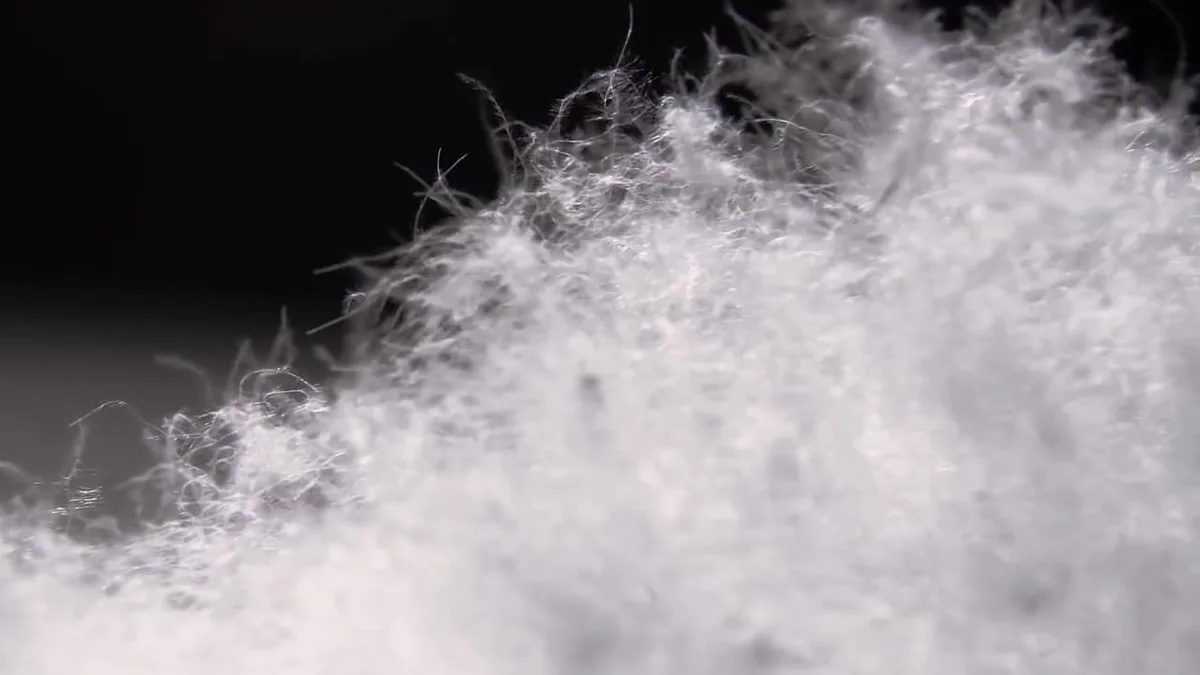
The shell fabric of a down comforter is deliberately woven extremely tightly so that it holds the down in while still allowing air to pass through. Down fibers are light and branch outward, and their tips can poke slightly through the tiny holes along the seams and quilt stitching. To some degree, this is simply part of how a down comforter is built.

Cases that can be considered normal
- A few strands come out only during the first few weeks after buying a new comforter
- It temporarily increases right after washing or professional cleaning
- Only fine quills or small fibers come out
In cases like this, the down is simply settling into the weave of the shell fabric, and it usually calms down after a while. How easily down works its way out also depends on the shell fabric's material and weave. The finer the yarn count and the denser the weave, the less down tends to escape.
Cases that call for attention
- Large amounts keep coming out every day, or every time you use it
- Whole clusters of down come out, not just quills
- Down is escaping from thinning spots or tears in the fabric
- The comforter is old and the shell fabric is weakening overall
In these cases the shell fabric itself has most likely deteriorated, and a quick fix often won't solve the problem.
What you can do at home
The one thing you should never do when down starts poking out is pull it out. Pulling enlarges the hole, making it even easier for more down to escape. Instead, gently push the down back inside the comforter and press the spot lightly with your hand to settle it.
For areas where escaping down bothers you, pairing the comforter with a tightly woven duvet cover also helps. A cover reduces the amount of down that touches your skin directly and makes it easier to keep feathers from scattering around the bedroom. Choosing a densely woven cover such as our crisp white duvet cover works well as a countermeasure. For more on choosing a cover, see How to choose a duvet cover for your down comforter.
How to judge when there's too much, or it won't stop
If any of the following continues, it's best to take it as a sign that the shell fabric has reached the end of its life.
| What you see | Possible cause | Recommended action |
|---|---|---|
| A few strands a day | Normal escape through the weave | Keep using it and see how it goes |
| Large amounts every day | Worn shell fabric or loosened stitching | Consider refurbishing |
| There are tears or holes | Age-related deterioration or heavy friction | Consult a specialty store promptly |
Once the shell fabric starts to thin, the down inside may still perform well, but continuing to use the comforter as-is will only make the leakage worse. In such cases, you have the option of down comforter refurbishing (re-making), in which the down inside is cleaned and topped up, then rebuilt into a brand-new shell. Because the down itself is reused rather than discarded, it's also a more environmentally friendly choice.
If the comforter is going flat and leaking down at the same time, the down itself may also be losing its loft. Reading up on how to revive a flat comforter as well will make it easier to decide whether to replace it or simply have it refurbished.
Summary
A small amount of down working its way out of a down comforter is unavoidable by design and doesn't necessarily mean the product is defective. As a rule of thumb, if large amounts come out every day, whole clusters of down pull free, or there are holes or tears, suspect that the shell fabric has deteriorated — that's the time to consider refurbishing or replacement. Push the down back inside rather than pulling it out, pair the comforter with a tightly woven cover, and keep an eye on it; if the condition warrants, we recommend consulting a specialty store.
Frequently asked questions
Is a brand-new down comforter defective if down comes out of it?
Not necessarily. If only a few strands appear during the first few weeks after purchase, the down is simply settling into the weave of the shell fabric, and it usually calms down after a while. If the amount is large and doesn't stop, consult a specialty store.
How do I choose a comforter that won't leak down?
How easily down escapes depends on the shell fabric's material and weave. The finer the yarn count and the denser the weave, the less down tends to escape. Pairing the comforter with a tightly woven duvet cover also helps.
Can refurbishing fix a comforter that keeps leaking down?
Once the shell fabric has thinned, the leakage will only get worse with continued use, even if the down still performs well. Down comforter refurbishing — cleaning and topping up the down inside, then rebuilding it into a new shell — can take care of this. If the comforter has also gone flat, the down itself may be losing its loft.
What to do when fine down floats into the air or scatters widely
When down is already working its way through the weave or seams, the impact of shaking or beating the comforter hard can break the tips loose and send them floating into the air. Handling the comforter gently when you fold, lift, or store it helps keep down from scattering around the room.
If you vacuum up fine down on the floor or around the bed right away, the airflow can blow it back into the air. Gathering it up lightly by hand first, then vacuuming, keeps the mess to a minimum.
Everyday handling tips to keep leakage from increasing
- Don't beat the comforter hard or swing it around
- Store it uncompressed, in a roomy storage bag
- Rotate the comforter inside its cover from time to time so friction doesn't always land on the same spot
Handling your comforter this way reduces strain on the shell fabric and slows down how quickly down starts working its way out.