The answer in 30 seconds
- Made in Japan means sewn in JapanIt generally refers not to where the down comes from, but to products whose shell fabric is cut, quilted and sewn in Japan.
- Fujiyoshida, Yamanashi: the leading production hubIn Japan, down comforter sewing is concentrated in the Fujiyoshida area, where decades of craftsmanship and quilting know-how have accumulated.
- Check the quality label for where it was madeThe manufacturer name and address fields on the label sewn into the shell fabric give you a good indication of whether it was sewn in Japan.
- Imported comforters can vary in qualityDifferences in sewing facilities and inspection standards can result in shifted quilting or uneven shell fabric density.
With down comforters, "Made in Japan" generally refers not to where the down itself comes from, but to products whose shell fabric is cut, quilted and sewn in Japan. The down itself is almost always imported from Hungary, Poland, China and elsewhere, with only a small amount sourced domestically. To find out whether a comforter was sewn in Japan, check the manufacturer and address fields on the quality label, or ask the retailer directly.
What "Made in Japan" actually means for a down comforter
Just as with "Made in Japan" clothing, a Made in Japan label on a down comforter usually refers to where the finished product was made up, which needs to be considered separately from the country of origin of the down inside. In other words, a combination like "Polish down, sewn in Japan" is perfectly common. We also cover down origins and how to tell them apart in Why Is Polish Down So Highly Rated? Cold Climates and Longer Growing Periods, so reading both together will give you a fuller picture.
What "sewn in Japan" (the Fujiyoshida area) means
Down comforter sewing in Japan is known for being concentrated in and around Fujiyoshida, Yamanashi Prefecture. The area developed long ago as a center for textiles and bedding, and many of its factories handle the entire process in-house — from cutting the shell fabric to quilting, filling with down and final inspection. This locally rooted accumulation of skill is widely seen as the reason for the consistency of the finished product.
How sewing abroad compares
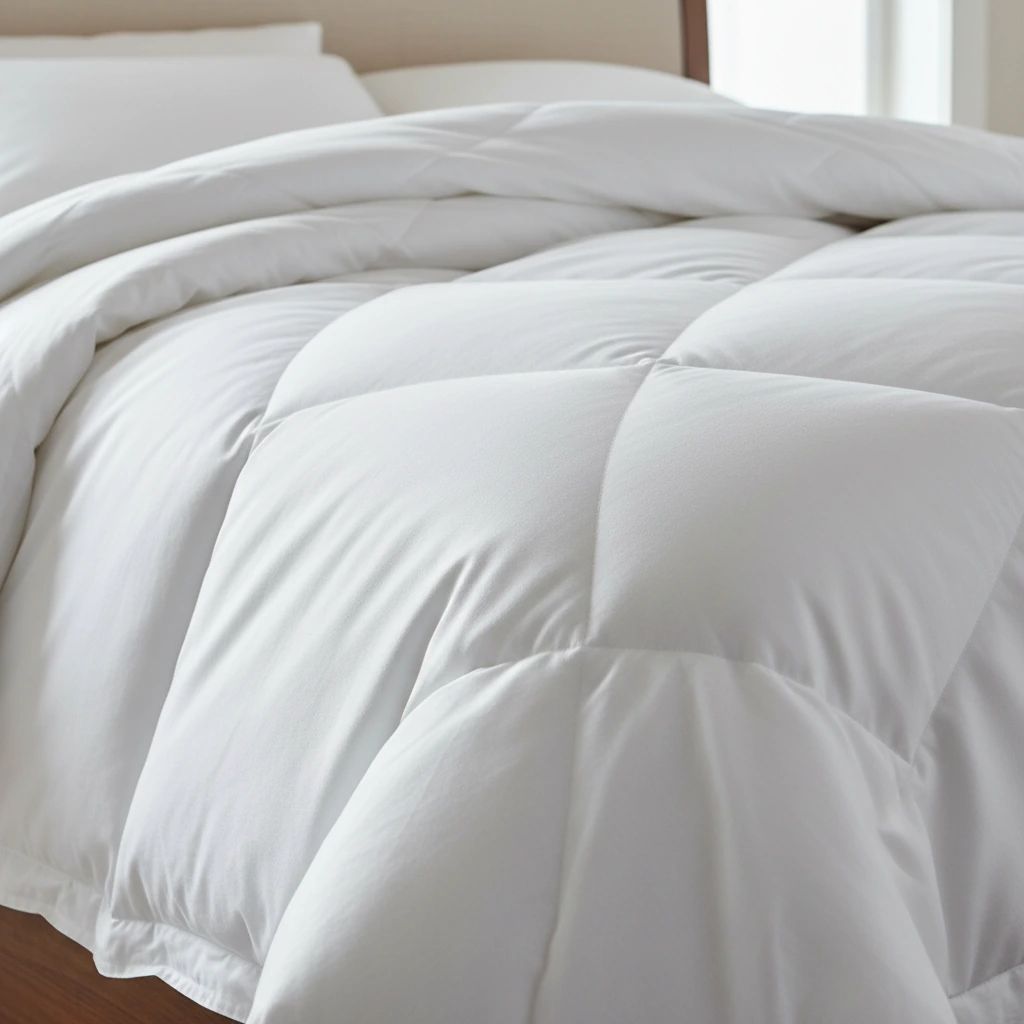
There are highly skilled sewing factories overseas as well, so you can't judge quality by country of manufacture alone. That said, inspection systems, the evenness of the quilt boxes and the consistency of the shell fabric density depend largely on each factory's quality control, and comforters sewn in Japan have the advantage of a shorter supply chain that is easier to verify. The quilt stitching and the finish of the shell fabric are points that are easiest to compare when you see the comforters in person.
How to tell whether it was made in Japan
The surest method is to check the quality label sewn into the shell fabric. If a Japanese address appears in the manufacturer name or address field, there's a good chance the comforter was sewn in Japan. Checking the stated fill power and down cluster ratio at the same time makes it easier to assess overall quality. We explain how to read these labels in detail in How to Read a Down Comforter Quality Label: Gold Label Grades and Real-World Quality. If anything is unclear, the safest approach is to ask the retailer directly.
Who should insist on Made in Japan — and who doesn't need to
If consistent stitching and transparent inspection matter most to you, choosing a comforter sewn in Japan brings real peace of mind. On the other hand, if you want to keep the price down, or if traceability at the down-sourcing stage is your priority, it can make just as much sense to put other criteria — such as RDS certification — ahead of the country of sewing. Our range includes products inspected and finished in Japan, such as the White Goose Sleep Down Winter-Weight Comforter, the Premium Mother Goose Sleep Down Winter-Weight Comforter and the Clean Cycle Sleep Down Winter-Weight Comforter made with recycled down. We recommend checking both the country of sewing and the quality of the down before you decide.
Frequently asked questions
Does "Made in Japan" mean the down is Japanese too?
No. The down itself is almost always imported, typically from Hungary or Poland. "Made in Japan" generally means that the shell fabric was cut and sewn in Japan.
Where can I check whether it was made in Japan?
Look at the "manufacturer" and "address" fields on the quality label attached to the shell fabric, or at the retailer's product description. If it isn't clear, asking the retailer directly is the surest way.
Are down comforters sewn overseas lower in quality?
Not necessarily. There are highly skilled sewing factories overseas too, although comforters sewn in Japan do tend to offer more consistent quality in terms of inspection systems and even quilting.
What makes down comforters from Fujiyoshida distinctive?
The area developed long ago as a bedding production center, and many of its factories handle everything from cutting the shell fabric to quilt sewing in-house, with generations of accumulated skill.
Are there cases where Made in Japan isn't essential?
Yes. If you want to keep the price down, or if down traceability such as RDS certification matters most to you, it can make sense to prioritize criteria other than the country of sewing.