The answer in 30 seconds
- A top-up keeps the shell fabric and simply adds more downIt's a simple, low-cost process that temporarily restores loft.
- Refurbishing includes washing plus a new shell fabricIf you want to resolve hygiene concerns and shell fabric deterioration too, refurbishing is the better fit.
- It won't necessarily feel like new againThe result depends on the grade of the down added and the condition of the shell fabric.
- Take care with comforters that leak down or smell mustyIf the shell fabric is badly worn, refurbishing suits you better than a top-up.
When a down comforter goes flat, many people wonder whether simply adding more down will bring it back. The short answer: a top-up is a low-cost way to restore loft temporarily, but it cannot resolve shell fabric deterioration or hygiene issues. If you judge by puffiness alone, you may find yourself dissatisfied again a few years later.
What is "adding down"?
Adding down means opening part of the shell fabric of your existing down comforter and filling in new down. Because the fabric itself is not replaced and only the fill volume is topped up, it is generally cheaper and faster than full down comforter refurbishing (re-making).
Adding down vs. full refurbishing (re-making)
In full refurbishing, the down is taken out, washed and sorted, the worn shell fabric is replaced with new fabric, and the comforter is rebuilt from there. Adding down, by contrast, is a simpler approach: the original shell fabric stays in use and only the down is topped up. It helps to understand that refurbishing that includes washing and a fresh look at the shell fabric — such as Omotesando Futonten's Down Comforter Refurbishing / Clean Cycle Reform — tends to hold its results far longer than a down top-up alone.
Will adding down make the comforter like new again?
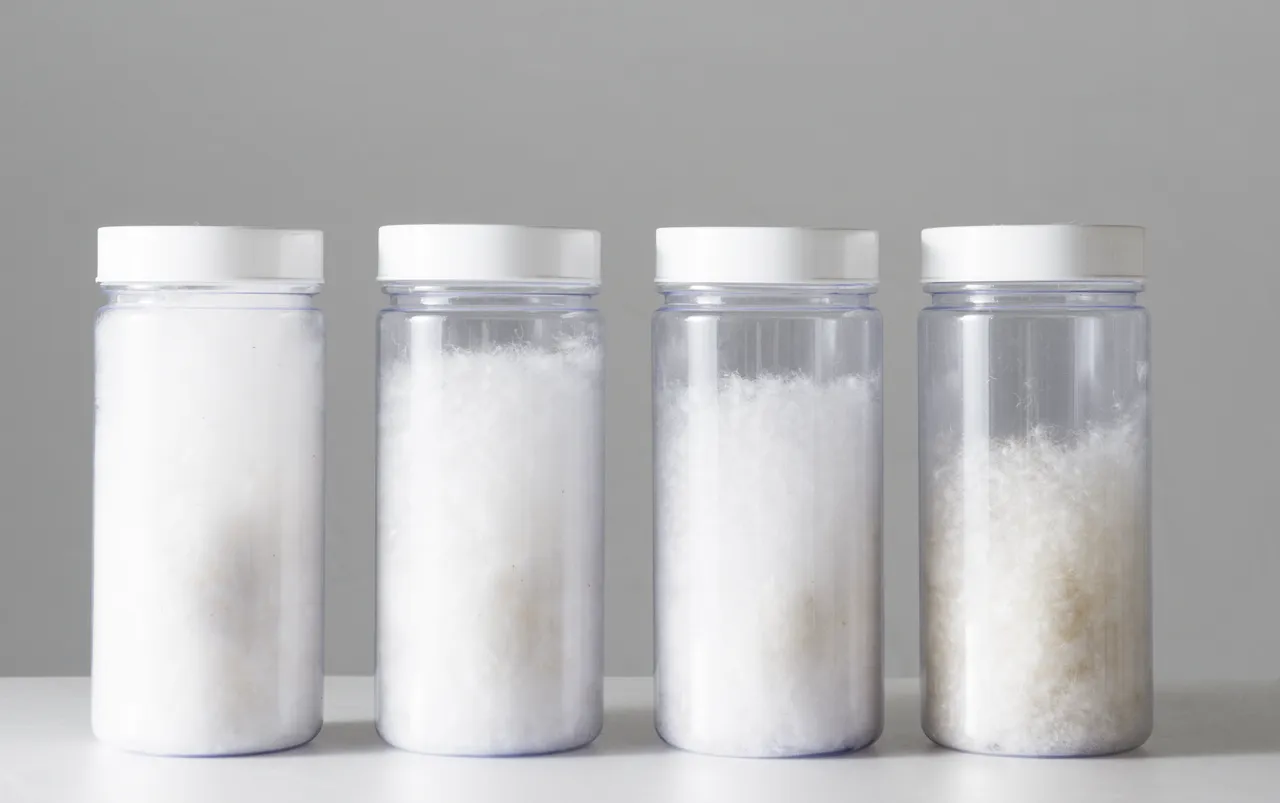
The warmth and loft of a down comforter depend heavily on the down cluster ratio and the fill power (the down's ability to expand). If the down you add is a lower grade than the original fill, even a generous amount may not bring the warmth and loft back to like-new levels. Conversely, using a higher grade than the original can feel satisfying at first, but be aware that down escapes more easily if the weave of the shell fabric is not tight enough.
The "hidden drawbacks" that adding down can't solve
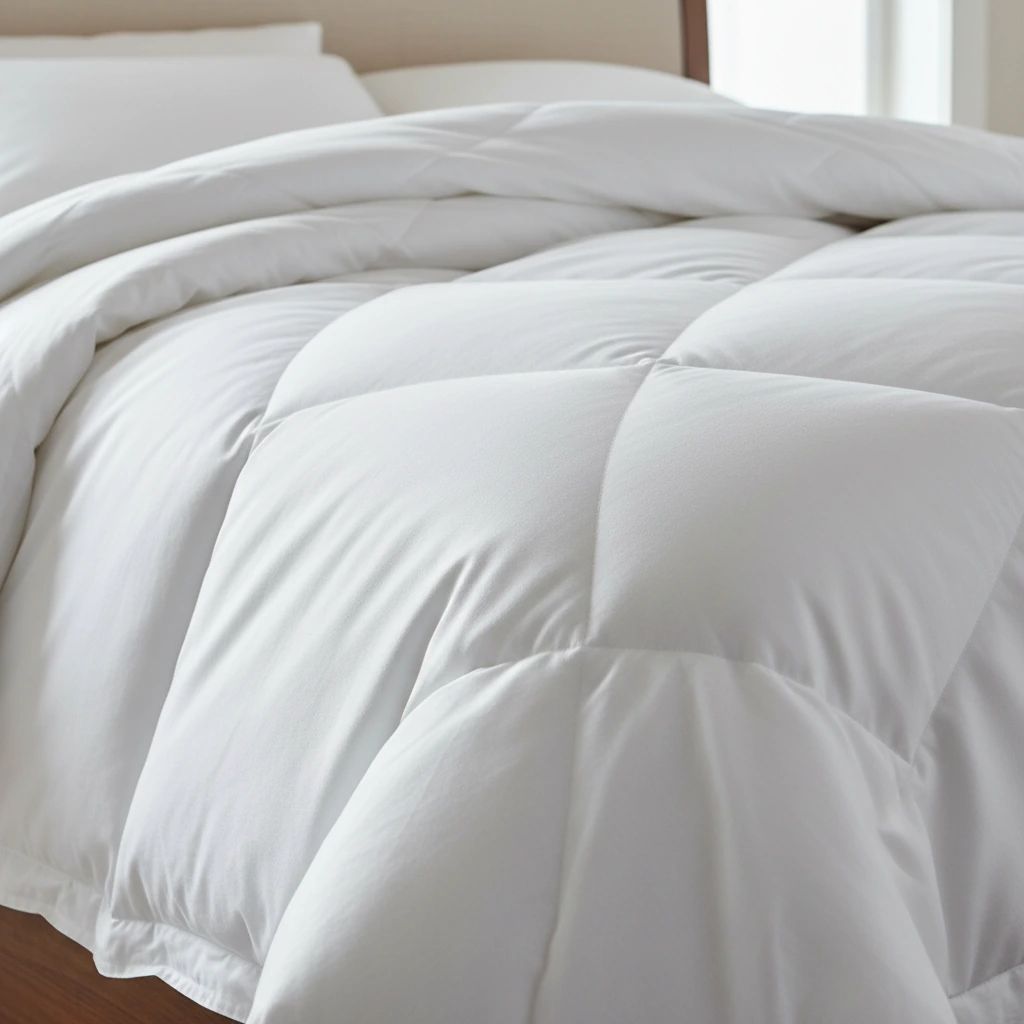
Over years of use, the weave of a down comforter's shell fabric gradually opens up and its down-proof performance (how well it keeps the down from escaping) slowly declines. Topping up the down does nothing about this aging of the fabric itself. If down works its way out of the comforter or the fabric makes a crisp, rustling sound, full refurbishing with a new shell fabric is far more likely to solve the problem at its root than simply adding down.
How to judge hygiene (dust mites, mold, allergens)
A down top-up is, by definition, a process that reuses the existing down as-is, without washing it. A comforter used for many years may have accumulated dust mite carcasses and droppings, body-oil soiling, and mold caused by moisture. If hygiene is a concern, down comforter refurbishing — where the down is washed and then re-filled into a brand-new shell fabric — tends to offer more peace of mind, not just in terms of visible loft but in cleanliness too.
Which comforters suit a down top-up, and which don't
- Bought relatively recently, with little wear to the shell fabric
- No bothersome down leakage or odor
- You simply want to restore volume temporarily at the lowest possible cost
On the other hand, if the comforter is more than 10 years old, if down keeps escaping through the fabric, or if you notice a musty smell or yellowing, considering down comforter refurbishing or a replacement — rather than a top-up — is more likely to leave you satisfied in the end. For guidance on choosing between replacing and refurbishing, see When should you replace a down comforter? Signs it has gone flat and how to decide on refurbishing for a detailed explanation.
How to choose a trustworthy provider
When requesting a down top-up or refurbishing, one good indicator is whether the provider clearly states the down cluster ratio, country of origin, and amount of down to be added on the written quote. A provider that gives you concrete figures — weights before and after the work, plus quality labeling — offers far more transparency about the finished result than one that simply says "we use high-quality down" verbally.
Think ahead to a "future top-up" when you buy
The surest way to get a beautiful result from a down top-up or refurbishing is to start with a down comforter that has a durable shell fabric and plenty of fill power to spare. At Omotesando Futonten, we offer down comforters made to exacting standards for shell fabric weave and fill power. For choosing a comforter you intend to use for many years, see What's the difference between down comforter grades and ranks? A specialist store explains how to judge quality as well.
Frequently asked questions
Which is cheaper, a down top-up or refurbishing?
Generally, a down top-up costs less than refurbishing because the shell fabric is not replaced. However, it does not resolve shell fabric deterioration or hygiene issues, so depending on the condition of your comforter, refurbishing may ultimately leave you more satisfied.
Will a down top-up make the comforter as warm as a new one?
It can come close if the added down matches or exceeds the original in down cluster ratio and fill power. If lower-grade down is used, however, even adding more of it may not restore the warmth of a brand-new comforter.
Why does down still escape after a top-up?
The main reason down escapes from a comforter is that the shell fabric's down-proof performance has declined with age. A top-up only adds more down, so it cannot fix deterioration of the shell fabric itself.
Can I still get a top-up if I'm worried about dust mites or mold?
In most cases the work itself is possible, but you would continue using the existing down without washing it. If hygiene is a concern, down comforter refurbishing — which includes washing — tends to offer greater peace of mind.
How can I tell if a comforter isn't suited to a down top-up?
If your comforter is more than 10 years old, if down escapes frequently, or if you notice yellowed fabric or a musty, moldy smell, you'll usually get a better outcome from down comforter refurbishing or a replacement than from a top-up.