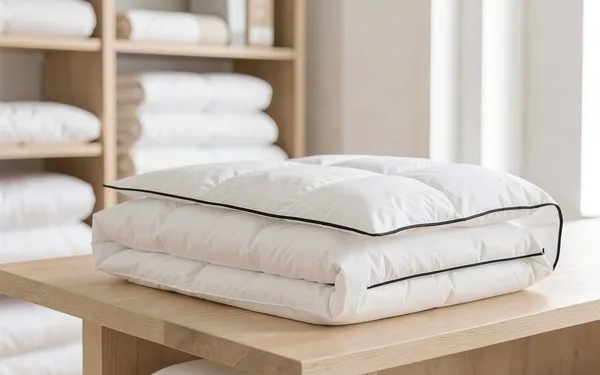
The answer in 30 seconds
- Down comes in two basic types: duck and goose. Among goose down, "mother goose down" — taken from mature breeder birds — has larger clusters and costs more.
- Down is the fluffy plumage from the breast; feathers come from the wings. Down has no quill, so it's light and highly insulating. Feathers have a quill and give moderate springiness.
- As a benchmark for high quality, look for fill power of 350 dp or higher. The higher the number, the more loft the down has — a good sign of lighter weight and better warmth.
- Choose the weight based on the season and how airtight your home is. There are three types: winter-weight, mid-weight (all-season) and summer-weight (light) comforters. In a well-insulated, airtight home, you may stay warm without a winter-weight comforter.
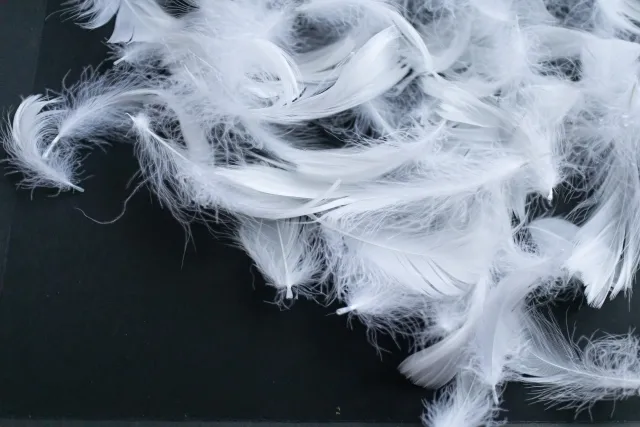
The filling inside a down comforter is plumage taken from birds such as ducks. The outer shell that encases the down is made from fabrics such as polyester, and in recent years so-called synthetic down has also come into common use.
This article looks at the types of plumage used in down comforters, the differences between "down" and "feather," and the key points to check when choosing one. If you're unsure how to pick a down comforter (duvet), use this guide as your starting point.
Three types of down are used in down comforters
Down comforters use plumage from two birds: duck and goose. Within goose, there is also "mother goose down," taken from mature parent birds. Let's look at the characteristics and benefits of all three.
Duck down
Duck down comes from domesticated ducks — waterfowl of the duck and goose family raised on farms.
Because it costs less than goose down, duck down is the most widely used filling in down comforters. However, only about 20g can be harvested from a single bird, so it's said that roughly 100 ducks go into one Single-size comforter.
Duck down is sorted into white and gray: white is called "white duck" and gray is called "silver duck." And while duck down is generally known as the more affordable option compared with goose, some varieties — such as the eider duck of the far north — yield exceptionally high-quality down.
Goose down
Goose down comes from geese. Geese are larger birds than ducks, so the down clusters harvested from them are larger too.
Cluster for cluster, goose down insulates better than duck down, delivering superior warmth. Geese are also herbivores, so their feed is largely plant-based and the down tends to have less noticeable odor than duck down.
Goose down clusters are not only large but also light, so a comforter filled with them has plenty of loft without feeling heavy. The result is a down comforter that feels light in the hand and is easy to handle despite its springy volume.
Related reading: Goose vs. duck down: what to know before you buy a down comforter
Mother goose down
Mother goose down is the name given to down harvested from geese raised for two years or more — fully grown parent birds.
Not every mature goose qualifies as a mother goose. Only birds selected from the rearing stage onward are used, and those that do not reach a large enough body size cannot be classified as mother goose.
Goose down already costs more than duck down, and mother goose down is more expensive still. Its clusters are larger and more resilient than those from younger geese, giving it outstanding durability and warmth. Down is graded on a five-level scale based on loft (fill power) and down cluster ratio — the measures of its volume.
Related reading: What makes mother goose down comforters special, and how to choose one
Down and feather are not the same thing
"Down," familiar from down jackets, and "feather," also the name of a boxing weight class, are both materials that come from the plumage of the same birds. Let's take a closer look at how they differ.
Characteristics of down
Down is the name for the fine plumage that grows on a bird's breast. That said, only waterfowl such as ducks and geese produce it — land birds have no down at all.
Down feels soft and warm to the touch, and it slips smoothly between your fingers. Because it has no quill (ujiku) — the central shaft that runs through a feather — a single down cluster spreads out like a dandelion puff rather than a flat feather.
One of down's biggest advantages is how light it is — it's often compared to dandelion fluff — which also makes it easy to handle. It insulates beautifully too, so a comforter generously filled with down keeps you thoroughly warm while staying feather-light.
Characteristics of feather
Feather refers to the plumage from the wings of waterfowl. Unlike down, each feather has a quill, and just as you'd picture it, every feather keeps its own distinct, independent feather shape.
On a bird's body, down is said to act as the "inner layer" and feather as the "outer layer." That's why feathers shield the body firmly from the cold outside and have a pleasant springiness to them.
Feathers measuring under 6.5 cm are known as "small feathers." Their slender quills make them light as well as soft, so they're a good choice if you find the usual firmness of feather fill uncomfortable.
Down cluster ratio and fill power
The quality of the down that grows on a waterfowl's breast can be assessed by a figure known as fill power (Japanese dp).
Related article: What is fill power, and why is it essential when choosing a high-quality down comforter?
The unit is dp (cm³/g). The loft — the down's own ability to expand — is measured, and the volume per 1 g of down is calculated from the total volume. The resulting number is the fill power.
Since greater loft translates directly into higher fill power, it's one of the key benchmarks when choosing a down comforter. High-loft down also insulates better, so the larger the number, the higher the quality and the lighter, warmer, more moisture-absorbent and more breathable the fill.
So that shoppers can identify down that meets a set standard of quality, the Science and Technology Promotion Association (CIL) selects the down characteristics that affect comfortable sleep, tests and assesses them, and grades the down itself. Depending on the grade, down is sorted into six levels, from "Green Label" up to "Platinum Label."
The Japan Down Products Cooperative Association (Nichiu-kyo) also ranks down quality in order to evaluate products made in Japan fairly. Its system has four levels, from "New Gold Label" up to "Premium Gold Label."
| Label name (CIL Guarantee Label) |
Green Label |
Red Label |
Silver Label |
| Quality standard label (Japan Down Products Cooperative Association quality standard label) |
‐ |
New Gold Label |
Excel Gold Label |
| Fill power | 240db(c㎥/g) | 300db(c㎥/g) | 350db (c㎥/g) |
| Characteristics Number of stars |
Loft of 100 mm or more ★★ |
Loft of 120 mm or more ★★★ |
Loft of 145 mm or more ★★★★ |
| Label name (CIL Guarantee Label) |
Gold Label |
Black Label |
Platinum Label |
| Quality standard label (Japan Down Products Cooperative Association quality standard label) |
Royal Gold Label |
Premium Gold Label |
Premium Gold Label |
| Fill power | 400db(c㎥/g) | 440db(c㎥/g) | 480db (c㎥/g) |
| Characteristics | Loft of 165 mm or more ★★★★★ |
Loft of 180 mm or more ★★★★★★ |
Loft of 200 mm or more ★★★★★★★ |
As a rule, a down comforter is generally considered high quality from 350 dp (cm³/g) and up. With CIL labels, look at Silver Label or above; with the Japan Down Products Cooperative Association, Excel Gold Label or above.
Source: Japan Down Products Cooperative Association
Looking for a luxury comforter? Take a look below.
Related article: Luxury comforter lineup
What to look for when choosing a down comforter
Beyond the quality of the down itself, down comforters fall into three types according to how much down they contain. Choose the one that best suits the season and your sleeping environment.
Here are the key points to keep in mind so you can choose the right down comforter.
Choose by season and by your home's characteristics
There are three types of down comforter: the thickest "honkake" winter-weight comforter, the "aigake" mid-weight comforter (thinner than the winter weight), and the "hadakake" summer-weight comforter, prized for being thin and light.
One simple way to choose between them is by season. In midwinter you'll want at least a mid-weight comforter, but if your home is well sealed and you've insulated the air vents and around the windows, you may well stay warm without going up to a winter-weight comforter.
In homes where heating, cooling and good airtightness keep the room temperature steady, it's easy to stay warm and to switch between a summer-weight and a mid-weight comforter. In cold regions or less airtight homes, though, it's reassuring to have a winter-weight comforter on hand for emergencies — for example, if your heating stops working.
Fall and winter: the warmth of a winter-weight comforter
From fall through winter, a winter-weight comforter is the one to reach for — a single layer is all you need for a warm night's sleep. Even as the room cools, it holds in your body heat, and the comforter itself blocks drafts, so there's no risk of feeling chilly while you sleep.
If you'd rather not keep extra bedding around, having one well-insulating winter-weight comforter on hand gives you peace of mind. It also makes it easier to cope when temperatures drop below freezing or your heater breaks down.
For spring, fall, and well-insulated homes: the mid-weight “aigake” comforter
If you don’t need all the loft of a winter-weight comforter, we recommend an aigake mid-weight comforter. It’s ideal for seasons like spring and fall, when cold hours and warm hours mix in a single day, and for those changeable weeks between seasons when temperatures swing.
Because a mid-weight comforter isn’t as thick as a winter-weight one, it isn’t heavy either. It’s also a great choice when you want something with more substance than a summer-weight (light) comforter.
For summer: the breathable, moisture-releasing summer-weight (light) comforter
Summer runs roughly three months, including the peak heat of July and August. From June into early July, the rainy season can still bring chilly days, and in some regions you’ll want a warmer comforter — that’s exactly where a summer-weight (light) comforter earns its place.
A summer-weight down comforter is also the answer in midsummer when you sleep with the air conditioning on and think, “I want the room cool, but I don’t want to get chilled.”
Year-round comfort: the 4-season 2-in-1 comforter
If you keep air conditioning and heating use to a minimum to save energy, try regulating your body temperature with your down comforter instead.
In regions with a big gap between midsummer and midwinter temperatures, pairing a summer-weight comforter with a winter-weight one works best. In areas that stay warm year-round, choose two summer-weight comforters instead and layer them on chillier nights.
If you aren’t especially trying to cut energy use and keep the heat on, or if your home is well insulated and warm, a single mid-weight comforter is enough to fine-tune your sleeping temperature.
Choose by type and origin of the down
You can also choose by the type of down — duck or goose — or by quality grade (label) and country of origin.
If you’re after top quality, look for a few key points: a clearly stated country of origin, a high down ratio, and mother goose down rather than standard goose down.
The Gold Label is proof of high-quality down
Of the six grades in the CIL guarantee label system, the “Gold Label” corresponds to the “Royal Gold Label” of the Japan Down Products Cooperative Association.
With a high fill power of 400db(c㎥/g), it sits a step above the 350db(c㎥/g) mark that already indicates high quality.
With so many classifications out there — Green Label, Premium Gold Label and more — it’s easy to get lost. When in doubt, use the Gold Label as your benchmark.
If you're shopping for a luxury comforter, take a look below.
Related article: Luxury comforter collection
Choose by quilting and shell fabric
The shell fabric of a down comforter holds the down in place and keeps it from escaping. Cotton and polyester are the most common choices, though luxurious materials such as silk are also used.
Cotton excels in breathability, polyester in durability. You can also choose between two weaves: lightweight “plain weave” and “sateen,” prized for its smooth, soft hand.
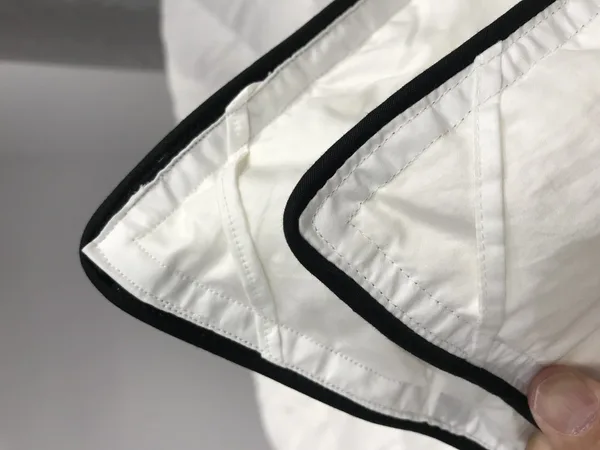
Pay attention to the quilting as well — it’s what keeps the down in place and creates that soft, springy loft. Two stitching methods are used: “baffle-box quilting” and “sewn-through quilting.”
“Baffle-box quilting” builds a grid of box-like chambers, giving the comforter three-dimensional loft. “Sewn-through quilting” stitches the top and bottom shell fabrics directly together and is used on lightly filled comforters such as summer-weight ones. It takes less work, so it costs less — but watch for feathers working their way out through the seams.
Compare shell fabrics carefully for both performance and feel, and when it comes to the stitching, decide whether price or loft matters more to you.
Related article: Don't overlook the shell fabric of your down comforter! Fabric types and how to choose

How can you make a down comforter last longer?
To get as many years as possible out of your down comforter, regular care and cleaning are essential. When you can’t handle it yourself, leave it to a professional cleaner or a specialist experienced with down comforters.
Related article: How many years does a down comforter last? How to decide between replacing and refurbishing
Washing the comforter
Like any other comforter, a down comforter can be washed and kept in use for years. The key to making it last is handling it the right way.
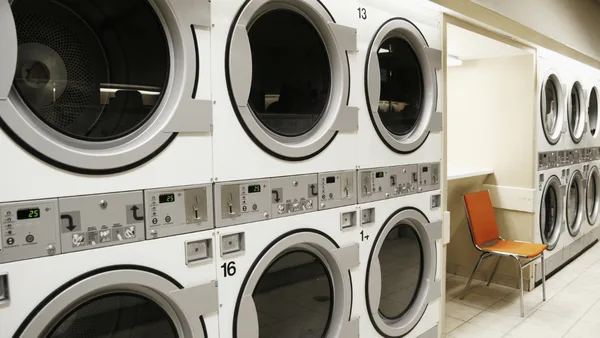
Before washing, fold your down comforter and check that it fits comfortably inside your washing machine. A thick comforter may not tumble properly, or the lid may not close — in that case, use a professional cleaning service or a laundromat (launderette) with large-capacity machines.
Check the care label on your down comforter first. Air out any moisture beforehand, then give it a gentle shake while it’s still on the drying rack to release dust. Roll the comforter up, place it in a large mesh laundry bag, put it in the machine, and wash it according to the care label.
Washing once a year is ideal, but airing it in the shade about once in every month you use it will keep moisture from building up and keep it hygienic.
Topping up the down fill
Refilling with down goes by several names in Japan — refurbishing (re-making), maintenance, or uchinaoshi (down comforter refurbishing). When the down has flattened or escaped and the loft has dropped, it’s worth asking a specialist to refill it.
You won’t need this often, but if years have passed since you bought your comforter and the loft feels gone, talk to a specialist (the service may be bundled with washing and re-stitching).
Replacing the shell fabric
Refurbishing isn’t limited to washing and topping up the down inside — it’s also the perfect moment to replace the outer shell fabric.
Renewing both the inside and the outside gives you a down comforter with the same quality as a brand-new one. Like refilling the down, it isn’t something you do often, but if your comforter has seen many years of use, we recommend renewing it when the time feels right.
Removing dust
Dust removal (jojin) is a method that strips impurities out of a down comforter while keeping the down cool. Unlike drying in direct sunlight, it doesn't degrade the fibers or risk damaging the shell fabric, which makes it a cleaning step worth including whenever you have your comforter serviced.
Some shops offer it only for comforters that are still relatively new and will recommend replacement for older ones, but because it lifts out dust that you simply can't remove at home, it can also help cut down on household dust.
Re-stitching the quilting
To service a down comforter properly, it has to be opened up once so the down itself can be washed clean.
The fabric is cut open, the fill is taken out and washed, then blown back in — and the comforter is carefully re-sewn once the refreshed down is inside. This isn't something you can do yourself, so leave it to a specialist.
Air it out regularly
If you'd rather not use a service, airing your down comforter regularly — about once a month — will help it last longer.
Direct sunlight damages the materials, so air it in the shade instead: about three hours in a well-ventilated spot out of direct sun. Give each side at least an hour in the moving air to draw out the moisture.
Good places to air it in the shade include near a window, on a covered veranda, or in a sunroom. Avoid dusty areas such as entryways and hallways, since fine dust and grit will settle into the comforter.
Keep humidity down in the bedroom
When a comforter absorbs moisture, it invites mold and dust mites. Since that also means it will need servicing sooner, controlling humidity in the room is an important part of making a down comforter last.
Check a hygrometer and ideally keep room humidity from rising above 50%. Humidity inside the comforter should stay at 60% at most, and when airing it in the shade, aim for an environment of around 40% so it can dry out properly.
Choose a breathable comforter
Among shell fabrics for down comforters, cotton is considered the most breathable — and the finer the yarn, the lighter and more breathable the fabric.
Cotton yarn counts run from 10 to 100, and the higher the number, the finer the yarn. The stuffy feeling you sometimes get under a comforter is said to become much less noticeable from a 40-count cotton upward, where breathability is sufficiently high.
Synthetics such as polyester are inexpensive but absorb moisture poorly. Cotton, by contrast, takes up moisture and releases it again, which makes it a good match for a down comforter you want to keep dry.
Choose a highly durable material
If the comforter itself tears or develops a hole, down escapes through it, leading to leaking feathers and flat spots.
If you want your down comforter to last as long as possible, choose one made with a durable shell fabric. With pets in the house, claws and teeth can easily snag the fabric, so a 100% polyester duvet cover is a smart safeguard.
Leave it to the pros if you're unsure
If you're unsure about caring for it yourself, we recommend leaving washing and drying to the professionals rather than doing it at home.
A down comforter is a delicate piece of bedding that can't be handled roughly. Washing it any way other than the care label specifies can cause damage, and you also need to be careful about where you air it — in sun or shade — and for how long.
To keep your comforter performing well for years, talk to a cleaning and refurbishment specialist and have it cared for according to its condition. They can also help if the down has thinned out or the fabric has developed a hole.
Summary
In this article we took a close look at the types and quality of down used in down comforters. Many down comforters are a significant investment, so check the quality labeling and confirm that it offers the performance you're after before you buy.
Omotesando Futonten's “Premium RDS Down” carries RDS certification, which means it meets a series of strict animal welfare requirements.
It's filled with “Premium Mother Goose” down whose quality is verified by an independent third party, and each comforter is carefully sewn by artisans in Fujiyoshida. The down is encased in “Gran Sirieu,” an extra-long staple cotton with excellent moisture absorption and water repellency. A great choice if you're looking for a truly high-quality down comforter.
If you're looking for a down comforter (duvet) that combines Japan's finest quality with a refined design that complements your interior, do take a look at the Omotesando Futonten collection.
Premium RDS Down Winter-Weight Comforter / Mother Goose Down
For high-quality Japanese-made premium down comforters (duvets), choose Omotesando Futonten
Frequently asked questions
What's the difference between goose down and duck down?
Goose down comes from geese, duck down from ducks. Geese are larger birds, so their down clusters are bigger and insulate better; because geese are herbivores, odor is also less of a concern. Duck down costs less and is the fill used most often in down comforters.
What should I look for in the shell fabric and quilting?
For the shell fabric, cotton wins on breathability and polyester on durability. With cotton, finer yarn means a lighter, more breathable fabric, and 40-count or finer is said to feel noticeably less stuffy. For quilting, there's baffle-box quilting, which creates box-shaped chambers, and sewn-through quilting, where the top and bottom layers are stitched directly together — with sewn-through quilting, watch for feathers working their way out through the seams.
How can I make my down comforter last longer?
Air it in the shade about once a month in a well-ventilated spot out of direct sunlight to draw out moisture. Ideally, keep room humidity at 50% or below. If it loses loft, ask a specialist about washing and topping up the down or replacing the shell fabric.
What is synthetic down? How it differs from natural down
Synthetic down is made from synthetic fibers such as polyester, engineered into a shape that mimics natural down clusters. Because it isn't harvested from waterfowl like natural duck or goose down, it can be produced inexpensively.
It tends to fall short of natural down on warmth and moisture handling, but it's easy to wash and usable by people with allergies to animal-derived down. When shopping for a comforter, check the shell fabric label or the product description to confirm whether the fill is natural down or synthetic down.
How to choose a down comforter cleaning service
If your down comforter can't be washed at home, or you're worried about wear and damage, it's safest to consult a cleaning service that specializes in down. When choosing a service, check the following points.
- Do they offer full-immersion (whole-comforter) washing for down comforters?
- Can they handle everything in one place, from adding down (refurbishing) to replacing the shell fabric?
- Do they offer hygiene care such as dust removal and dust-mite treatment?
- Do they inspect the comforter's condition (flattening, down leakage, etc.) when preparing the estimate?
If the down has thinned out or the fabric has holes, choose a service that can combine cleaning with refilling and restitching — that's how one down comforter stays in use for many more years.