The answer in 30 seconds
- A down ket and a summer-weight (light) comforter are the same thing. Also called a summer down comforter, it's a thin comforter with far less fill weight than a winter one.
- The standard fill weight is 0.3–0.4kg for a Single. If you sleep hot, go with 0.2–0.3kg; if you sleep cold, 0.4–0.5kg.
- Look for a down cluster ratio of 80% or more — ideally 90% or more. Choose a 100% cotton shell fabric. Polyester blends trap humidity and aren't suited to summer.
- Start using it once room temperatures stay above 20°C. In the Kanto region around Tokyo, late May to early June is the usual time to switch.
| What you'll learn in this article
・What a summer down comforter (downket / summer-weight light comforter) actually is ・The 5 points to check when choosing one (fill weight, down cluster ratio, materials, quality, washability) ・How quality differs by price range, and which level to choose ・Answers to common questions (how it differs from a towel blanket, and when to start using it) |
"My comforter is too hot to sleep under in summer." "A towel blanket is too cold, but a down comforter is too hot." Every summer, we hear this from so many customers.
The answer to these summer sleep troubles is the summer down comforter (down blanket / summer-weight light comforter). With far less fill weight than a winter down comforter, it puts down's natural ability to absorb and release moisture to work, so you sleep cool and comfortable without feeling clammy.
In this article, Omotesando Futonten — with more than 25 years in the bedding business — explains exactly how to choose a summer down comforter: material differences, fill weight guidelines, and how to read the price ranges.
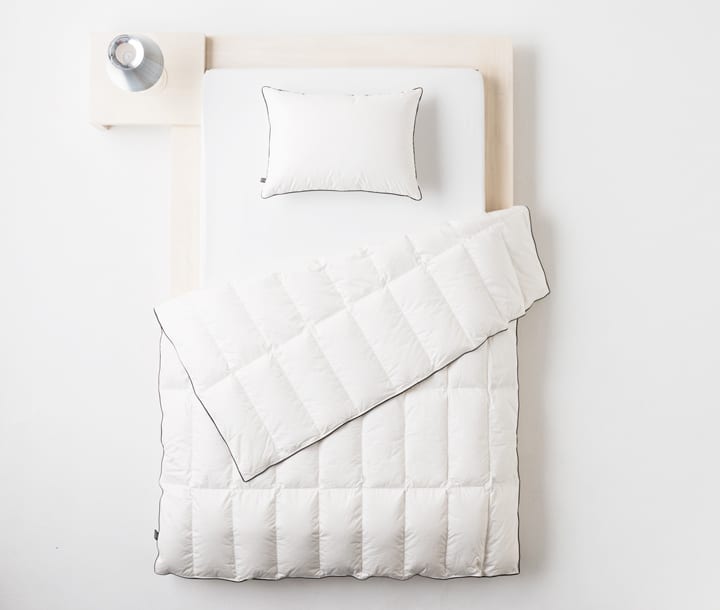
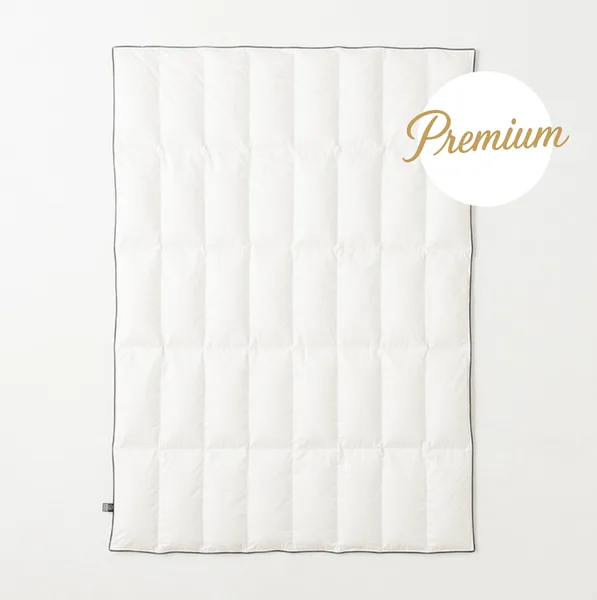
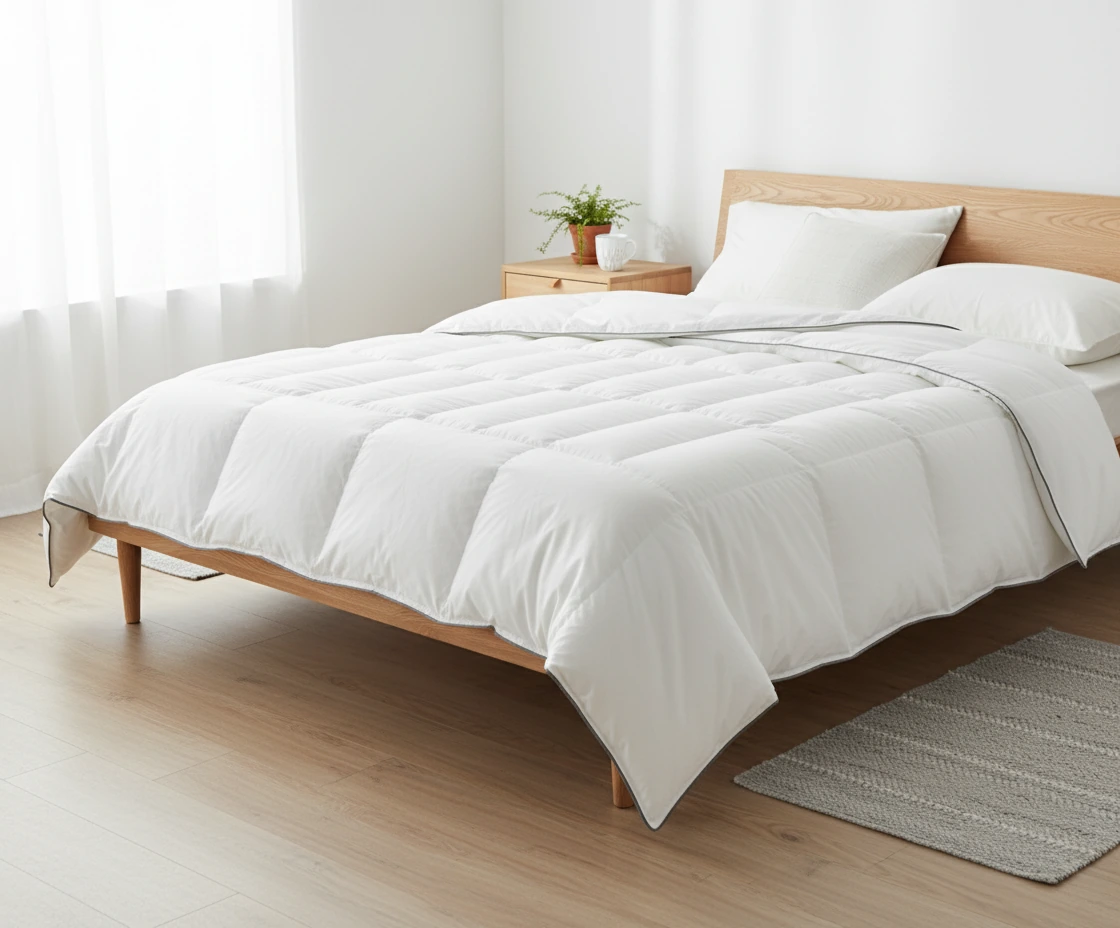
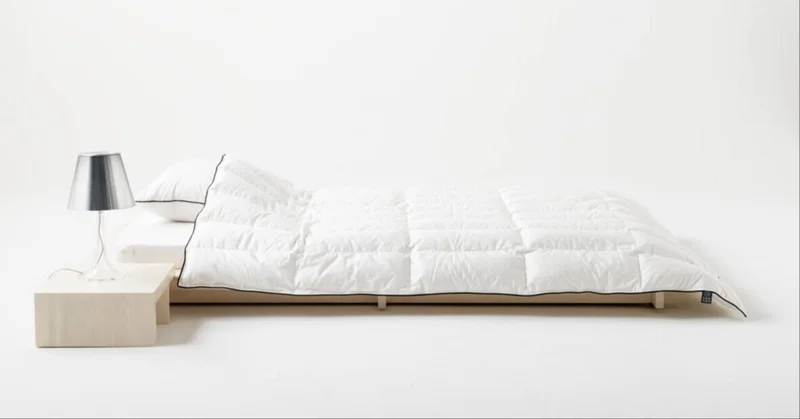
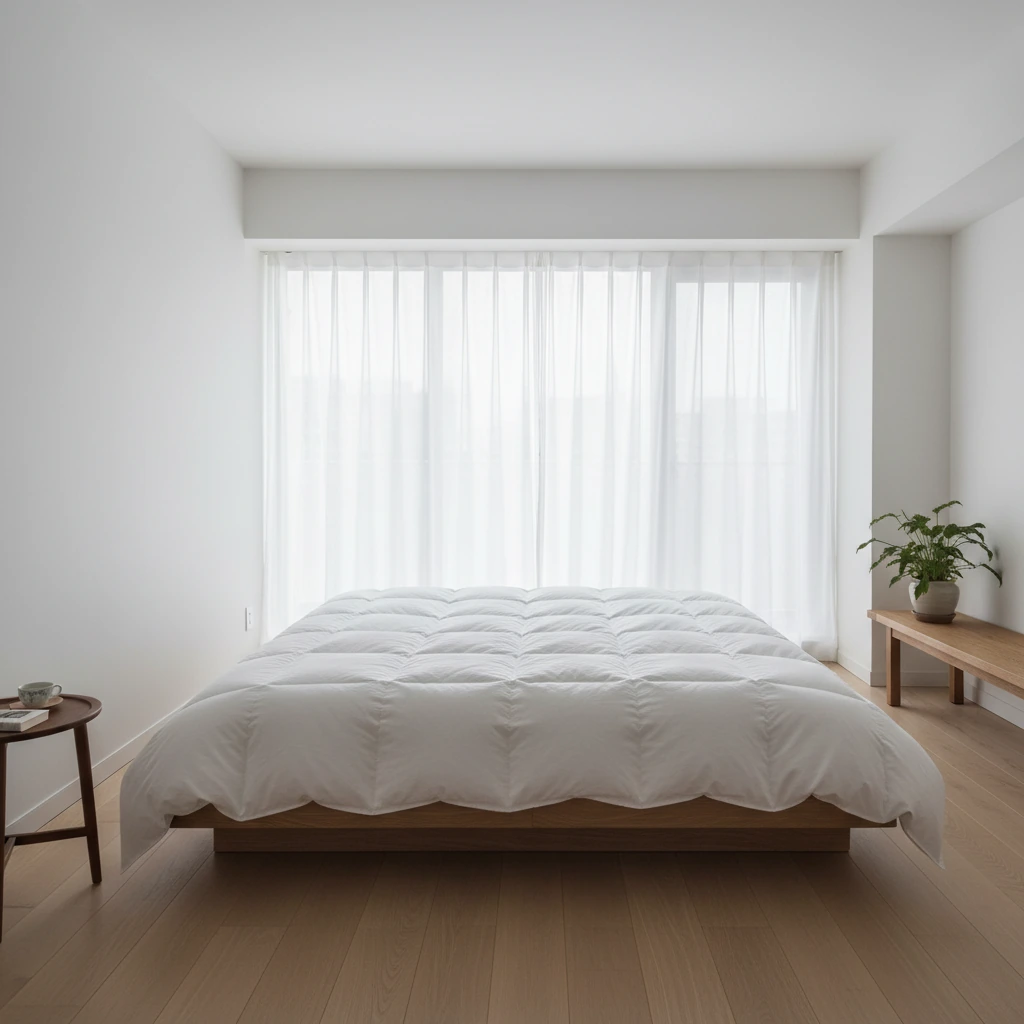
A light, airy summer down blanket. Lighter and fresher against the skin than a cotton towel blanket.
What is a summer down comforter? How it differs from a down ket and a summer-weight comforter
"Summer down comforter," "down ket" and "summer-weight comforter" all mean the same thing
"Summer down comforter," "downket" and "summer-weight (light) comforter" are simply different names used by different makers and retailers — they all refer to essentially the same product.
What they share is this: a thin comforter with far less fill weight than a winter down comforter. In a Single size, fill weight is typically around 0.2–0.4 kg — only about one-third to one-quarter of the down in a winter model (1.2–1.3 kg).
| Type | Fill weight (Single) | Season of use | Characteristics |
| Winter-weight comforter (for winter) | 1.2〜1.3kg | November–March | Warmest and loftiest |
| All-season (medium-weight) comforter (for spring and fall) | 0.5〜0.8kg | April–June and October–November | Mid-weight loft, ideal for the change of seasons |
| Summer-weight (light) comforter = down ket (for summer) | 0.2〜0.4kg | June to September | Thin, lightweight and breathable |
Can you use a down comforter in summer? And how is it different from a towel blanket?
Some people ask, "Isn't a down comforter too hot for summer?" In fact, a summer-weight down comforter with the right fill weight can keep you more comfortable than a cotton towel blanket — and here's why.
The reason is down's ability to absorb and release moisture. Down clusters soak up night sweat and then release it back into the air, over and over. A towel blanket only absorbs sweat and grows heavy with it, while a down comforter lets that moisture escape, so the air inside your bedding stays fresh instead of clammy.
| A down comforter is nature's air conditioner. By absorbing moisture and releasing it again, it keeps the temperature and humidity inside your bed comfortable even on summer nights. |
When should you use a summer down comforter — from when to when?
A good general rule is "when room temperatures stay above 20°C." In the Kanto region around Tokyo, late May to early June is the usual switching point, and many people keep using a summer comforter until late September or early October.
- You wake up feeling muggy under the covers → time to switch
- You find yourself sticking your feet out from under the covers at night → time to switch
- Your pajamas are damp with night sweat → switch right away
How to choose a summer down comforter | 5 key points
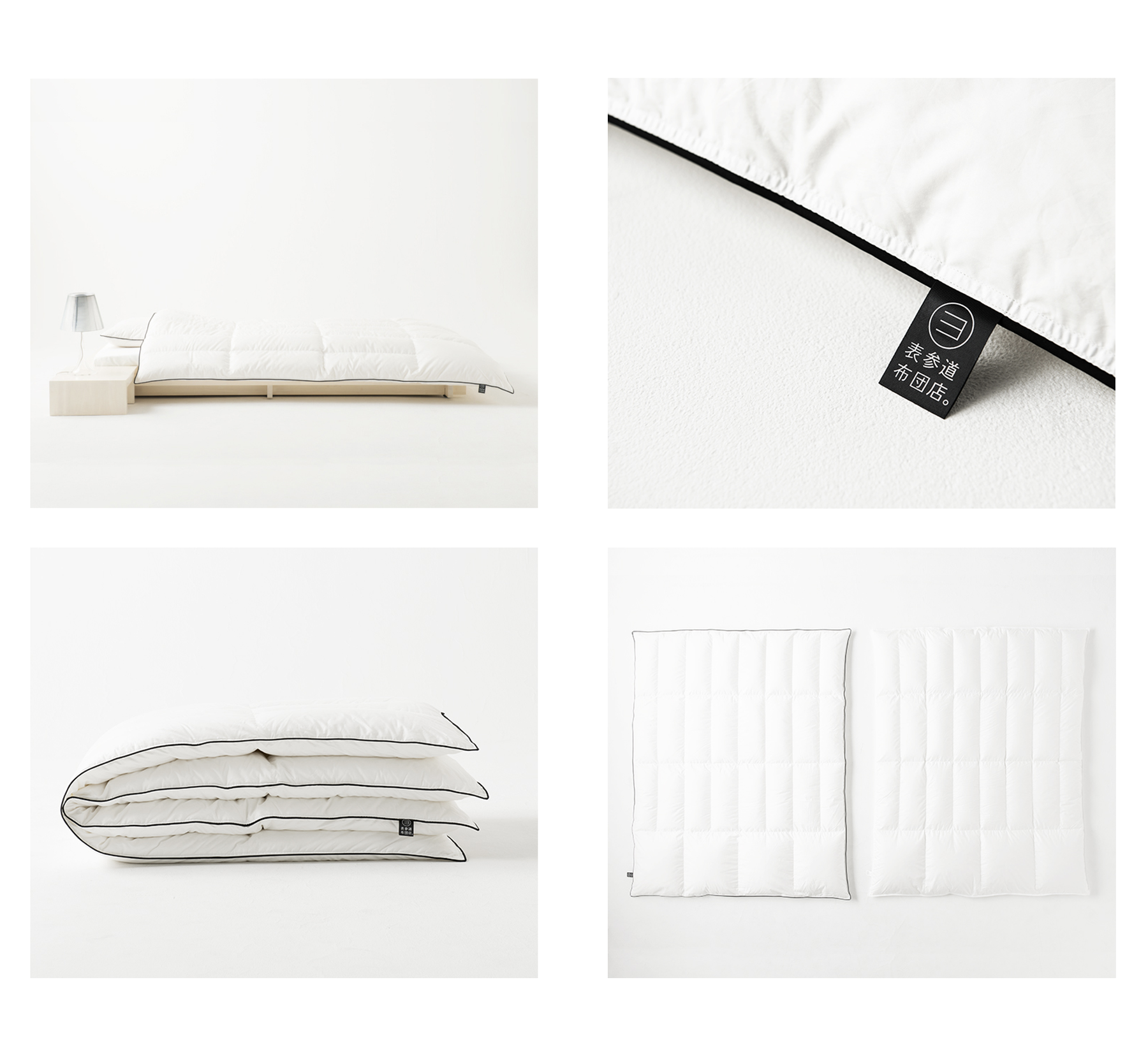
Point 1: Aim for a fill weight of 0.3–0.4kg (Single)
Fill weight is the first number to check when choosing a summer down comforter. Too little and you'll feel chilly in an air-conditioned room; too much and it traps heat and leaves you clammy.
| Fill weight (Single) | Who it's best for |
| 0.2〜0.3kg | People who sleep hot, rooms with strong air conditioning, and regions with frequent nights above 30°C |
| 0.3〜0.4kg | Standard air-conditioned rooms; anyone sensitive to temperature swings (our most popular choice) |
| 0.4〜0.5kg | People who sleep cold, regions with chilly early mornings, and rooms with light air conditioning |
Point ②: Choose a down cluster ratio of 80% or higher (90% or higher for top quality)
The down cluster ratio is the percentage of down (the soft clusters) in the comforter's fill; the rest is feather. The higher the ratio, the lighter the comforter, the better it handles moisture, and the less likely you are to feel any prickliness.
- 80% or more: the minimum. A passing grade for quality.
- 90% or more: the level we recommend. Comfortable and breathable even in summer.
- 95% or more: premium quality. Common in goose and mother goose down.
| Anything at 50% or below is classified as a feather comforter, and it won't give you the breathable, less-stuffy feel you want from a summer down comforter. Always choose 80% or higher. |
Point ③: The type of down changes how comfortable you feel in summer
Summer down comforters use two types of down: duck and goose. If a cool, comfortable summer's sleep is your priority, we recommend choosing goose down.
| Material | Moisture absorption & release | Breathability in summer | Price | Our recommendation |
| Duck down (50–80%) | △ Average | △ Can feel slightly stuffy | Low | △ Best for value-focused shoppers |
| Duck down (90% or more) | ○ High | ○ Resists stuffiness | Medium | ○ Well-balanced |
| Goose down (90% or higher) | ◎ High | ◎ Resists stuffiness | High | ◎ For those who prioritize sleep quality |
| Mother goose down (90% or higher) | ◎◎ The very best | ◎◎ Most comfortable | Highest | ◎◎ Top quality |
Point ④: Choose a 100% cotton shell fabric (double gauze or extra-long staple cotton)
The shell fabric (the outer fabric of the comforter) is a key factor in summer comfort. Choose 100% cotton or cotton gauze for high moisture absorption: it quickly absorbs and releases night sweat, so you don't feel clammy.
- 100% cotton (plain weave): the standard. Moisture absorption ○ / durability ◎
- Double gauze: the most breathable. Crisp, dry feel against the skin
- Extra-long staple cotton (sateen): smooth with excellent moisture absorption ◎. Common on high-quality comforters
- Polyester blend: easy to wash, but traps heat and moisture. Not ideal for summer
Point ⑤: Check whether it's washable
You sweat more in summer, so a comforter that's easy to keep clean is a real plus. Check the care label to see whether yours is washable.
That said, washing high-quality summer down comforters filled with goose or mother goose down at home can damage the down. Air them in the shade instead, and have them professionally cleaned once every 2–3 years.
| Material | Washing |
| Duck down (80–90%) | Many models are machine washable at home |
| Goose down (90% or more) | Air-dry in the shade; use professional cleaning |
| Mother goose down | Not washable at home. Professional cleaning required |
Summer down comforters by price range: quality and how to choose
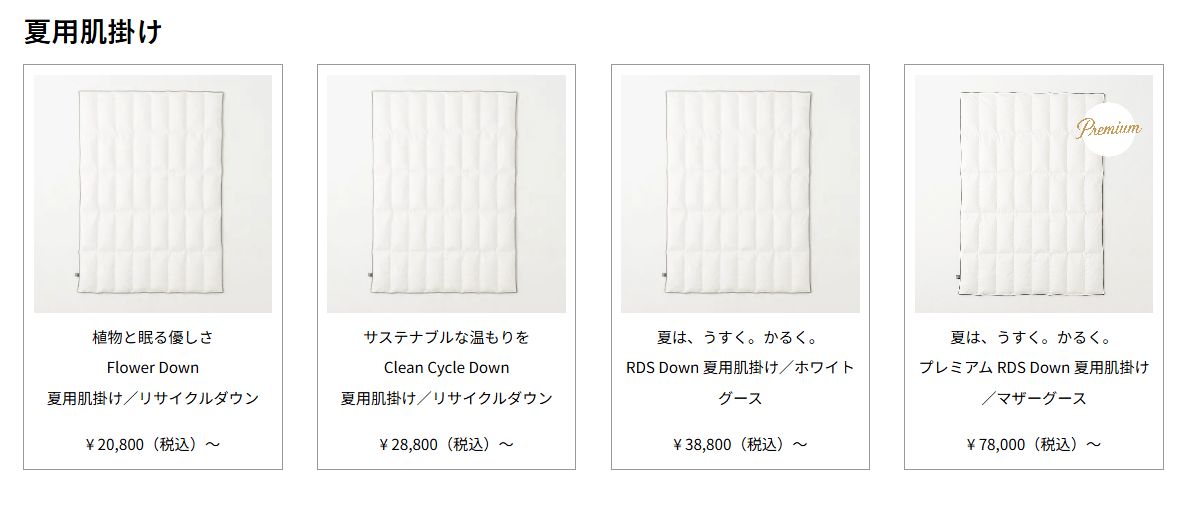
Summer down comforters at entry, mid and premium price points, left to right — the difference in quality at a glance.
¥5,000–¥15,000: the value-focused entry line
This price range is full of comforters with roughly 50–80% duck down. They're worth considering if you plan to replace yours every year, but they absorb and release moisture poorly, so they can feel stuffy in summer.
- Best for: anyone who simply wants to try one at the lowest cost, students, and short-term use
- Keep in mind: products with a down cluster ratio of 50% or less trap heat and moisture easily, and tend to lose quality after just a few seasons
¥15,000–¥35,000: the best balance of quality and price
This price range is dominated by comforters with 90% or more duck down, or a goose down fill. Washable options are plentiful, and it's the range most households choose.
- Best for: shoppers who want the best balance of quality and price, and anyone outfitting the whole family
- Recommended specs: down cluster ratio of 90% or higher, fill weight of 0.3–0.4 kg, 100% cotton shell fabric
¥35,000 and up: the premium goose and mother goose down line
These comforters use 90% or more goose down, or mother goose down. They absorb and release moisture exceptionally well, so you feel the least summer stuffiness. Built to last 15–20 years or more, this is a once-in-a-lifetime comforter.
It's a mistake to think "it's just for summer, so cheap is fine." Summer is exactly when high-quality down proves its worth. The upfront cost is higher, but because it lasts for years, the total cost works out lower.
| Omotesando Futonten's recommended specs: goose down 90% or higher, fill power of 400 dp or more, fill weight 300–400 g, and an extra-long staple cotton shell fabric |
Care and storage
Everyday care (airing in the shade)
The basic care for a summer down comforter (down blanket) is airing it in the shade. Air it indoors in a well-ventilated spot for 2–3 hours once or twice a month, and the moisture trapped in the down escapes, keeping it light and lofty.
- If airing outdoors: always leave the duvet cover on and keep it out of direct sunlight
- After bringing it in: pat it briskly by hand to loosen up the down
- Frequency: once or twice a month is a good guide
How to store it in the off-season
When you put your summer comforter away in early fall, air it in the shade or have it cleaned first, then store it in a breathable non-woven storage bag. Vacuum compression bags are a no-go, as they damage the down.
- Air it in the shade (1–2 hours in a well-ventilated shaded spot) or have it professionally cleaned
- Make sure it is completely dry
- Place it in a non-woven storage bag or case (no vacuum compression bags)
- Store it on an upper shelf of a closet or built-in storage space (to keep air circulating)
How often to have premium models cleaned
For high-quality summer down comforters made with goose or mother goose down, we recommend taking them to a specialist cleaner about once every 2–3 years. Washing them at home can damage the down.
Frequently Asked Questions
Which is better in summer: a summer-weight down comforter or a cotton towel blanket?
If you sleep with the air conditioning on, we recommend a summer down comforter (down blanket). Down naturally absorbs and releases moisture, so your bed stays fresh even when you perspire in your sleep. A cotton blanket is easy to wash, but it holds onto sweat without releasing it, so it gets clammy — and it doesn't handle the early-morning chill as well.
From when until when should you use a summer-weight down comforter (down ket)?
A good guide is when room temperatures stay consistently above 20°C. In the Kanto region, many people start using one from late May to early June and keep it until late September or early October. If you find yourself kicking off the covers at night, or waking up sweaty, it's time to switch to a summer comforter.
Do you need a duvet cover on a summer-weight down comforter?
Yes — a cover keeps things more hygienic and helps your comforter last longer. In summer, when you perspire more, simply washing the cover once a week keeps the comforter itself clean. For fabric, we recommend 100% cotton or linen covers for their moisture absorption and breathability.
Which is better, goose down or duck down?
If a great night's sleep in summer is your priority, we recommend goose down. Goose down clusters are larger than duck down, and they absorb and release moisture faster, so you feel far less summer stuffiness. It costs more, but the difference in quality is obvious once you actually sleep under it.
Summary
Here's a recap of the five points to check when choosing a summer down comforter (down blanket).
- Fill weight of 0.3–0.4 kg is standard for a Single (adjust if you sleep hot or cold)
- Choose a down cluster ratio of 80% or higher — ideally 90% or higher
- Choosing goose down or better means less summer stuffiness
- Shell fabric should be 100% cotton (double gauze or extra-long staple cotton)
- Premium types cannot be washed — airing in the shade is the basic care
The idea that "it's just for summer, so cheap is fine" is a mistake. Summer is precisely when quality down with high moisture absorption and release creates great sleep. If you're choosing your first summer down comforter, aim for 90% or more goose down and a fill power of 400 dp or higher.
| ▶ Browse all summer down kets and summer-weight comforters at Omotesando Futonten |