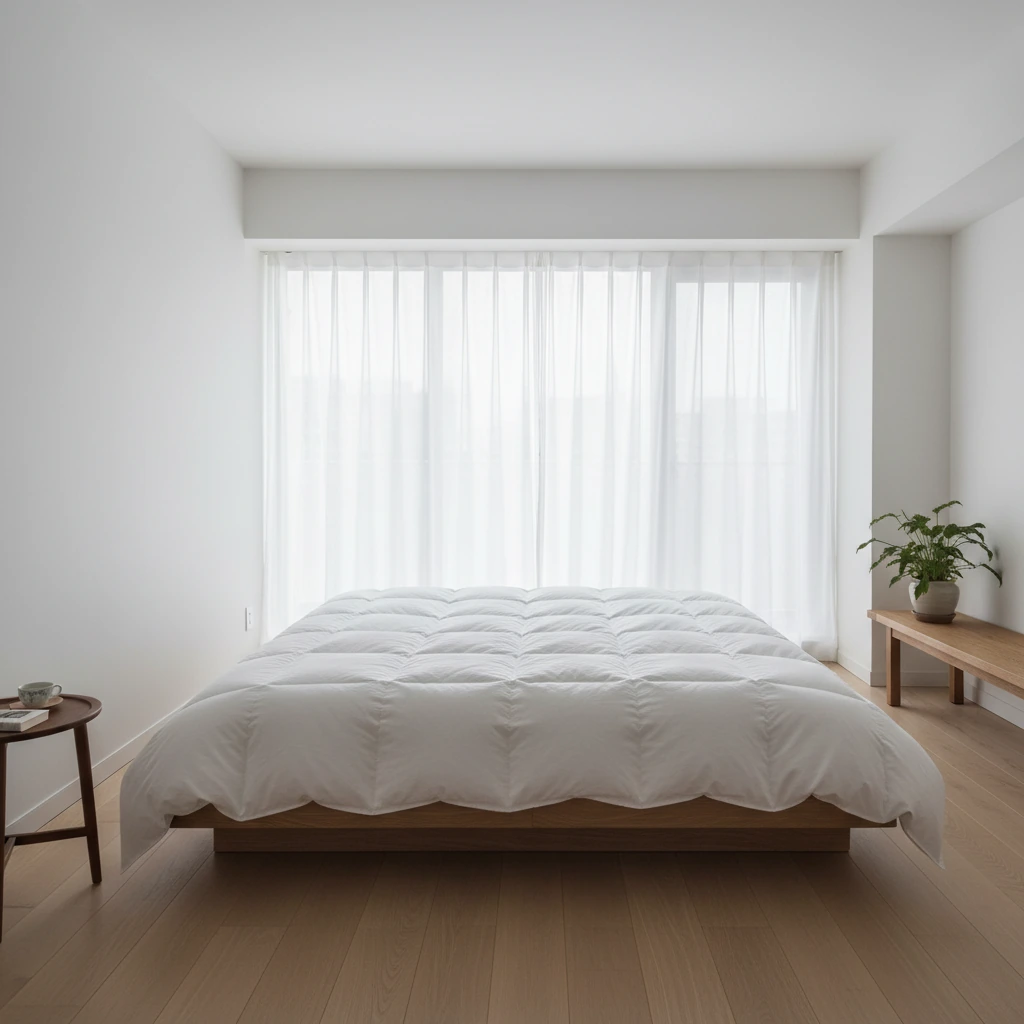
The answer in 30 seconds
- Excellent moisture absorption and feel100% cotton absorbs perspiration readily and builds up little static, making it a good match for anyone bothered by stuffiness or skin irritation.
- Watch out for wrinkling and shrinkageBecause cotton tends to shrink in the wash, choose a size with a little room to spare rather than one that fits your mattress exactly.
- Yarn count and weave change the textureThe higher the yarn count, the smoother and lighter the fabric; a plain weave feels crisp and dry, while a sateen weave feels soft and supple against the skin.
- Check the pocket depth as well as the sizeIf the pocket depth doesn't match the thickness of your mattress, the corners will pop off or the sheet will sag.
When choosing a fitted sheet, many people wonder whether 100% cotton or a cotton blend is the better choice. The short answer: 100% cotton absorbs and releases moisture exceptionally well and feels consistently comfortable in every season, but it wrinkles easily and needs care to avoid shrinking in the wash. Since yarn count and weave change both the hand-feel and how easy the sheet is to look after, picking one that suits your lifestyle is the key to getting it right.
Fitted sheets and 100% cotton: the basics
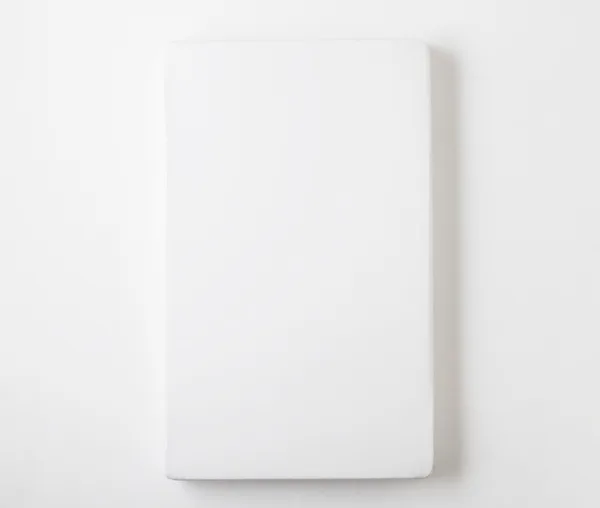
A fitted sheet wraps around a mattress or futon mattress like a box. Elastic at all four corners means there's no tucking in as there is with a flat sheet, and it stays put while you sleep. 100% cotton is a popular choice for this kind of sheet thanks to the high moisture absorbency only natural fibers offer, plus its softness against the skin.
In Japan, fiber composition labeling on household goods is governed by the Household Goods Quality Labeling Act, so a product marked "100% cotton" is guaranteed to be pure cotton rather than a blend. It's a good habit to check the composition on the care tag before you buy.
The benefits of a 100% cotton fitted sheet
- Absorbs perspiration and humidity readily, so you feel less clammy
- Builds up little static, so it attracts less dust
- Breaks in with use, developing a softness all its own
- Gentle on the skin, so it suits sensitive skin too
That high absorbency matters, especially since we're said to perspire more than a cupful over the course of a night. Compared with sheets blended with synthetic fibers, 100% cotton is less likely to trap perspiration, which can help take the edge off a restless, stuffy night.
How it differs from cotton-blend fabrics
Fabrics blended with polyester and similar fibers resist wrinkling and dry quickly, which makes them easy to live with. Whether 100% cotton or a blend suits you better comes down to how often you launder and the hand-feel you prefer. For more on how to read blend ratios and how blends compare with 100% cotton, see What is cotton-polyester blend bedding? How to read blend ratios and how it differs from 100% cotton.
Drawbacks worth knowing, and how to handle them
The two weak points of 100% cotton are its tendency to wrinkle and its shrinkage in the wash. New sheets in particular tend to shrink a little with each wash, so rather than buying an exact match for your mattress, it's safer to choose a size with a bit of room to spare.
As for wrinkles, a little extra effort goes a long way: take the sheet out as soon as the spin cycle ends, smooth it out before hanging, and straighten the elastic at the corners before it dries. If you use a dryer, avoid high heat — low heat or line drying keeps both wrinkling and shrinkage in check.
How yarn count and weave change the hand-feel
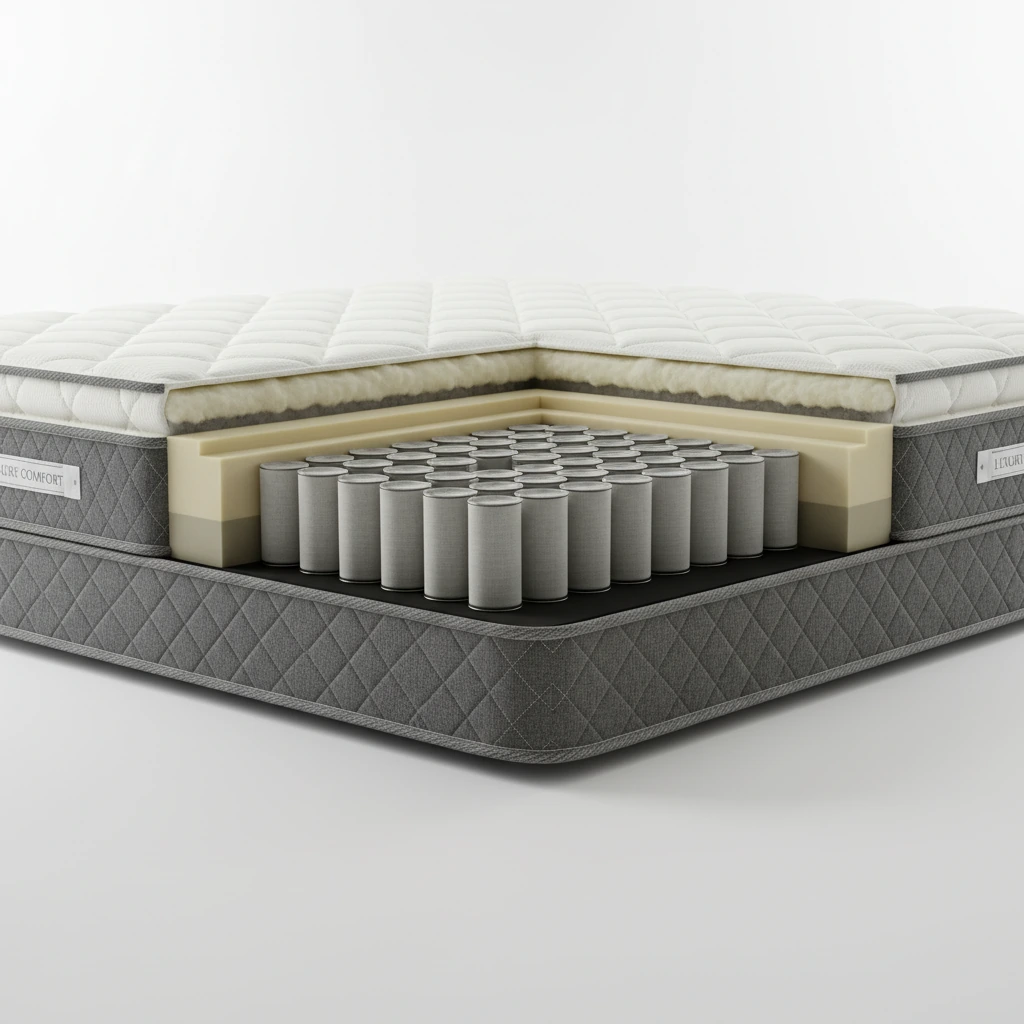
With a 100% cotton fitted sheet, the "yarn count" (a measure of yarn fineness) and the weave make a big difference to the overall impression. The higher the count, the finer the yarn, and generally the lighter and smoother the fabric. A lower count means thicker yarn, which tends to give a sturdy, crisp, dry texture.
The two main weaves are plain weave, where warp and weft cross alternately, and sateen, where yarns float over several others to create sheen and smoothness. Plain weave feels crisp and dry and wears well, while sateen offers a supple, silky hand. The same thinking applies to the 60 sateen and 80 sateen fabrics used for the shell fabric of a down comforter, so you may also find 60 sateen vs. 80 sateen: a specialist's guide to choosing down comforter shell fabric helpful.
How to choose the right size
A fitted sheet's gusset (the depth of its sides) needs to match the thickness of your mattress. Too shallow and the corners slip off; too deep and the sheet sags. We've put together the size relationships between Single, Semi-double, Double and so on — for comforters and mattresses alike — in How to choose duvet cover sizes: a quick-reference chart for comforters, futon mattresses, fitted sheets and pillowcases, so do check it before you buy.
Care tips to make it last
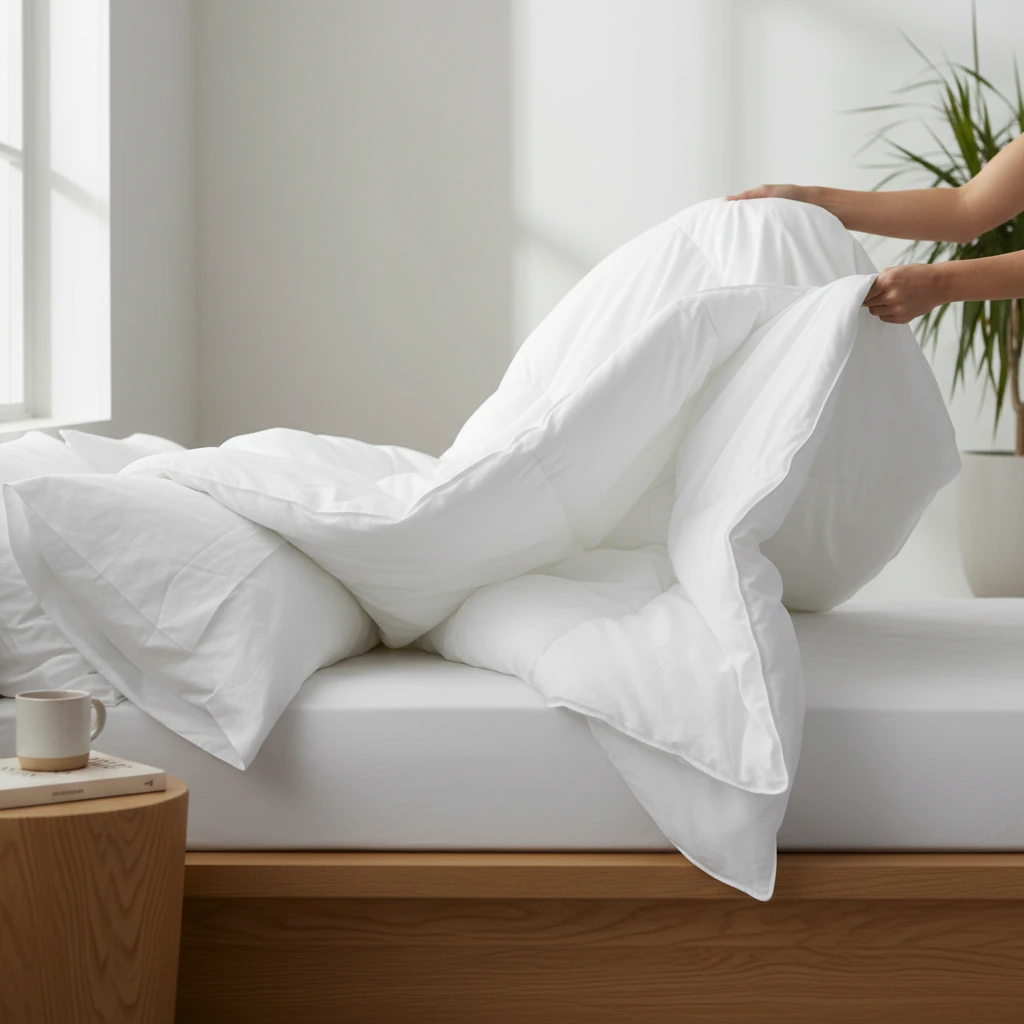
To keep a 100% cotton fitted sheet feeling fresh for years, wash it about once a week and air it regularly in the shade. Heavy use of bleach damages the fibers and leaves the fabric feeling rough, so check the care label and stick mainly to a mild (neutral) detergent.
At Omotesando Futonten, we offer a crisp white fitted sheet made from 100% cotton. Layer it with our 100% cotton bed pad in the same natural fiber and you'll strike an even better balance of moisture control and comfort. Come feel the weight and hand of the fabric for yourself, in store or online.
Frequently asked questions
Do 100% cotton fitted sheets wrinkle easily?
They do tend to wrinkle more than synthetic blends. Taking the sheet out as soon as the spin cycle ends, smoothing it into shape before hanging, and avoiding high-heat drying all keep wrinkles from showing.
Which do you recommend — 100% cotton or a cotton-polyester blend?
If moisture absorbency and hand-feel matter most to you, go with 100% cotton. If you value easy care and wrinkle resistance, a blend is the better fit. Choose according to your lifestyle.
Is there a way to prevent shrinkage in the wash?
Avoid high-heat drying and stick to low heat or line drying, and shrinkage stays minimal. Buying a size with a little room to spare also helps.
How do I choose the right fitted sheet size?
Choose a size whose gusset matches the thickness of your mattress or futon mattress. For detailed size pairings, please see our quick-reference chart for duvet cover sizes.
Does a higher yarn count always mean a better sheet?
A higher count means finer, smoother yarn, but not necessarily greater durability. We recommend choosing based on the hand-feel you prefer and how you'll use the sheet.