The answer in 30 seconds
- Warmth matters — and so does using the comforter so no gaps form. Warmth comes down to fill weight, fill power and quilt construction.
- Look for around 400dp or higher and 1.2–1.5kg. That's the guideline for a Single if you really feel the cold. Goose down winter-weight comforters tend to feel warmer at the same weight.
- Close the gaps at your neck and feet. Use a cover with a stand-up collar, and tuck the foot end of the comforter lightly under your body to keep the layer of warm air intact.
- Rethink the insulation underneath you, too. Heat escapes easily from the underside of your body. Simply adding a bed pad changes how quickly your body heat disappears.
If you run cold, sleeping warm under a down comforter comes down to two things: the warmth of the comforter itself, and using it so no gaps open up between it and your body. Warmth is determined by fill weight, fill power and quilt construction, while in daily use the key points are the gaps at your neck and feet, plus the insulation underneath you. Here we set out standards for choosing and using bedding, without claiming any medical benefits.
Why a down comforter can still feel cold
A down comforter creates warmth by holding plenty of air. The flip side is that if there isn't a sufficient layer of air between the down and your body, it can't deliver its full warmth. People who run cold often have chilly hands and feet, so in many cases the chill comes from "gaps" rather than from the comforter's performance. For help pinpointing the cause, see why your down comforter feels cold and what to do about it.
Three factors that determine warmth
The warmth of a down comforter is governed mainly by these three things.
- Fill weight: the amount of down. The more there is, the thicker the layer of trapped air and the greater the warmth — though too much weight can make it harder to turn over in your sleep.
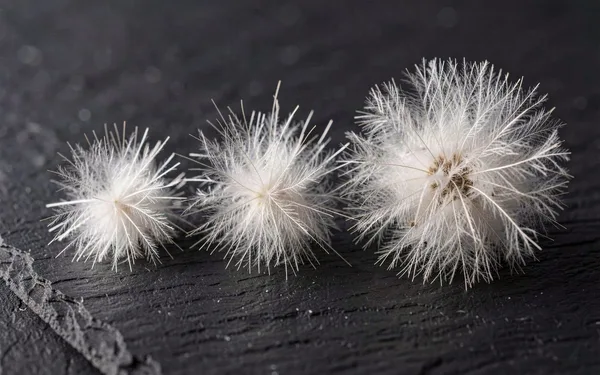
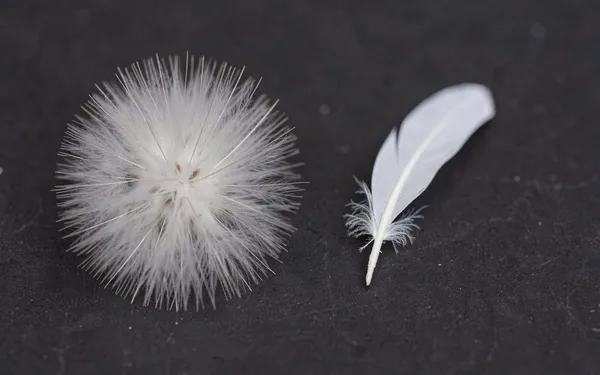
- Fill power: the number that shows how much loft the down has. At the same weight, higher fill power traps more air.
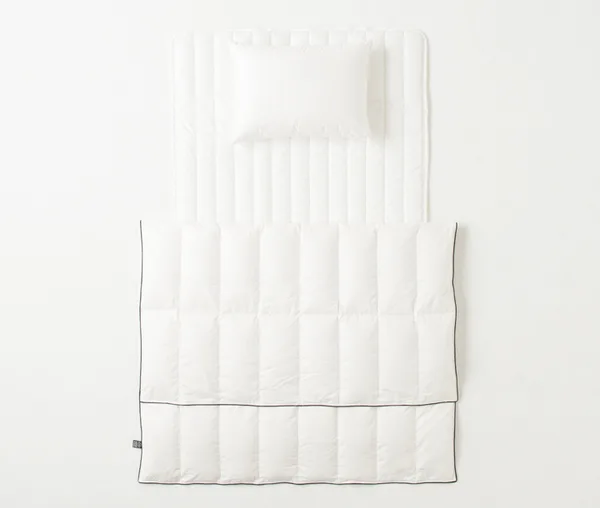
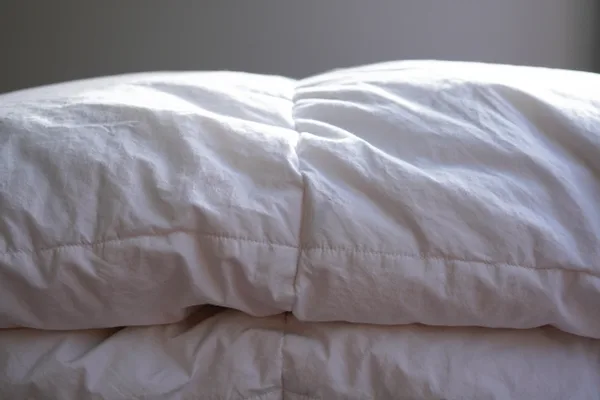
- Quilt construction: how the shell fabric is stitched. A comforter with small quilt boxes and evenly distributed down is far less likely to develop cold, thin spots.
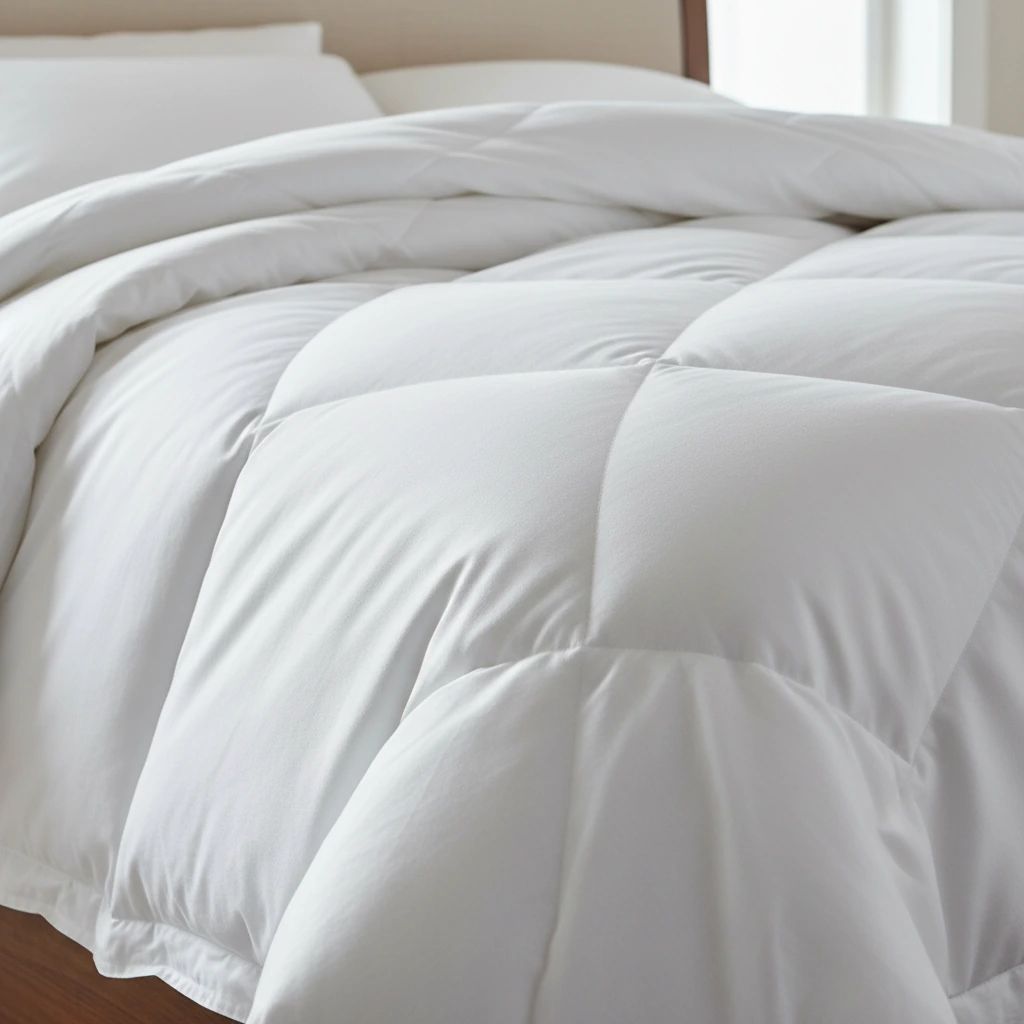
We've broken down fill weight guidelines and how different weights feel season by season in down comforter weight and fill weight guidelines, so take a look there as well.
Close the "gaps" at your neck and feet
If you run cold, the gaps at your neck and feet deserve special attention. When the neck area is open, warm air escapes from the comforter easily, and at the foot end the weight of the comforter tends to lift the fabric away from your body. Using a cover with a stand-up collar edge, or tucking just the foot end of the comforter lightly under your body, makes it easier to maintain that layer of air.

Rethink the insulation underneath you
Warmth isn't decided by the comforter alone. Heat is easily drawn away from the underside of your body through the mattress or futon mattress, and you'll feel the chill from below especially with thin mattresses or bedding close to the floor. Adding a single bed pad already changes how much body heat escapes. Cotton bed pads also absorb moisture well, so humidity is less likely to build up while you sleep (100% cotton bed pad).
Layering and using a blanket as well
If a down comforter alone isn't quite enough, you can add a blanket. The basic order is "body → down comforter → blanket." Down lofts up with your body heat and insulates best when it's closest to you, so the blanket goes on top of the comforter as a lid that keeps heat from escaping. Keep in mind, though, that a heavy blanket presses the down flat and reduces the layer of air, so choose something light for the top layer. Highly absorbent materials such as wool can also be used underneath (the right order for blankets and down comforters). We cover the reasoning behind layering in more detail in why your down comforter feels cold and what to do about it.
Down comforter guidelines for people who run cold
If you feel the cold keenly, a useful starting point is a fill power of around 400 dp or higher and a fill weight of roughly 1.2 kg to 1.5 kg in Single size, which makes it easier to secure a good layer of air. A winter-weight comforter made with goose down has excellent loft and tends to feel warmer at the same weight.
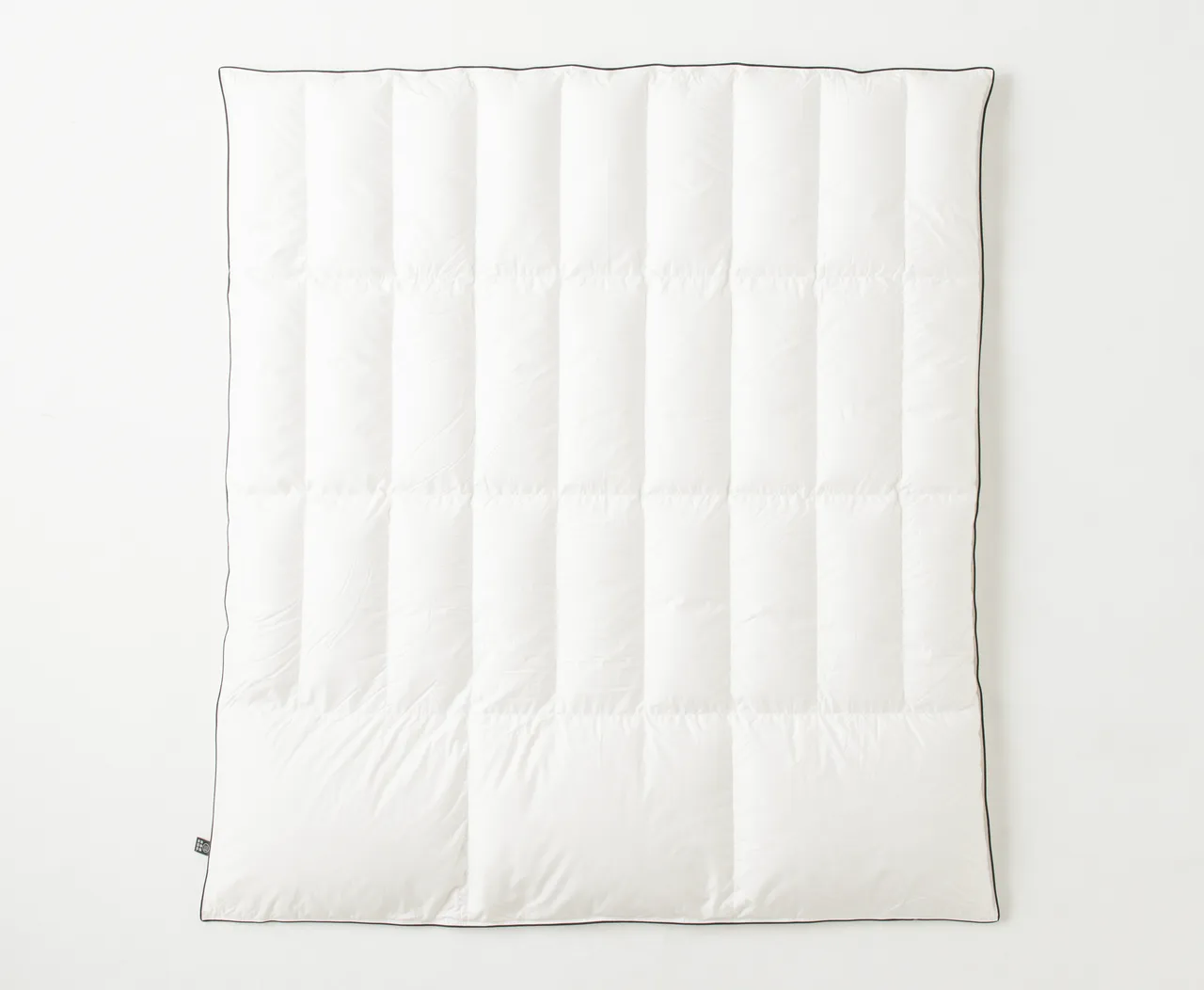
Our lineup includes winter-weight comforters built for cold-weather warmth, such as the White Goose Sleep Down Winter-Weight Comforter and the Mother Goose Sleep Down Winter-Weight Comforter. If you'd like to stay warm while reducing environmental impact with recycled down, the Clean Cycle Sleep Down Winter-Weight Comforter is also worth considering.
Summary
For anyone who runs cold, sleeping warm right down to your toes under a down comforter means reviewing three things: the comforter's own performance (fill weight, fill power and quilt construction), how you use it to close the gaps at your neck and feet, and the insulation underneath you. Rather than trying to solve it with a single piece of bedding, build up the layer of warm air by combining them.
Frequently asked questions
Why does my down comforter still feel cold?
If there isn't a sufficient layer of air between the down and your body, the comforter can't deliver its full warmth. People who run cold tend to have chilly hands and feet, and in many cases the chill comes from "gaps" at the neck and feet rather than from the comforter's performance.
Does more fill weight always mean more warmth?
More fill weight does create a thicker layer of air and more warmth, but too much weight can make it harder to turn over in your sleep. Since higher fill power holds more air at the same weight, look at the amount of down and the quality of the down together.
What should I look for in quilt construction?
Look for small quilt boxes with down distributed evenly. An evenly filled comforter is less likely to develop thin spots, so cold air has nowhere to seep in. Along with fill weight and fill power, it's one of the key measures of warmth.