The answer in 30 seconds
- There is no clear legal standard for the age to start using one. Japan's Consumer Affairs Agency and Children and Families Agency have repeatedly warned about suffocation accidents caused by bedding during infancy.
- Avoiding thick bedding until around age 1 is the safer choice. One common guide is when a baby can roll over confidently and push away a cover that lands on their face.
- Judge by development and supervision, not age alone. Development varies from child to child, so no age can be called guaranteed safe.
- If you do use one, choose a lightweight, smaller size that suits your child's build. While your baby sleeps, have a caregiver check regularly that the comforter is not covering their face.
There is no clear legal standard for the age at which a baby can start using a down comforter. That said, Japan's Consumer Affairs Agency and Children and Families Agency have repeatedly warned about suffocation accidents involving bedding during infancy, so the safer approach is to avoid thick bedding that can easily cover the face at least until around age one, when a child can roll over confidently on their own. This article explains why, and what to keep in mind when you do start using one.
Why thick bedding calls for extra care with infants
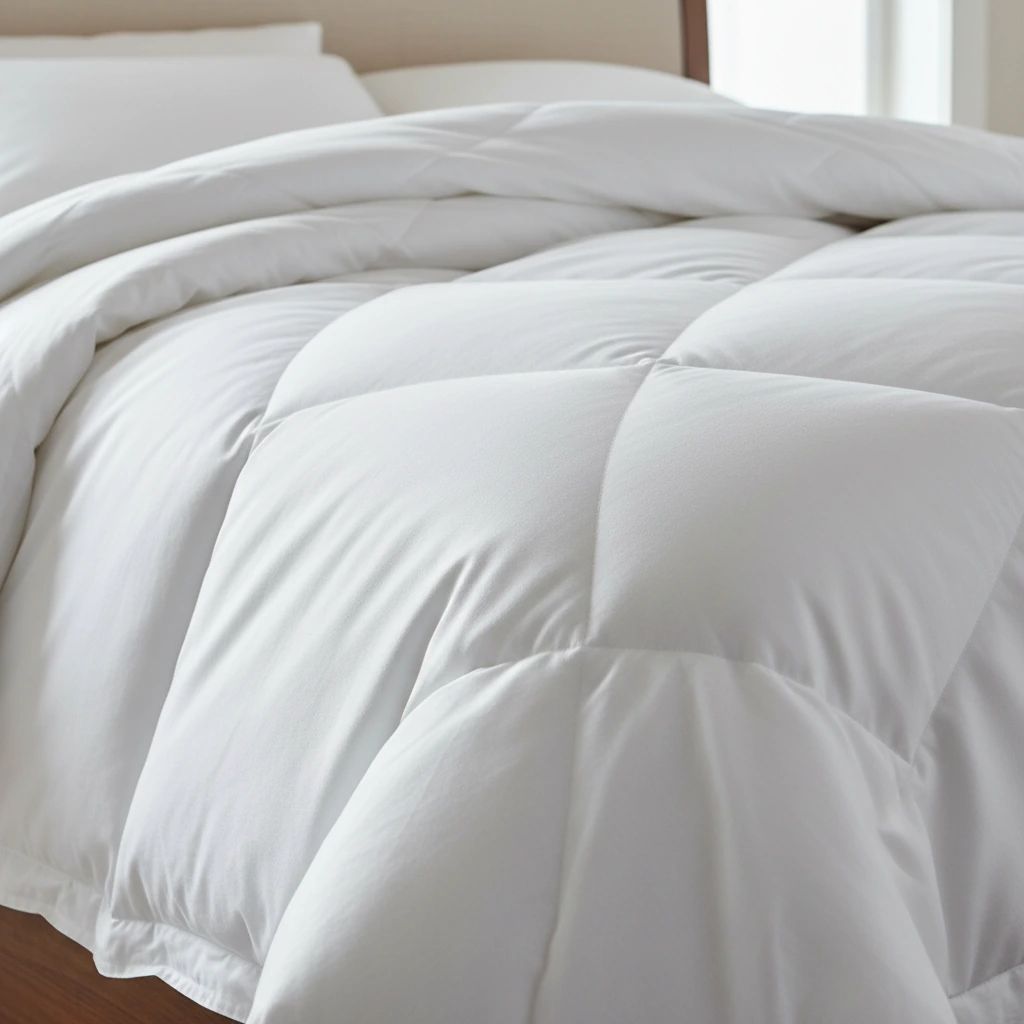
Many infant suffocation accidents are linked to a baby lying face down with their face pressed into soft bedding. A down comforter lofts gently and conforms easily to the shape of the face, and some products are heavy enough that a small push won't lift them — which is why they're often considered unsuitable for babies who can't yet roll over reliably. Japan's Consumer Affairs Agency and Children and Families Agency also issue repeated warnings about infant sleep environments on their official websites.
The real issue isn't that down comforters are inherently dangerous, but that the shape and weight of the bedding don't match the baby's stage of development. Even a down comforter can carry less risk, depending on how it's used, if it's lightweight and designed so it's less likely to cover the face.
At what age can a baby use one? How to think about the timing
A common guideline is around age one, when a child can roll over on their own and push away a covering near their face. Development varies from child to child, however, so no one can state that a certain age is automatically safe. Rather than going by age in months alone, consider how well your child rolls over and whether you'll be able to check on them while they sleep.
For general guidance on when to start using a down comforter, see When Should You Start Using a Down Comforter? A Specialist Store Explains the Switch-Over Timing by Temperature — a useful reference if you're thinking about it from a seasonal perspective.
Points to keep in mind if you use one
If you introduce a down comforter during infancy or toddlerhood, keeping the following points in mind helps make it safer.
- Choose a lightweight type with a lower fill weight, so your baby can push it away if it ever covers their face
- Don't repurpose an adult comforter — use a smaller size suited to your baby's body
- While your baby sleeps, check regularly that the comforter isn't covering their face
- Check that your baby isn't lying face down and that the bedding hasn't come loose and draped over them
For guidance on down comforter weight and fill weight, see Down Comforter Weight & Fill Weight Guide|A Specialist Store Explains the Difference Between 1.0kg, 1.2kg and 1.5kg. It's a helpful comparison when considering how light a baby comforter should be.
About baby futons at Omotesando Futonten
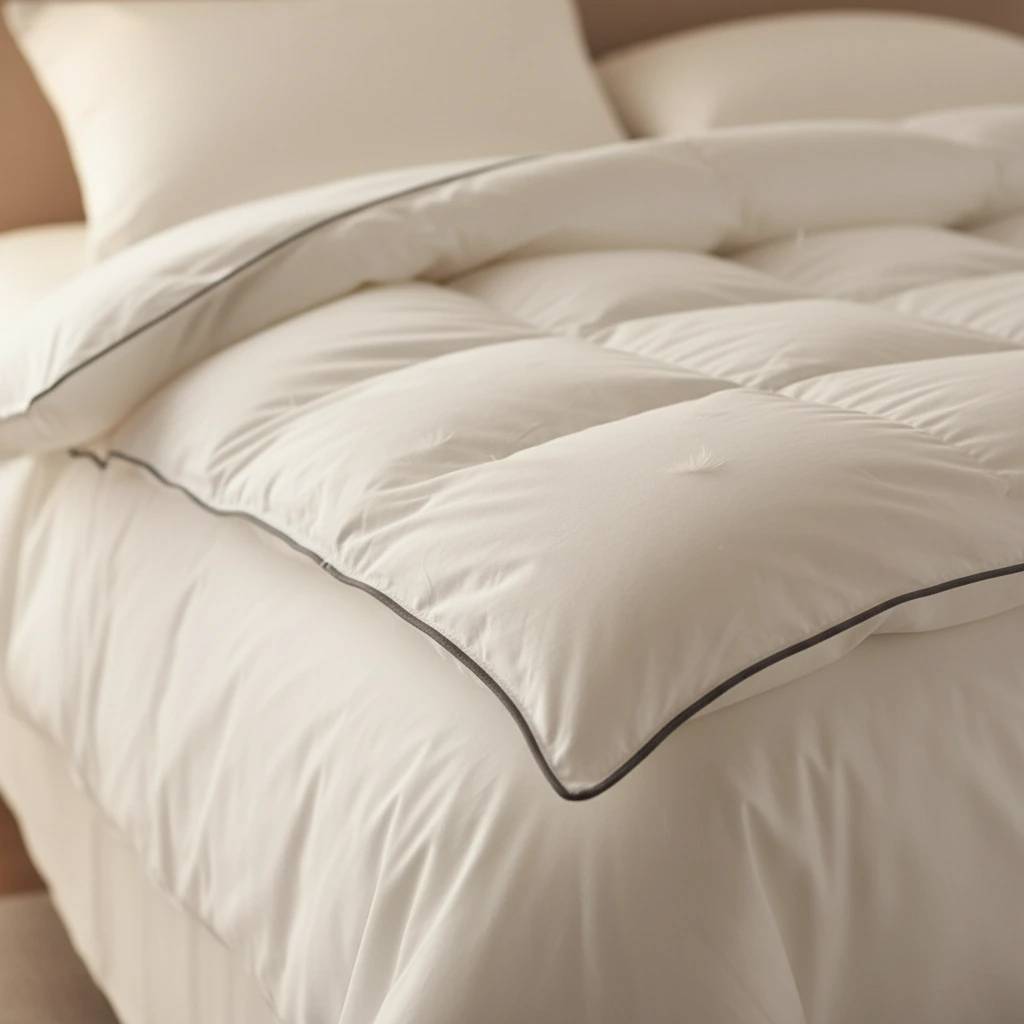
We offer a comforter designed specifically for babies. The Baby Comforter with Cover is made in a true baby futon size — not an adult comforter cut down to fit. For families setting up their first bedding, we also offer the Baby Futon Starter Set, which includes the comforter, cover and more in one package. These descriptions cover product specifications only; they are not a recommendation or guarantee of use from any particular age. Parents and caregivers should decide when to start using them based on their child's development.
For the thinking behind our baby futons, see Introducing Omotesando Futonten's Baby Futons <High Quality・Exceptionally Clean・Luxurious>.
Summary
There's no single right answer for when to start using a down comforter with a baby, but given the risk of suffocation, careful judgment is needed until your child can roll over well on their own. If you do use one, combine light weight, the right size and supervision during sleep to create an environment that puts safety first.
Frequently asked questions
Are down comforters themselves dangerous for babies?
The real issue is said to be less the down comforter itself than a mismatch between the shape and weight of the bedding and the baby's stage of development. Because a down comforter conforms easily to the shape of the face, it's often considered unsuitable for babies who can't yet roll over reliably. A lightweight design that's less likely to cover the face can lower the risk, depending on how it's used.
Can I use an adult down comforter for my baby?
Rather than repurposing an adult comforter, it's better to choose a smaller size suited to your baby's body. A lightweight type with a lower fill weight is easier for a baby to push away if it ever covers their face.
What should I watch out for once I start using one?
Have a caregiver check regularly that the comforter is not covering the baby's face during sleep. Also check whether the baby has rolled onto their stomach, and whether the bedding has come loose and is draped over them.
How to think about comforters for newborns and by age in months
Here we sort out the questions people search for most — "Can it be used from the newborn stage?" and "Is it safe at age 1?" — month by month.
Is it okay to use a comforter from the newborn stage?
Newborns cannot roll over, so if a cover ends up over their face they cannot push it away themselves. As Japan's Consumer Affairs Agency and Children and Families Agency continue to warn, careful judgment is needed before using a thick comforter at this stage. If you do use one, choose light, thin bedding and check on your baby frequently while they sleep.
Is it okay to use a comforter once the baby is over 1 year old?
Around 1 year of age is often cited as a rough guide for when babies can roll over on their own, but development varies from child to child, so you cannot say that turning 1 automatically makes it safe. It is important to judge based on how well your child rolls over, together with whether your sleeping setup allows a caregiver to keep an eye on them.
Does the same thinking apply to comforters other than down comforters?
Even if the fill is not down, the same caution applies to any comforter that is thick and can press closely against the face. What matters is less the type of material and more whether the weight and shape of the bedding suit your baby's stage of development.