The answer in 30 seconds
- One comforter for all four seasons rarely worksA winter-weight comforter is made for cold months and a summer-weight one for hot nights; no single comforter can handle the full swing in temperature.
- Use winter-weight, all-season and summer-weight comforters for what they do bestSwitching between the three types as the seasons change is the most comfortable approach.
- Layering an all-season and a summer-weight comforter works wellOn chilly nights, layering an all-season comforter over a summer-weight one gives you warmth close to a winter-weight comforter, with room to adjust.
- Let your home decide how many you needDepending on how much you use heating and cooling, a two-comforter setup may be all you need.
The short answer: in most cases, a single down comforter is not enough to stay comfortable through a full year in Japan. A winter-weight comforter retains so much heat that it becomes too warm in summer, while a summer-weight comforter alone can't keep out the winter cold. For comfortable sleep year-round, the practical approach is to rotate between winter-weight, all-season and summer-weight comforters, or to layer them to fine-tune your warmth.
Why one down comforter rarely covers the whole year
The warmth of a down comforter comes down to how much down is packed inside the shell fabric (the fill weight) and the quality of that down. A winter-weight comforter, with its high fill weight, is designed for cold weather and will leave you hot and clammy in midsummer. A summer-weight comforter, with much less fill, often feels too thin for spring and autumn temperatures. In Japan's climate, where temperatures swing from the low teens to nearly 30°C, asking one comforter to cover the entire year means some season will always feel wrong.
What winter-weight, all-season and summer-weight comforters each do
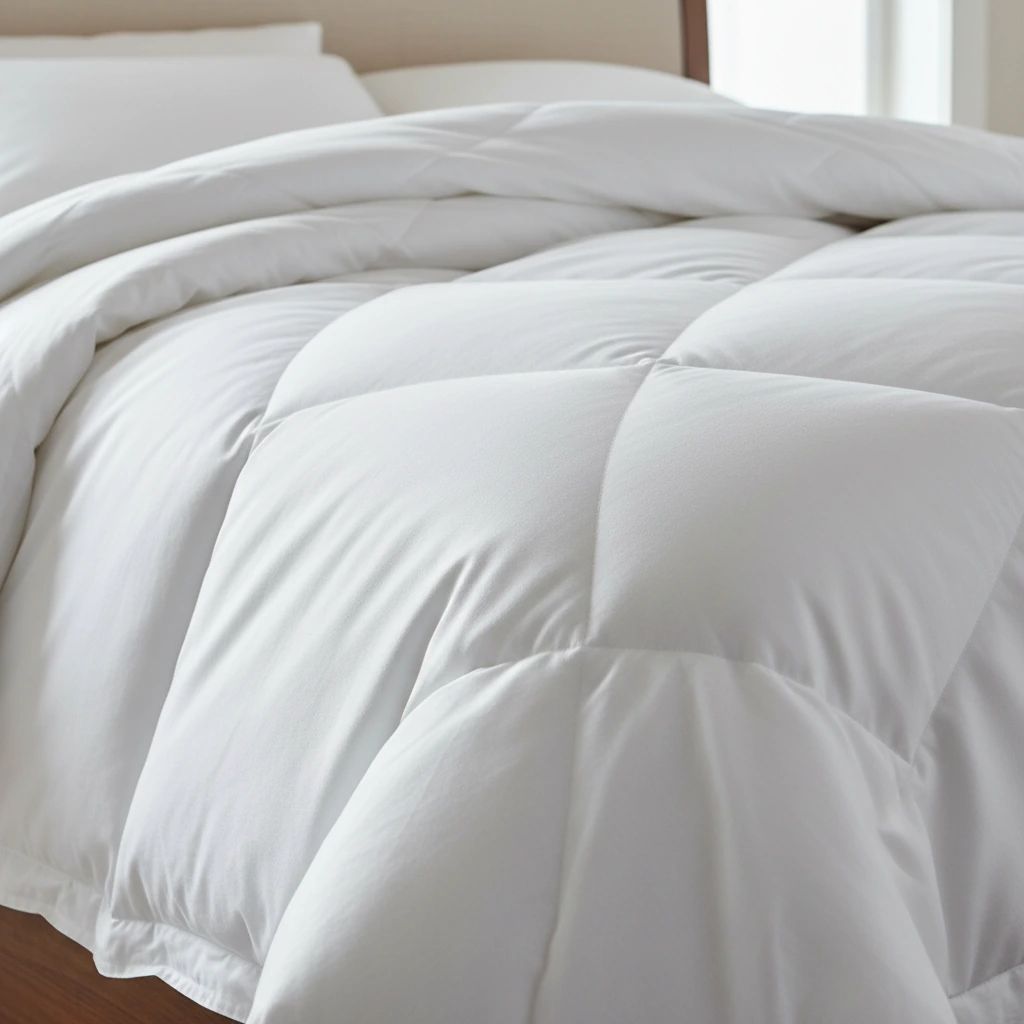
Down comforters fall into three broad types.
- Winter-weight comforter: a high-fill-weight winter comforter built for the coldest months
- All-season comforter: lighter than a winter-weight comforter and easy to live with through the temperature swings of spring and fall
- Summer-weight comforter: thin and light, ideal for muggy summer nights
Ideally you'd own all three, but if storage space or budget makes that difficult, you can build around the all-season (medium-weight) comforter you'll use for the longest stretch of the year — adding a blanket in winter and switching to a single summer-weight comforter in the heat. For temperature guidelines on when to change from one type to the next, see our article on when to switch your down comforter for spring and fall.
Another option: pairing an all-season comforter with a summer-weight one
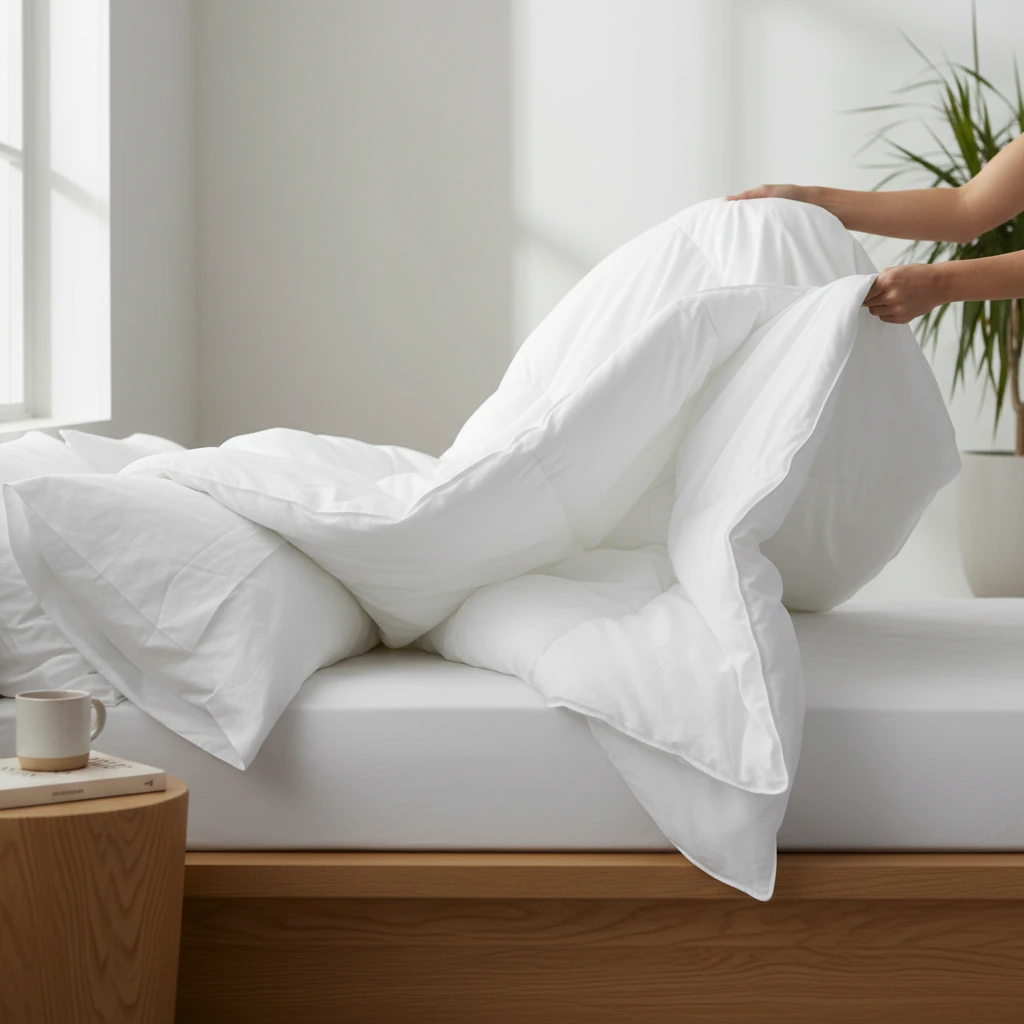
If you want comfortable coverage all year without overthinking it, you don't have to rely on a single winter-weight comforter — you can layer an all-season comforter over a summer-weight one. On chilly early-winter or early-spring nights, that combination gives you warmth close to a single winter-weight comforter, with room to fine-tune. In midsummer you use the summer-weight comforter alone, and in midwinter you add a blanket to the all-season comforter. Combining two lighter comforters season by season makes it far easier to dial in the right temperature than relying on one heavy winter comforter.
What to look for when choosing a down comforter for year-round use
If you're building your bedding from scratch, start by thinking about which season lasts longest in your home. In a bedroom where the air conditioning or heating runs regularly, an all-season comforter can carry you through most of the year comfortably. If you rarely use heating or cooling, a two-comforter setup — winter-weight plus summer-weight — is the safer choice. At Omotesando Futonten, our spring/fall options include Refined Warmth. White Goose Sleep Down All-Season Comforter for Spring & Fall and Sleep Gently with Nature. Flower Sleep Down All-Season Comforter for Spring & Fall, made with plant-derived materials for a soft, gentle feel. Both work beautifully on their own and are designed to layer easily with a summer-weight comforter.
For more on the features of the all-season comforter itself and how to choose one, see How to Choose the Best All-Season Comforter; and if you'd like to know exactly how it differs from a winter-weight comforter, also read What Is a Winter-Weight Comforter?
Summary
The reality is that in Japan's climate, getting through the entire year with a single down comforter is rarely practical. Once you understand the role each type plays — winter-weight, all-season and summer-weight — you can change comforters at the turn of the season, or layer an all-season comforter over a summer-weight one to fine-tune your warmth, and build a sleep environment that works comfortably all year long.
Frequently asked questions
How many down comforters do I need to stay comfortable all year?
Three is ideal — winter-weight, all-season and summer-weight. If storage or budget is limited, a two-comforter setup also works well: build around the all-season comforter, switch to a summer-weight one in summer, and add a blanket in winter.
Is it okay to layer an all-season comforter over a summer-weight one?
Absolutely. On chilly nights, layering an all-season comforter over a summer-weight one can give you warmth close to that of a single winter-weight comforter.
Can I keep using my winter-weight comforter in summer?
You can, but the high fill weight tends to trap heat and moisture, making sleep uncomfortable. We recommend switching to a summer-weight comforter for the warmer months.
When should I make the seasonal switch?
Use outdoor temperature as your guide. For detailed timing, see our article on switching comforters for spring and fall.