The answer in 30 seconds
- Expect roughly 10–15 yearsThat said, results vary widely with how a comforter is used, so don't judge by age alone.
- Lost loft, cold nights and odor are the signsLoft that won't come back, waking up cold in the middle of the night, or an odor that won't wash out are all signs it's time to consider replacing.
- If the fabric is sound, refurbishing is an optionIf the shell fabric is undamaged and the down is high quality, refurbishing can often restore that plump, lofty feel.
- Sleep signs matter more than the seasonRather than waiting for a sale, it's safer to act as soon as you notice your sleep quality slipping.
People often say a down comforter should be replaced every 10–15 years, but results vary widely depending on how it's used, so we don't recommend going by age alone. What really matters are concrete signs: loft that won't come back, waking up cold in the middle of the night, or an odor that won't go away. This article explains how to check your comforter yourself and how to decide between replacing it and having it refurbished.
Why the signs matter more than the years
A down comforter's lifespan depends heavily on how you store it day to day, how often you air it in the sun or take dust mite precautions, and the humidity of the room you sleep in. Two comforters can both be ten years old, yet one that's been aired in the shade regularly and one that's been left packed away will be in completely different condition. That's why checking the state your comforter is in right now — rather than counting the years since you bought it — is the fastest way to know when to replace it.
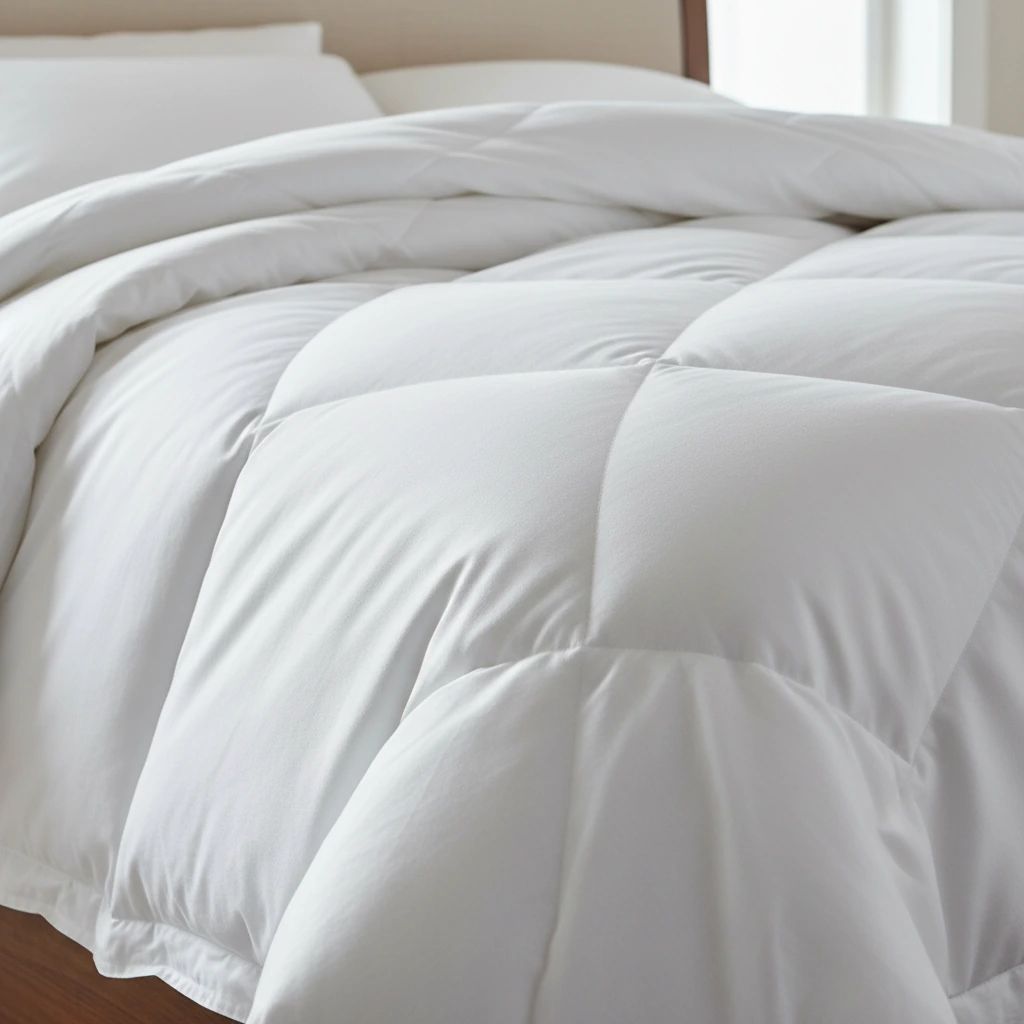
Five self-checks that signal it's time to replace
If three or more of the following apply, it's time to consider either replacing or refurbishing your comforter.
- Folded up, the comforter is noticeably thinner than when you bought it
- You're waking up more often to cold air seeping in at the shoulders or feet
- Odors linger even after washing or professional cleaning
- Down regularly escapes through the shell fabric
- The comforter feels lighter than it used to (the down may have lost volume)
Changes that affect sleep quality in particular — waking up cold in the night, or worsening shoulder stiffness and feeling chilled — are signs your bedding is no longer doing its job. Going by how you actually feel, rather than by the calendar, makes it far less likely you'll miss the right moment to replace it.
Replace, or refurbish?
Even if your comforter feels flat, you don't necessarily need to buy a new one. If the shell fabric is undamaged and the down is still in good condition, down comforter refurbishing (re-making) can restore its plump loft. Here's how to decide.
| What you see | Recommended option |
|---|---|
| Shell fabric is undamaged, but the comforter feels flat | Down comforter refurbishing (uchinaoshi) |
| Tears or yellowing across large areas of the fabric | Replace it |
| Filled with high-quality down with a high fill power | Well worth restoring through refurbishing |
| An economy-priced down comforter showing significant age-related wear | Replacing is usually the better value |
As a rule, comforters filled with genuinely high-quality down — Hungarian or Polish white goose down, for example — benefit most from refurbishing. Conversely, economy-priced comforters with modest fill weight or fill power to begin with tend to show little difference between the cost of refurbishing and the cost of a new comforter, so replacing is often the more sensible choice. To learn how refurbishing works and what the process involves, see our Down Comforter Refurbishing / Clean Cycle Reform page.
Is there a best season to replace your comforter?
Generally speaking, the periods when summer bedding is being cleared out and when new fall collections arrive are known as good times to replace a comforter at an attractive price. From a sleep-science point of view, though, we'd rather say this: instead of waiting for a seasonal sale, if the self-check above has turned up any warning signs, acting early — whatever the season — is what protects your sleep quality. If you wait until the depths of winter and only start looking once you realize you're "too cold to sleep," your choices may be limited. If you're considering a new purchase, comparing classics such as the Luxurious warmth: White Goose Sleep Down winter-weight comforter is an easy way to get a feel for your options.
What should you do with your old down comforter?
Once you've decided to replace it, the next question is usually how to dispose of the old down comforter. Beyond putting it out as oversized household waste through your local authority, programs that collect and recycle down as raw material are becoming more widespread. We compare specific disposal methods and typical costs in detail in our article on how to dispose of, hand back or replace a down comforter.
Not sure? Have a specialist assess its condition
The condition of the down inside a comforter is hard to judge accurately from the outside. We cover more detailed guidance on expected lifespan and how to decide in How many years does a down comforter last? How to decide between replacing and refurbishing, but if you want a judgment based on the actual state of your comforter, the surest route is to have specialist staff examine it in person. At Omotesando Futonten, we're happy to advise on whether replacement or refurbishing is the better fit, based on the condition of the shell fabric and the down.
Frequently asked questions
How often should a down comforter be replaced?
The usual guideline is 10–15 years, but it varies with how you store and care for it. Rather than going by age alone, we recommend judging by actual condition — loft that no longer returns, or feeling cold at night.
Which is the better value: refurbishing or replacing?
If the shell fabric is undamaged and the comforter was filled with high-quality down to begin with, refurbishing can often bring it back to life. If it's an economy-grade comforter that has deteriorated significantly, replacing it may be more cost-effective.
Can I revive a flat, worn-out down comforter myself?
Airing it in the shade or giving it a gentle shake can temporarily restore some loft, but if the down itself has deteriorated, that won't solve the underlying problem. Depending on the condition, we'd suggest considering refurbishing.
How should I dispose of an old down comforter?
Besides putting it out with local household waste, there are programs that collect down for recycling as raw material. See our related article for detailed disposal options.
Is there a good season to replace a comforter?
End-of-summer clearances and the fall changeover to new collections make shopping easier, but if you're seeing signs such as being too cold to sleep, we recommend acting early no matter the season.