The answer in 30 seconds
- Baffle-box quilting is a boxed construction with internal wallsFabric walls between the top and bottom shells create space for the down to loft fully.
- Fewer cold spots than flat (sewn-through) quiltingBecause the down sits in a deeper chamber, it suits winter-weight comforters.
- Double-layer and twin quilting go a step furtherTwo layers are stacked with the seams offset, so there is down over virtually every point of the comforter.
- Look at the down quality, not just the constructionChecking the down cluster ratio, fill power and shell fabric together makes the choice much easier.
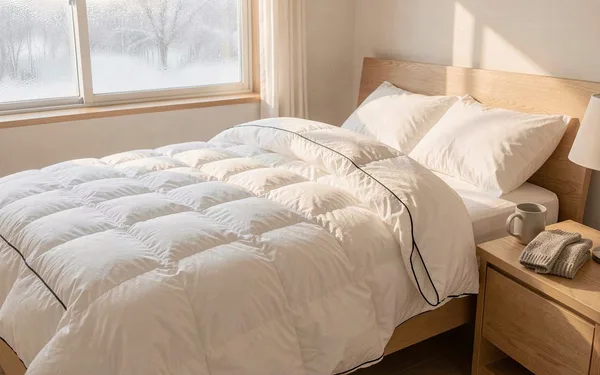
"Baffle-box quilting" in a down comforter refers to a construction in which fabric walls (baffles) are sewn between the shell layers to hold the down in place. Compared with flat, sewn-through quilting, it gives the down more room to move and expand, so the comforter lofts more easily and is less prone to cold spots. That said, baffle-box quilting is not automatically the best choice in every case — the right construction depends on the thickness of the comforter and how you plan to use it.
What quilting is, and why it's needed
A down comforter is made by enclosing down between a top and bottom layer of shell fabric, but left as is, the down would simply shift to one side inside the comforter. To prevent this, the shell fabric is stitched together to form small compartments (boxes) and the down is distributed evenly among them — this is quilting. Differences in stitching and construction give us types such as sewn-through (flat) quilting, baffle-box quilting, two-layer quilting and twin quilting.
The difference between sewn-through (flat) quilting and baffle-box quilting
Sewn-through (flat) quilting is the simplest construction, stitching the top and bottom fabric directly together. It keeps manufacturing costs down, but no down sits along the seam lines, so warmth tends to drop at those points. It is most often used for lightweight summer-weight (light) comforters and all-season (medium-weight) comforters.
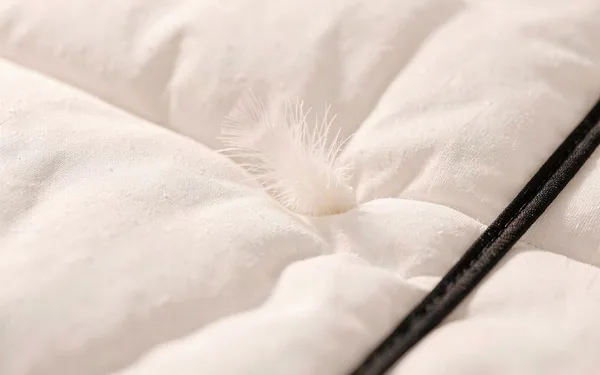
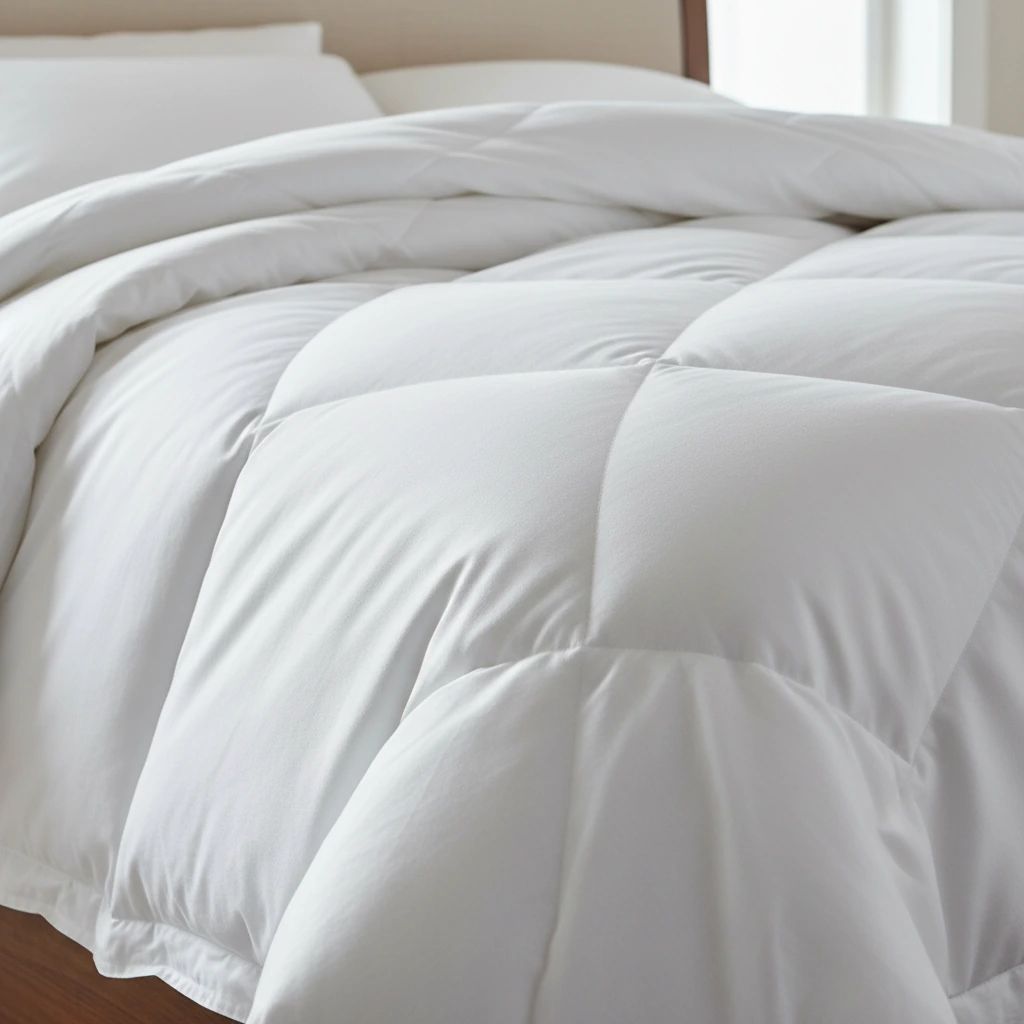
Baffle-box quilting sandwiches strips of fabric (baffles) between the top and bottom layers to create box-shaped compartments. Because it provides the depth needed to hold plenty of down, it suits winter-weight comforters. With room to expand, the down can deliver its natural loft, so the same fill weight often feels warmer. The construction is more complex, so sewing takes more work than sewn-through (flat) quilting.
How it differs from two-layer and twin quilting
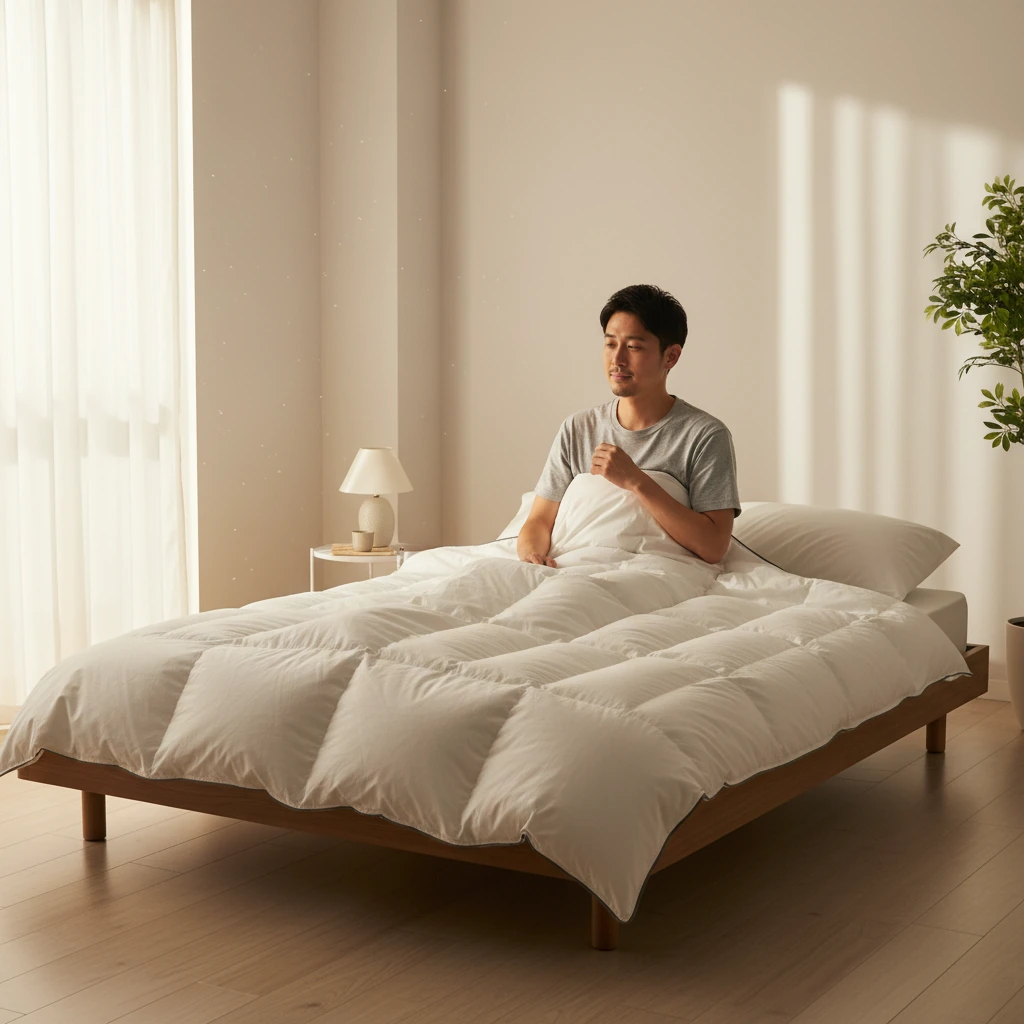
For even greater warmth there are "two-layer quilting" and "twin quilting." Here the comforter is made as two separate layers, upper and lower, stacked so that the quilting seams of each layer are offset. In a single-layer comforter the seams are the weak point, but by overlapping two layers with offset seams, you get much closer to having down present at every point of the comforter. Most of the finest down comforters use this two-layer or twin quilt construction.
Keep in mind, though, that two-layer quilting uses more fabric and more sewing steps, so the comforter tends to be heavier and more expensive. If lightness is your priority, two-layer quilting isn't necessarily the right answer.
Quilt construction alone doesn't determine quality
Quilt construction is one factor affecting warmth and resistance to flattening, but you'll also want to check the quality of the down (down cluster ratio and fill power) and the weave and yarn count of the shell fabric. Even with baffle-box quilting, low-quality down won't deliver real loft. Conversely, even excellent down will offer limited warmth if it's made thin with sewn-through (flat) quilting. When buying, don't judge by the name of the construction alone — check the fill weight and fill power figures as well, and the choice becomes much clearer.
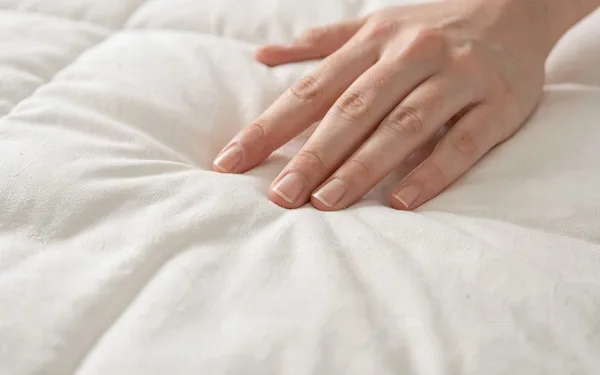
In comforters where the quilt seams are spaced too closely, there is even less room for the down, so rather than choosing on looks alone, it's worth touching the comforter in person to check its thickness and loft.
Choosing a quilt construction to match how you'll use it
- Winter-weight comforter: focus on baffle-box or two-layer quilting, and look for fill power of 400dp or higher as a guide
- All-season (medium-weight) comforter for spring and fall: many are baffle-box but thinner, so prioritize the balance of lightness and warmth
- Summer-weight (light) comforters and summer down blankets: sewn-through (flat) quilting is often plenty, so feel free to put lightness first
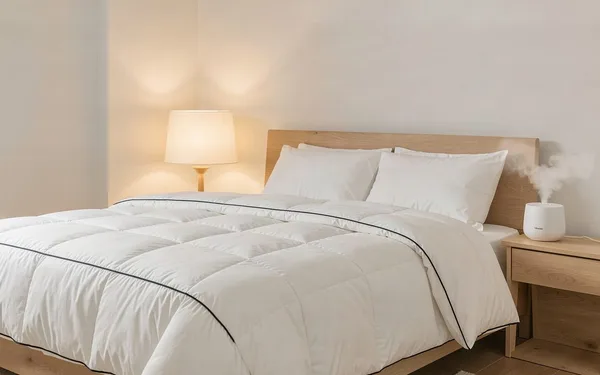
Our Quality warmth. White Goose Sleep Down Winter-Weight Comforter uses baffle-box quilting, designed to help the down hold its loft through the winter. If you're after an even higher level of warmth, consider the Premium Mother Goose Sleep Down Winter-Weight Comforter as well. Alongside quilt construction, we also cover differences in shell fabric in 60 sateen vs. 80 sateen: what's the difference? — do take a look.
If you'd like to review how to choose a down comforter from the ground up, How to Choose a Down Comforter | 5 Criteria: Down Cluster Ratio, Fill Power, Shell Fabric and More is also a helpful read.
Frequently asked questions
Which is warmer, baffle-box quilting or sewn-through (flat) quilting?
Generally, baffle-box quilting gives the down more room and lets it loft better, so it has the advantage in warmth. However, the quality of the down and the fill weight also matter, so we recommend looking at the whole picture rather than judging by construction alone.
Should I always choose two-layer quilting?
Two-layer and twin quilting compensate for the weak points at the seams, but the extra fabric tends to make them heavier and more expensive. If lightness matters most to you, a well-made single-layer baffle-box comforter can be more than enough.
Does down escape easily through the quilt seams?
Down can work its way out if the stitching is poorly done, but this comes down to sewing precision and the weave of the shell fabric far more than the construction itself. If you're concerned, check the yarn count and weave of the shell fabric as well.
Is baffle-box quilting also used for all-season and summer-weight comforters?
For all-season (medium-weight) and summer-weight (light) comforters, where you want to keep the loft lower, sewn-through (flat) quilting or shallow baffle-box quilting is sometimes used. The thickness you need varies by season, so choose a construction that suits how you'll use it.