The answer in 30 seconds
- Blends sit midway between cotton and polyesterThe fabric is engineered to balance moisture absorption with quick drying and wrinkle resistance.
- Labeled percentages allow a margin of errorA tolerance of about ±4–5% is legally permitted, so the figures are not exact absolutes.
- A higher polyester content is practical if you sweat a lotGiven that we lose about 200 ml of sweat a night, roughly 50% cotton / 50% polyester is also an option if you launder frequently.
- Weave can also reduce pilling and staticHigh-density weaves and double-face fabrics curb these weak points without relying on the blend ratio alone.
A cotton-polyester blend is a fabric woven from cotton and polyester in a set ratio, combining cotton's moisture absorption with polyester's quick drying and wrinkle resistance. Typical blends are 80% cotton / 20% polyester and 60% cotton / 40% polyester, and as the ratio shifts, so does the balance between hand-feel and performance. If you're torn between a blend and 100% cotton, the basic question is whether you prioritize easy care or softness and moisture absorption.
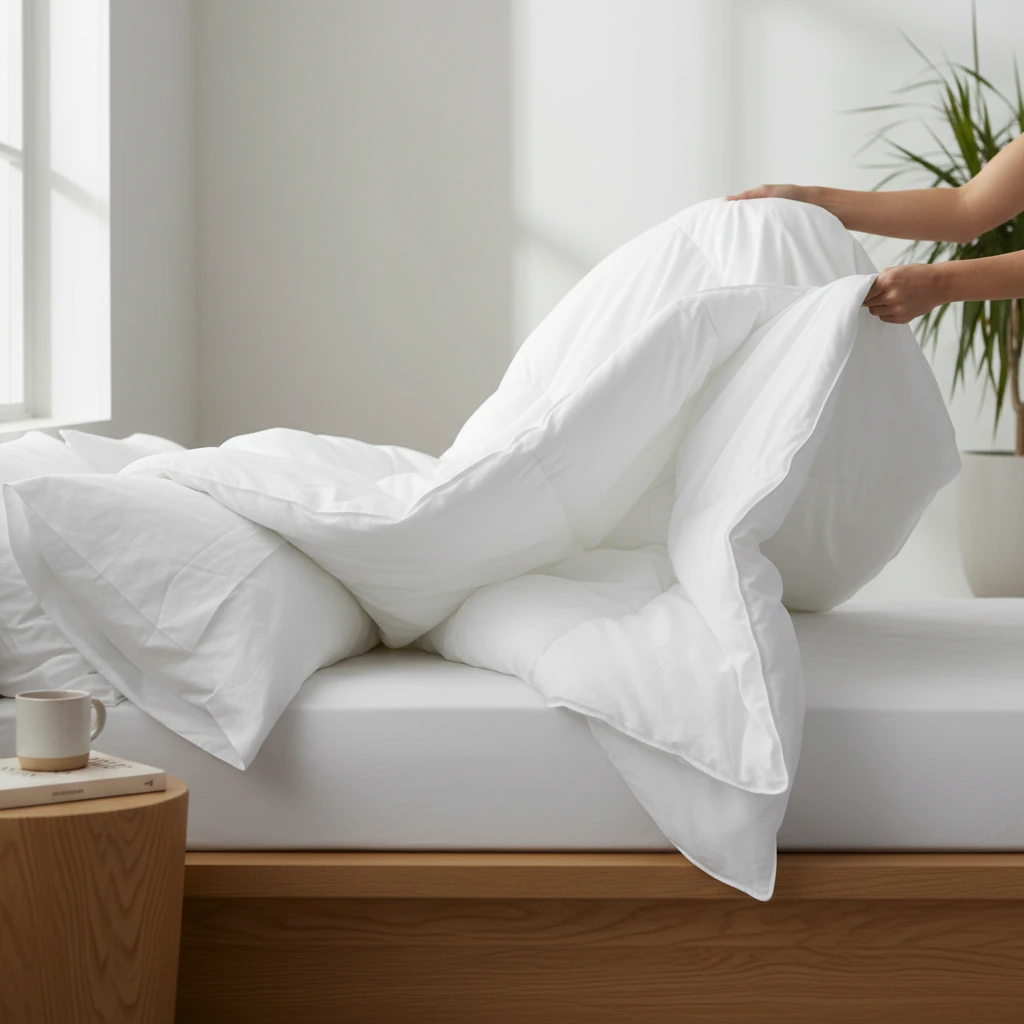
The great advantage of a blended fabric is that it is designed to take the best of both. Cotton alone is slow to dry and shrinks easily; polyester alone can feel static-prone and stuffy. In a blend, each fiber covers the other's weak points. If easy care matters to you, a blend is well worth considering for sheets and duvet covers.
Cotton vs. polyester: how the fibers compare
Let's start by laying out the strengths and weaknesses of each material.
| Item | 100% cotton | 100% polyester |
|---|---|---|
| Moisture absorption | ◎ | △ |
| Quick drying | △ | ◎ |
| Wrinkle resistance | △ | ◎ |
| Shrink resistance | △ | ◎ |
| Softness against the skin | ◎ | △ |
| Risk of static and pilling | Low | Somewhat high |
TC (cotton-polyester) fabric is said to dry faster than 100% cotton after washing, to wrinkle less thanks to the polyester content — cutting down on ironing — and to shrink less than 100% cotton, though it can feel slightly firmer against the skin (Okadaya.). Blends are easier to choose once you understand them as fabrics deliberately tuned to these in-between characteristics by adjusting the ratio.
How to read a "Cotton 00% / Polyester 00%" label
The figures in a fiber composition label actually carry a legally permitted tolerance. Under the Consumer Affairs Agency's Textile Quality Labeling Regulations, a 100% claim allows a tolerance of -1% for fibers other than wool; where the figure is a multiple of five, ±5% is permitted; and in all other cases, ±4% (Consumer Affairs Agency). In other words, a label reading "Cotton 60% / Polyester 40%" does not necessarily mean exactly 60.0% cotton — there can be a margin of a few percent.
In addition, when one fiber accounts for more than 80% of the blend, it may be labeled using "or more" and "less than" wording, such as "Cotton 80% or more / Other fibers less than 20%" (Japanese Law Translation Database). The latest version of these regulations — amended December 25, 2024 and effective January 1, 2025 — is published on the Consumer Affairs Agency website (Consumer Affairs Agency). Rather than comparing the figures as exact absolutes, it's more practical to read them as a guide to which fiber's characteristics the fabric has been designed around.
How the ratios differ and how to choose by use
Broadly speaking, the ratios break down as follows.
- Cotton 80% / Polyester 20%: keeps a hand-feel and moisture absorption close to pure cotton while curbing wrinkling and shrinkage a little — ideal for sheets and covers
- Cotton 60% / Polyester 40%: the balanced option between softness and quick drying. Widely searched for and a standard ratio for household sheets
- Cotton 50% / Polyester 50%: prioritizes quick drying and wrinkle resistance. Best for people who wash frequently or who sweat heavily in summer
Over a single night's sleep, you're said to lose about a cupful (roughly 200ml) of sweat on average, in summer and winter alike (Iris Ohyama). With that in mind, if your bedroom stays at a steady temperature and you don't sweat much, lean toward a cotton-heavy ratio; if you sweat easily or want to launder more often, a polyester-heavy ratio makes it easier to balance comfort with easy care.
How to deal with pilling, static, and clamminess
Pilling, static electricity, and a clammy feel are the drawbacks most often mentioned with blended fabrics. These can be reduced not only by adjusting the blend ratio, but also by the way the fabric is woven. High-density weaves, with yarns woven tightly together, keep fibers from fuzzing up, so pilling is less likely. Another clever solution is double-face fabric, with cotton on the side that touches your skin and polyester on the reverse, combining a pleasant hand feel with quick drying. So when choosing a cover, look beyond the fiber percentages and check whether the fabric uses this kind of weaving technology as well.
What to consider if you have delicate or sensitive skin
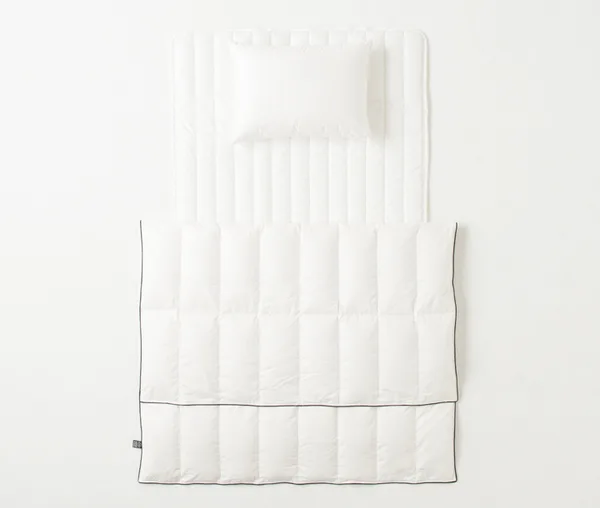
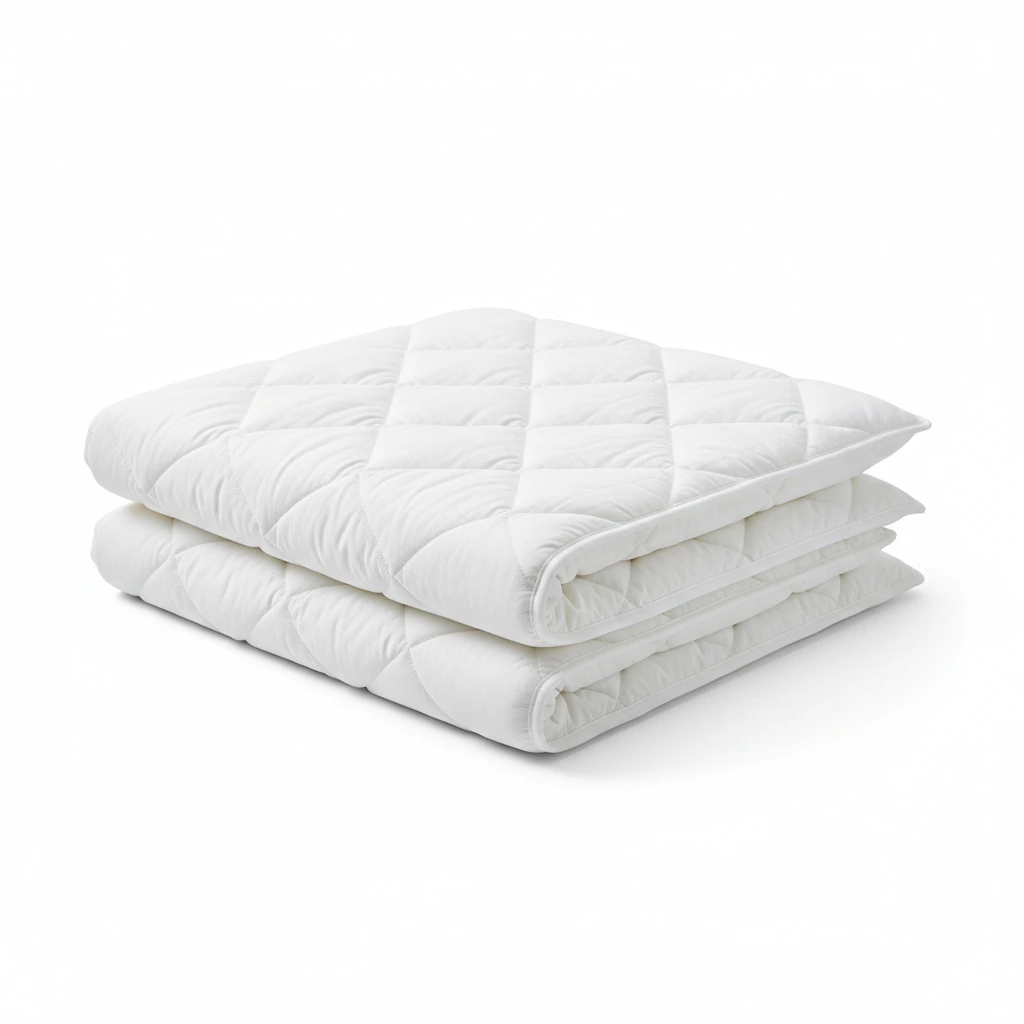
Blended fabrics are by no means bad for your skin, but if you tend to notice a prickly feeling from static or a clammy surface, it makes practical sense to choose fabrics with a higher cotton content on the side that touches your skin — or to use 100% cotton only for the items with the most skin contact, such as pillowcases and sheets. At Omotesando Futonten we also carry a 100% cotton bed pad, which can be paired with blended covers.
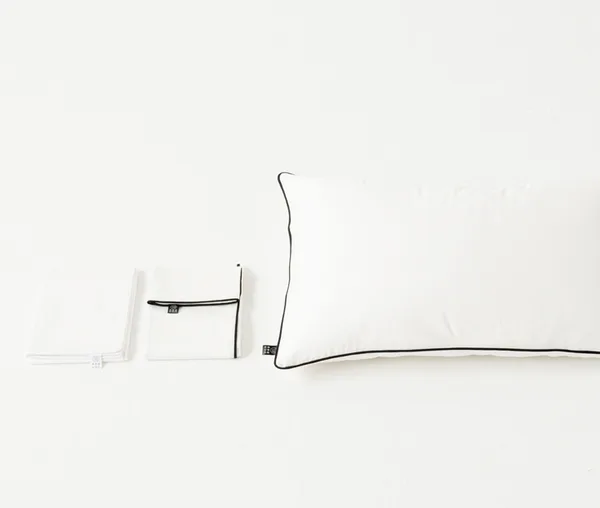
For the basics of sizing and choosing duvet covers, sheets, and pillowcases, see How to Choose a Down Comforter Cover: Luxury Duvet Covers Come Down to Fabric, Yarn Count, and Weave. Our crisp white fitted sheets and crisp white pillowcases are also worth a look as you compare materials.
Frequently asked questions
Which is better, a cotton-polyester blend or 100% cotton?
Neither is universally better. If a soft hand feel and moisture absorption are your top priorities, choose 100% cotton; if you value quick drying and wrinkle resistance, a blend is the better fit.
What kind of blend is 60% cotton / 40% polyester?
It is a popular, frequently searched blend that balances a pleasant hand feel with quick drying. It is widely used for household sheets.
Are the stated fiber content percentages exact?
Under Japan's Consumer Affairs Agency rules, a tolerance of about ±4–5% is permitted for anything other than 100%. In practice, read the label as a guideline.
Do blended fabrics pill easily?
The higher the polyester content, the more prone the fabric is to pilling, but some products reduce this through fabric construction, such as a high-density weave.
Can people with sensitive skin use blended bedding?
Most people can use it without any trouble, but if static or a clammy feel bothers you, we recommend fabrics with a higher cotton content on the skin side, or combining them with 100% cotton items.