The answer in 30 seconds
- Use around 15°C room temperature as your guideBelow 15°C, go winter-weight; 15–20°C, all-season; above 20°C, summer-weight.
- Judge by how mornings and nights feelLook beyond the thermometer — waking up cold in the early morning or sleeping restlessly are signals too.
- Region and body type matterAdjust flexibly: if you live in a cold region or run cold, switch to your winter-weight comforter earlier.
- Airing in the shade before storage is essentialA comforter you're putting away at changeover keeps better if you let the moisture escape first.
Down comforters come in three weights: winter, all-season and summer
Down comforters come in three types, depending on fill weight and the amount of down: winter-weight for winter, all-season (medium-weight) for spring and fall, and summer-weight (light) for summer. Knowing when to switch in spring and fall is the tricky part, and the best guide isn't the outdoor temperature — it's the temperature in your bedroom. As a general rule of thumb, around 15°C is the dividing line for swapping between a winter-weight and an all-season comforter.
Temperature guide for switching
There's no hard-and-fast rule, but putting together the guidance offered by manufacturers and specialist stores, the pairings look like this.
| Room temperature guide | Best comforter |
|---|---|
| 15℃ or below | Winter-weight comforter (for winter) |
| Around 15–20°C | All-season (medium-weight) comforter — spring and fall |
| Above 20°C | Summer-weight (light) comforter — summer |
These are guidelines only; how warm you feel also depends on whether you run cold and on your bedroom's humidity and sun exposure. Rather than switching by the numbers alone, we recommend also reading the signals from your body — waking up chilly at dawn, or sweating and sleeping poorly. The structural differences between winter-weight, all-season and summer-weight comforters are covered in detail in What Is a Winter-Weight Comforter? How It Differs from All-Season and Summer-Weight, and When to Use Each.
When to switch in spring (winter → spring)
Spring brings that back-and-forth of warm spells and cold snaps, so temperatures rarely settle. Days may be mild while mornings and nights stay chilly, so don't rush to pack away the winter-weight comforter — wait until morning room temperatures hold steadily above 15°C before moving to the all-season comforter. Early in the changeover, you can also add a lightweight blanket over the all-season comforter and see how it feels. For how to layer blankets, see The Right Layering Order for Blankets and Down Comforters.
When to switch in fall (summer → fall)
Fall works the other way around: days can still be hot while early mornings turn cold first. Once you start waking up chilly under a summer-weight comforter, take it as your cue to move to an all-season comforter. As temperatures keep falling and the room drops below 15°C, it's time for the winter-weight comforter. For choosing an all-season comforter itself, How to Choose an All-Season Comforter is a helpful read.
Allowing for regional and personal differences
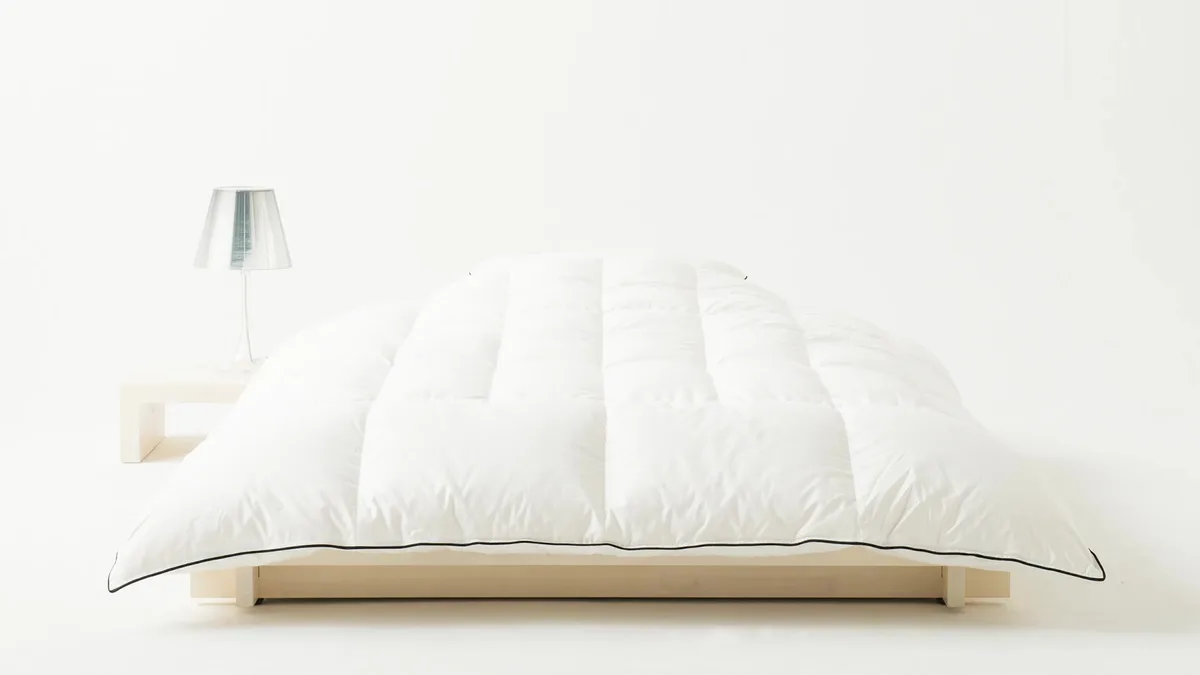
These temperature guidelines don't apply equally everywhere. In cold regions the winter-weight comforter stays on the bed longer, while in mild climates or well-insulated, airtight homes an all-season comforter may carry you through the whole winter. If you run cold, are older, or have small children at home, switching to a winter-weight comforter earlier than the numbers suggest is perfectly sensible. Rather than assuming one comforter will do all year, the practical approach is to fine-tune by the actual temperature in your own bedroom as the seasons turn.
Things to watch out for when you switch
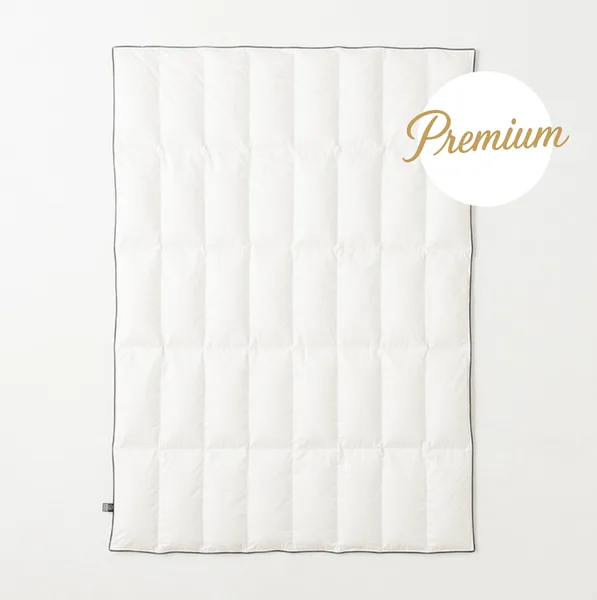
A comforter you're putting away for the season is far more likely to deteriorate if it goes into the storage bag with moisture still in it. Before storing it for the months you won't be using it, air it out in the shade to let the moisture escape. You'll find the full step-by-step in How to store a down comforter the right way. For tips specific to putting away a summer-weight (light) comforter, see How to store summer comforters as well. If you're buying a new all-season comforter at changeover time, choosing one with a fill weight designed specifically for spring and fall — such as the White Goose Sleep Down All-Season Comforter for Spring & Fall or the more luxurious Premium Mother Goose Sleep Down All-Season Comforter for Spring & Fall — makes it easy to bridge the gap between your winter-weight and summer-weight comforters with a single layer.
Frequently asked questions
How long is an all-season comforter typically used?
It depends on your region and home, but it's most often used in spring (around March to May) and fall (around October to November), in the temperature range between a winter-weight and a summer-weight comforter. The exact period shifts earlier or later depending on when your room temperature settles.
What should I do if I'm not sure when to switch?
Don't go by the thermometer alone — use how you actually feel as your guide, such as waking up cold in the early morning or, conversely, waking up sweaty. During in-between periods, you can also fine-tune by adding a lightweight blanket over your all-season comforter.
Should I own both a winter-weight and an all-season comforter?
If you live somewhere with big temperature swings, or you want to stay comfortable through the change of seasons, having both makes the switch effortless. If your budget is limited, you can also use a single winter-weight comforter together with a blanket.
Can using a blanket delay when I need to switch?
Yes — adding a blanket to a summer-weight or all-season comforter can push back the switch to your winter-weight comforter somewhat. That said, layering them in the wrong order can actually reduce warmth, so it's important to stack them correctly.