The answer in 30 seconds
- Household dryers: generally a noHeat damages the downproof finish and the down shifts and clumps easily, so it's safest to avoid them.
- Check the care label firstLook for the tumble-dry symbol and the temperature guide (the number of dots) to decide whether a dryer may be used.
- Choose your method based on the goalFor dust mite control, use a futon dryer or high-heat professional cleaning; if you're short on time, make air-drying in the shade a regular habit.
- Refurbishing is an option if the down has shiftedIf you can't redistribute it yourself, refurbishing (re-making) can restore the loft.
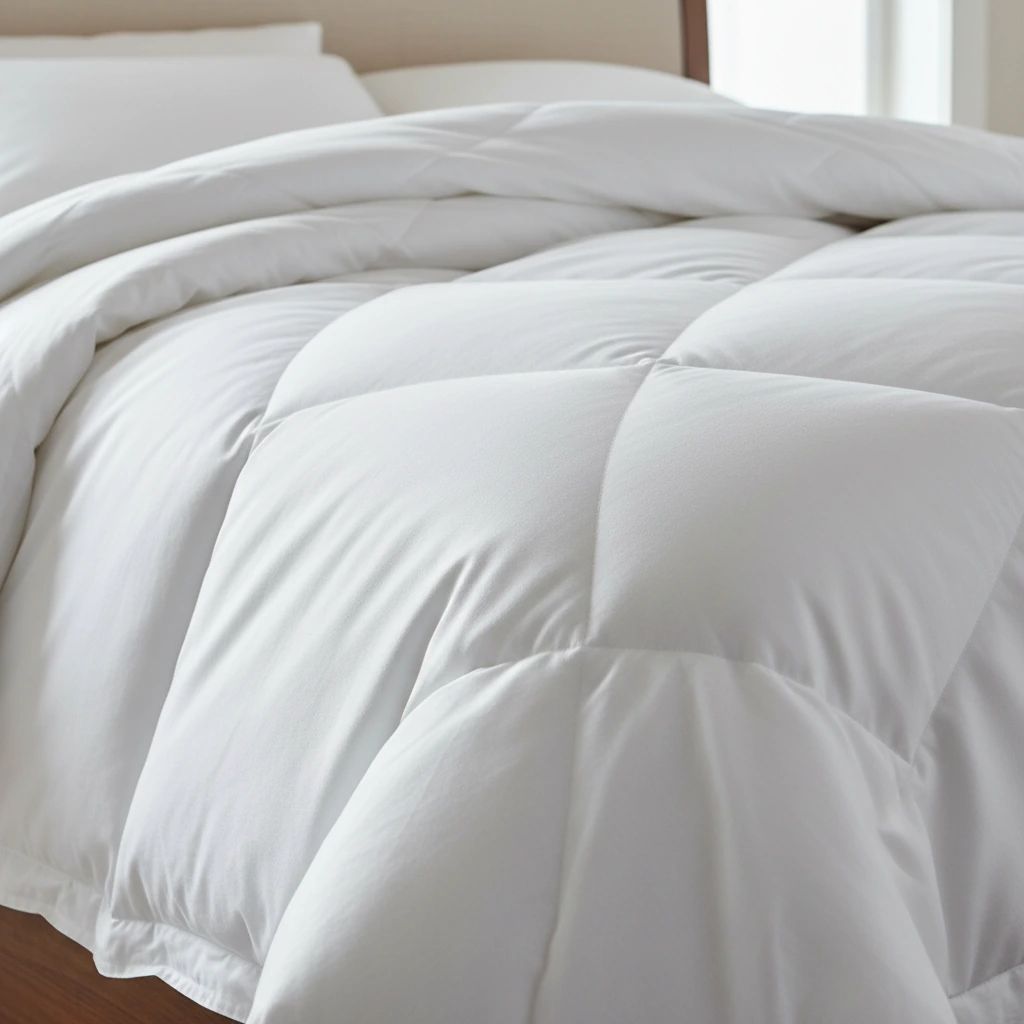
The short answer: putting a down comforter straight into a household clothes dryer or a high-heat laundromat dryer is generally not recommended. Down is sensitive to heat, and the finish on the shell fabric is easily damaged. That said, drying itself isn't unnecessary — in fact, proper drying is essential for keeping a down comforter lofty and hygienic. Separating the goal from the conditions is the quickest way to avoid a costly mistake.
Why dryers are risky for down comforters
The shell fabric of a down comforter is given a "down-proof" finish that keeps the down from escaping. This finish is sensitive to heat, and high-temperature tumble drying can change the hand of the fabric or make down more likely to leak out. Another major reason is that the tumbling action and friction inside the drum easily cause the down to shift and clump into one area. Once the down has shifted, it's hard to break it up and fully redistribute it at home, which means less warmth and less loft.
Check the dryer symbol on the care label
With a down comforter — and with anything else — the first step is to check the care label. A circle inside a square means "tumble dry OK"; a circle with an X through it means "do not tumble dry." The dots inside the circle indicate the maximum temperature: fewer dots means a lower setting. If there's no dryer symbol on the label, or if it shows "do not tumble dry," it's safest to avoid both home dryers and laundromats. Some products specifically state "dry in the shade only" or "professional cleaning recommended," so start by reading your own comforter's label carefully. For the difference between sun drying and shade drying, plus the basics of airing out a comforter, see our separate article, How to Air Out a Down Comforter the Right Way | Why Direct Sun Drying Is a No-Go, Explained by a Specialist Store.
Alternatives, based on why you want to use a dryer
People usually consider a dryer for one of three reasons: dust mite control, saving time, or getting rid of a musty, damp smell. The best method depends on which one applies.
- If your goal is dust mite control: Rather than the high heat of a clothes dryer, a dedicated futon dryer or professional cleaning with a high-heat treatment tends to spread heat more evenly through the whole comforter — and is safer for it, too.
- If your goal is saving time: Instead of insisting on fully drying it at home, air it in the sun or in the shade often and get into the habit of not letting moisture build up — that keeps the risk down.
- If a musty, damp smell is bothering you: The cause is usually incomplete drying, so rather than forcing it dry in a high-heat dryer, it's safer to wash it and then take plenty of time air-drying it in the shade, or leave it to a professional cleaner. For how to wash a down comforter, see Washing a down comforter: Can you do it at home? A specialist explains how to wash it, how to dry it, and when to use professional cleaning.
If you absolutely must use a dryer
Only for products whose care label says tumble drying is permitted, and only on a low setting for a short time. Also, small household dryers don't let the comforter spread out, so heat and airflow hit it unevenly; a laundromat with a large commercial dryer and plenty of drum capacity is generally said to lower the risk of the down shifting. Even then, the risk isn't zero, so treat the dryer as a last resort: check the label first, and if you have any doubts, ask a specialist store. For everything to know about washing and drying bedding at a laundromat, see The Complete Guide to Washing Comforters at a Laundromat | Down Comforters, Comforters, the Right Steps and What to Watch For.
If you've already used a dryer and the comforter is flat or lumpy
If you've already run it through a dryer and the down has shifted or some areas feel thin, you can try gently patting and kneading the comforter to redistribute the down. But once it has clumped badly, restoring it yourself may not be possible. If that doesn't help, refurbishing (re-making) the comforter is one way to bring the loft back. And if you'd rather not worry about care after purchase, an option like Monthly Comforter Rental / Clean Cycle Down, where cleaning is included, makes things much easier to manage.
Summary
As a rule, avoid putting a down comforter in a dryer — and always start by checking the care label. Once you've worked out whether your goal is dust mite control, saving time, or tackling a musty smell, choose from the options available: sun drying, shade drying, a futon dryer, or professional cleaning. If easy day-to-day care matters to you, it's worth thinking about shell fabric and finishes right from the moment you choose a comforter.
Frequently asked questions
Can I use a laundromat dryer?
Only if the care label says tumble drying is permitted, and then only on a low setting for a short time. The risk of the down shifting is never zero, so treat it as a last resort.
What should I do if I put it in the dryer by mistake?
First, gently knead the comforter by hand to redistribute the down. If the larger clumps won't even out, refurbishing (re-making) can restore it.
Is a dryer effective against dust mites?
A futon dryer, which gets heat through the entire comforter more evenly, or high-temperature professional cleaning is generally considered the better balance of safety and effectiveness than a clothes dryer.
Are there any down comforters that are dryer-safe?
Care labels vary by product, so always check the tumble-dry symbol and temperature marking on the tag when you buy and before you clean.
Which is better, sun drying or a dryer?
In general, sun drying or shade drying carries less risk and is widely recommended as the standard way to care for a down comforter.
A futon dryer (forced-air type) and a clothes dryer (tumble type) are two different things
Behind searches for “futon dryer down comforter” is a simple question: can you use a household futon dryer (the blower type that sends warm air through a mat or nozzle) on a down comforter? The “no dryer” advice in this article refers mainly to clothes dryers and laundromat tumble dryers (the type with a rotating drum that beats the bedding as it dries). A blower-type futon dryer has no rotating drum and no friction — it simply blows warm air through the comforter while it lies flat — so down is far less likely to shift and clump than with a tumble dryer. That said, the allowable temperature and whether the appliance can be used at all vary by product, so before using a futon dryer, check both the care label and the instruction manual for your particular dryer.
If you only want to dry it (no washing): what to keep in mind
Some people search for “down comforter dryer only,” wanting to drive out moisture and odors with a dryer instead of washing the comforter. Here too, avoid putting a down comforter in a clothes dryer or a high-heat laundromat dryer if its care label says tumble drying is not allowed. If your goal is removing moisture or tackling odors, a blower-type futon dryer or air-drying in the shade will get you closer to that goal with far less damage to the down.
Note the difference between down comforters and feather comforters
When people search for “feather comforter dryer,” they sometimes mean a feather comforter (filled mainly with feather) rather than a down comforter. Because the fill blend and the shell fabric finish differ from product to product, the rule for feather comforters is the same as for down comforters: always check the care label first to see whether a dryer may be used.