The answer in 30 seconds
- The warmth comes from the layers of air held inside the down clusters. Air conducts heat poorly, so your body warmth stays where it belongs.
- Absorbing and releasing moisture keeps the bed from getting clammy. Down takes in sweat and humidity, then releases it as it dries. Synthetic-fill bedding, which handles moisture far less effectively, tends to feel stuffy.
- Whether it's warm in winter and cool in summer comes down to the quality of the down. With small down clusters, opening and closing the clusters does far less to regulate temperature.
- The breathability of the shell fabric also shapes how comfortable it feels. Polyester isn't especially breathable; natural, breathable materials such as cotton are a better fit.
A down comforter is warm because of the air locked inside its down clusters.
Down has a soft, cloud-like structure, with countless fine barbs radiating out from the center, and it holds on to a great deal of air. That layer of air acts as insulation, keeping your body heat from escaping.
Down also absorbs and releases moisture, so it holds a comfortable temperature without overheating. In this article, our specialists explain exactly how a down comforter keeps you warm.
If you're shopping for a warm comforter, a down comforter may well be on your list. High-quality down comforters in particular are both warm and light.
Still, you may be wondering: why does better quality mean more warmth?
For anyone who wants to understand down comforters in depth, we explain how the warmth works and how a down comforter feels when the room is warm. By the end of this article, you'll understand exactly how down comforters and warmth are connected — we hope you find it helpful.
Why Are Down Comforters So Warm? How They Work
1. Air pockets created by down clusters
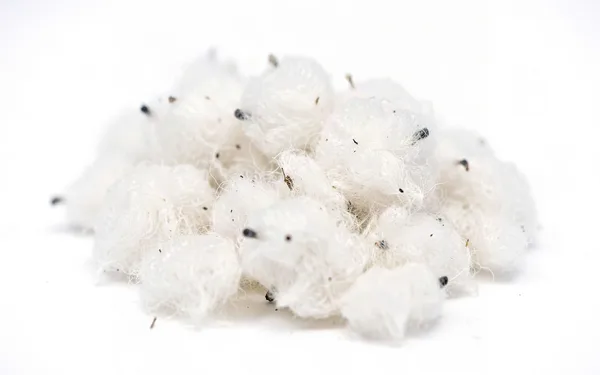
The down used as fill in a down comforter is made up of spherical clusters (down balls), with countless filaments radiating out from a central point. As these clusters loft up, they trap a large volume of air inside the comforter.
Because air is a poor conductor of heat (it insulates), your body heat stays where it belongs instead of escaping. This is the single biggest reason a down comforter can be so light and so warm at the same time.
2. Temperature control through moisture absorption and release
Down absorbs the perspiration and moisture your body gives off, then releases it quickly as it dries. Thanks to this absorb-and-release action, humidity inside the comforter never climbs too high while you sleep, so the temperature and moisture level stay naturally balanced.
Synthetic (polyester) comforters handle moisture poorly, so they tend to trap heat and humidity, and many people wake up too warm in the middle of the night. A down comforter regulates humidity naturally, so this rarely happens.
3. Automatic adjustment in response to body heat
Down clusters respond to body heat by lofting up. As your body warms, the down expands and traps more air; as things cool down, it contracts slightly. That is why a down comforter seems to settle naturally at just the right temperature as you use it.
Down Comforters vs. Other Fill Materials: Warmth Compared
| Material | Warmth | Moisture absorption & release | Lightness | Characteristics |
| Down | ◎ Excellent | ◎ Excellent | ◎ Lightest | Insulates with trapped air; regulates temperature by absorbing and releasing moisture |
| Feather | ○ High | ○ High | △ Slightly heavy | Springy and resilient; less expensive than down |
| Cotton | ○ High | ◎ Excellent | △ Heavy | Outstanding moisture absorption; rarely feels clammy; on the heavy side |
| Synthetic (polyester) | △ Average | △ Low | ○ Light | Inexpensive; easy to wash; can feel stuffy |
| Wool | ○ High | ○ High | △ Heavy | Helps regulate body temperature; on the heavy side |
How Down Regulates Temperature
Two kinds of plumage go into a down comforter: feather and down. Of the two, it's the down — the soft, fluffy clusters that grow on a waterfowl's breast, much like dandelion fluff — that regulates temperature and humidity.
From the core of each down cluster, countless barbs radiate outward, and each barb is covered in a huge number of tiny filaments called barbules. These barbules are what give down its temperature-regulating power.
The barbules have a remarkable property: they open up when the air turns cool and dry, and close when it turns warm and humid.
So when it's cool, they fluff open and create countless tiny pockets of air that hold in warmth. When it gets warmer, they close, reducing those air pockets and improving airflow so you feel cooler.
Each individual cluster of down is called a down ball, and the larger the down ball, the more barbules it carries.
That's why the larger the down balls used in a down comforter, the more comfortable it tends to feel — on hot nights and cold ones alike.
This article explains the differences between goose down and duck down.
Goose down vs. duck down: what's the difference?
Care Tips to Keep Your Down Comforter Warm for Years
The warmth of a down comforter comes from its down clusters. Once those clusters are crushed or damp, insulating power drops. Follow the care tips below to keep the warmth going year after year.
- Air it out in the shade once or twice a month (2–3 hours out of direct sun) → releases moisture and restores the loft of the down clusters
- Keep it out of direct sunlight → UV rays damage the shell fabric
- Don't store it in a vacuum compression bag long-term → the down clusters get crushed and never fully recover their warmth
- Store it in a breathable non-woven bag → moisture won't build up inside
- Wash or tumble-dry it once or twice a year → sweat and body oils build up and make the down clump together
Good down keeps you warm in winter and cool in summer
Most people swap their bedding with the seasons, but a down comforter can be used all year round.
That's thanks to the way down works: warm in winter, cool in summer.
When the room is cool, the down balls open up, trapping plenty of air and keeping heat from escaping.
When the room is warm, the opposite happens: the down balls close, letting air escape and reducing the insulating effect, so you feel cooler.
It adjusts automatically, with none of the fiddling you'd do with an air conditioner — perfect if you're looking for one comforter that keeps you comfortable all year.
That said, a great deal depends on the quality of the down comforter. In a low-grade comforter, the individual down balls are small, so opening and closing doesn't make much difference. If you want bedding that's genuinely warm in winter and cool in summer, choosing high-quality down is essential.
Related reading: For comfortable sleep on hot, sticky summer nights, try a summer-weight (light) down comforter

How the shell fabric changes the way it feels
To get the full performance out of a down comforter, the shell fabric matters just as much. The shell fabric is the outer cloth that encases the fill.
As the temperature and humidity rise, down closes up to improve airflow and let moisture escape.
If that moisture escapes freely, you feel cool and comfortable — but if the shell fabric wrapping the comforter blocks it, temperature and humidity can't be regulated properly.
Down's ability to regulate temperature and humidity only works when moisture-laden air can pass out through the shell fabric. With a shell fabric that doesn't breathe, humidity builds up inside the comforter and it starts to feel hot and stuffy.
No matter how high the quality of the down inside, a shell fabric with poor breathability will stop a down comforter from performing as it should — so it's worth paying attention to.
If you've bought a down comforter before and found it too hot and stuffy to sleep under in summer, the problem may well have been the quality of the down — or the shell fabric.
In terms of breathability, for example, polyester shells are best avoided, as polyester simply doesn't breathe very well.
That's why a down comforter with a polyester shell can trap humidity inside.
Where possible, choose a natural, breathable material such as cotton. Cotton isn't just breathable — it also absorbs and releases moisture exceptionally well.
Add its soft feel against the skin, and cotton makes an excellent shell fabric.
Looking for a luxury comforter? Take a look below.
Related article: Luxury comforter lineup
Related article: Don't overlook the shell fabric of your down comforter! Fabric types and how to choose
Frequently Asked Questions
Q1. Why is a down comforter so light yet so warm?
- Because each down cluster (the fluffy, three-dimensional ball of down) traps a large volume of air. Air is an excellent insulator, so your body heat stays in. Compared with a cotton-filled futon of equal warmth, a down comforter delivers the same heat retention at roughly one-third of the weight.
Q2. Why doesn't a down comforter feel clammy?
- It comes down to down's natural ability to absorb and release moisture. The down takes in the moisture your body gives off as you sleep and releases it again as conditions dry out. Thanks to this natural humidity control, it never traps heat and moisture the way a synthetic-fill comforter can.
Q3. My down comforter isn't as warm as it used to be. Why?
- There are two likely causes. (1) If the down clusters have absorbed moisture and collapsed because the comforter hasn't been dried properly, a session in a laundromat (coin laundry) dryer will usually bring the loft back. (2) If the down itself has deteriorated — years of use eventually break the down clusters apart — down comforter refurbishing (re-making) can often give it a second life.
If you want a truly warm down comforter, focus on quality
That's the story behind the warmth of a down comforter. Not every down comforter will keep you cool in summer and warm in winter, though — if you want that performance, quality is what matters.
At Omotesando Futonten, we stock comforters with a high fill power (dp) — the benchmark for genuinely warm down — all of which meet the "Gold Label" standard certified by the Japan Down Products Cooperative Association.
Because sustainability sits at the heart of how we make things, we use high-quality recycled down carefully sourced from around the world.
We also hold RDS certification, an international standard with strict animal-welfare requirements.
If you're looking for a down comforter (duvet) that combines Japan's finest quality with a refined design that complements your interior, do take a look at the Omotesando Futonten collection.
For high-quality Japanese-made premium down comforters (duvets), choose Omotesando Futonten