The answer in 30 seconds
- Start with 100% cotton. Down stays comfortable by absorbing moisture and releasing it outward, so the cover should be a natural fiber that lets that moisture pass through.
- The feel against your skin comes down to yarn count. The higher the number, the finer the yarn, and the smoother and softer the fabric. For a premium cover, look for a yarn count of 60–80.
- The weave changes the character of the fabric. Sateen for sheen and silkiness, plain weave for a crisp, hard-wearing finish. Choose whichever you prefer.
- Match the cover size to the comforter size. Too small and the down can't loft; too large and the comforter shifts around inside.
Contents: 1. Why a down comforter needs a cover / 2. Choosing the material / 3. Yarn count and weave / 4. Size and fastenings / 5. Care / 6. Frequently asked questions
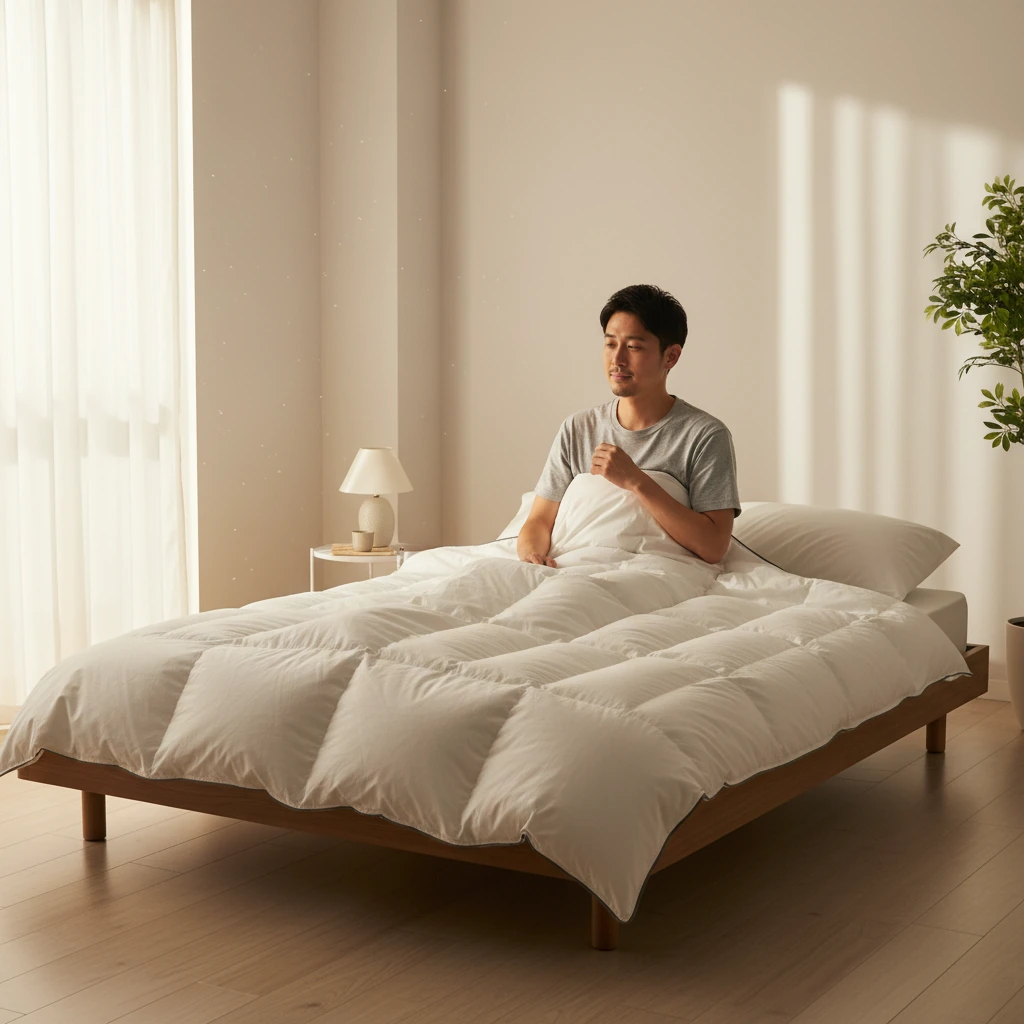
When you replace your down comforter, the cover is surprisingly easy to overlook. No matter how fine the comforter is, what touches your skin every night is the cover fabric. If the cover doesn't let moisture pass through, the qualities of the down never come alive — and if the fabric feels stiff, half the comfort of your sleep is lost.
In this article, Omotesando Futonten — which sews its covers at a factory in Fujiyoshida, Yamanashi Prefecture — explains how to choose a cover for your down comforter using four criteria: fabric, yarn count, weave and size.
1. Why a down comforter needs a cover
The shell fabric of a down comforter (the fabric of the comforter itself) isn't designed to be washed often at home. A cover takes on the sweat and skin oils and can be washed frequently, keeping the comforter itself clean and in good condition for years.
The other reason is how it feels. Shell fabric is woven at a high density so the down can't escape, and depending on the material it can feel slightly crisp. Putting a smooth cover against your skin changes the feel of the very same down comforter.
For more on shell fabrics themselves, see "What is down comforter shell fabric? How to choose the material, yarn count and weave."
2. How to choose the fabric|100% cotton suits a down comforter
Down absorbs the moisture from the sweat you produce overnight and releases it outward, creating a warm bed that doesn't feel stuffy. To avoid getting in the way of this, choose a cover in a fabric that also lets moisture pass through easily.
| Material | Characteristics | Match with a down comforter |
|---|---|---|
| Cotton | Highly absorbent and gentle on the skin. Easy to wash at home | ◎ The year-round standard |
| Linen | Absorbs and releases moisture quickly, with a crisp, dry feel. Wrinkles easily | ○ Great for hot sleepers and summer |
| Silk | Smooth, with excellent moisture retention. Expensive and needs careful laundering | ○ For those who prioritize feel against the skin |
| Polyester blend | Dries quickly and resists wrinkles. Less absorbent than cotton. | △ Can feel stuffy |
If you're unsure, 100% cotton is always a safe choice. From there, the next things to decide are what kind of cotton — which comes down to yarn count and weave.
3. With premium covers, the difference is in the yarn count and the weave
Yarn count: the higher the number, the finer and smoother the yarn
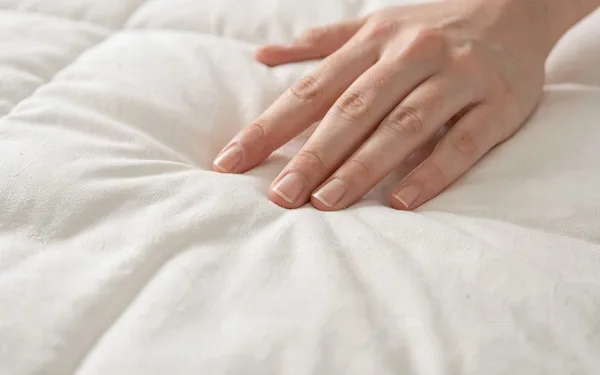
Yarn count is a number that describes the thickness of the thread: the higher the number, the finer the yarn. Fabric woven from fine yarn is light and soft with a smooth hand. Fabric made from thicker, lower-count yarn has its own advantages — it's opaque and hard-wearing.
Most standard cotton bedding fabrics use yarns of around 30 to 40 count, and once you go past 60 count the difference in feel becomes clearly noticeable. An 80 count is a fineness you rarely see even in hotel bedding. We compare 60 and 80 count side by side in "The difference between 60 sateen and 80 sateen."

Weave: sateen or plain weave?
- Sateen: a weave in which the yarns float across the surface, giving a soft sheen and a silky, fluid feel. Often used for luxury covers.
- Plain weave (broadcloth, percale): warp and weft cross one thread over one thread. Crisp, cool to the touch and hard-wearing.
- Gauze: a loosely woven, soft fabric. Highly breathable, and it grows softer with every wash.
Even among 100% cotton fabrics, sateen and plain weave feel completely different against the skin: sateen is smooth, plain weave is crisp and dry. If you care most about a silky hand, choose sateen; if you tend to sweat and prefer a dry, airy feel, plain weave is the better fit.
High-density fabric also helps with allergies
Fabric woven densely from fine yarns has a tight structure, which makes it harder for dust and dust mites to pass through. If allergies are a concern, also check whether the cover has an anti-mite finish. For more on down and allergies, see "Down allergies: causes, symptoms and what to do."
4. Choosing the right size and closure
Choose the same size label as the comforter itself
Choose a cover with the same size label as your comforter (Single, Semi-double, Double and so on). A standard Single comforter measures around 150 × 210 cm (59 × 83 in), but dimensions can vary by a few centimeters between manufacturers, so measuring your own comforter first is the surest way to get it right.
- Cover too small: the down is squashed flat and can't loft, so warmth suffers.
- Cover too large: the comforter slides and bunches up inside, so you end up straightening it every time you turn over.
For choosing the size of the comforter itself, see "How to choose the right down comforter size," which breaks it down by body type and bed size.
Check how the comforter is kept from shifting inside
Look for a cover with inner ties that fasten to the loops at the four corners of your comforter — this keeps it from sliding around inside. Zipper closures are the most common. Hook-and-loop (Velcro) closures are convenient, but be aware that they can snag and damage other fabrics in the wash.
White makes it easier to keep things clean
With a white cover, you spot body oils and yellowing early, so it's easy to tell when it's time to wash. Keep in mind, though, that a thin white fabric can let a patterned comforter show through.
5. Caring for your duvet cover
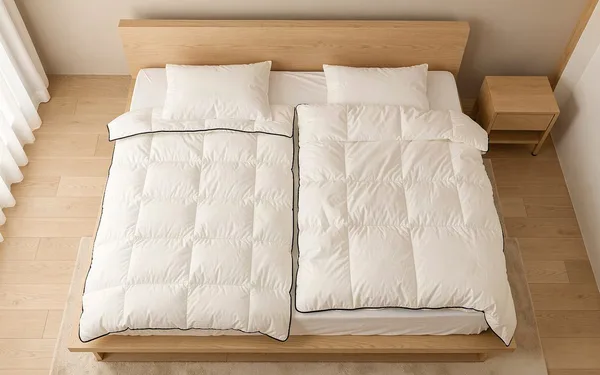
Because the cover takes the brunt of sweat and body oils, we recommend washing it about once a week. Having two on hand — one in use, one as a spare — means you're never caught short on laundry day.
- Check the care label before washing
- Close the zipper, turn the cover inside out and put it in a mesh laundry bag to protect the fabric
- High-count sateen is sensitive to abrasion, so use a gentle cycle
- High dryer heat causes shrinkage, so follow the care label
For caring for and washing the down comforter itself, see "How to wash a comforter at the laundromat," and for choosing sheets, see "The best premium sheets."
Duvet covers from Omotesando Futonten
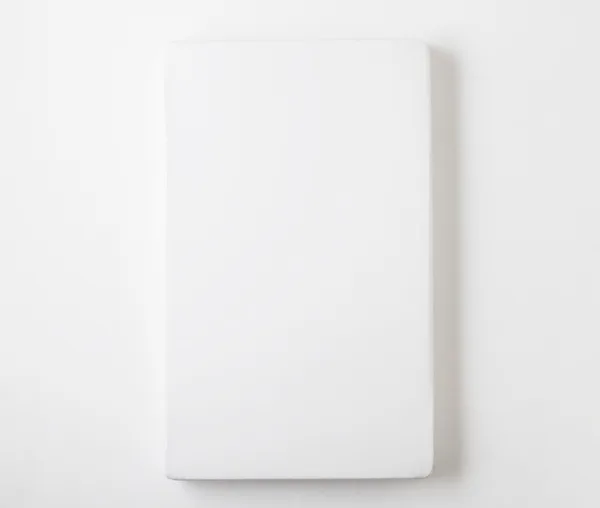
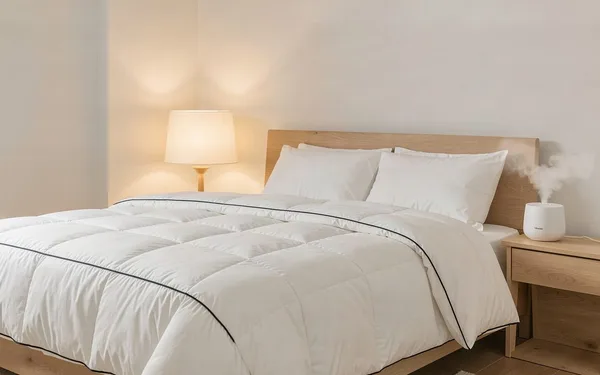
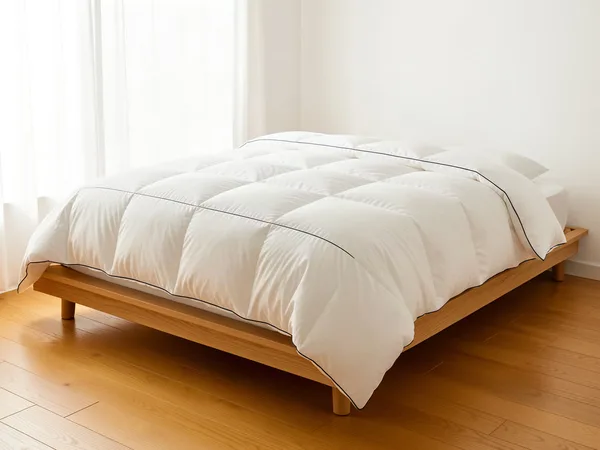
The clean white duvet cover from Omotesando Futonten is made from 100% premium Indian cotton, with 80-count yarn woven into a sateen fabric. It comes with an allergy-reducing and anti-mite finish, and it's sewn by hand, one piece at a time, by craftspeople at a workshop in Fujiyoshida, Yamanashi — a town long known for its weaving.
| Material | 100% cotton (premium Indian cotton), 80-count sateen |
|---|---|
| Finishes | Allergy-reducing and anti-mite finish |
| Sewing | Fujiyoshida, Yamanashi Prefecture |
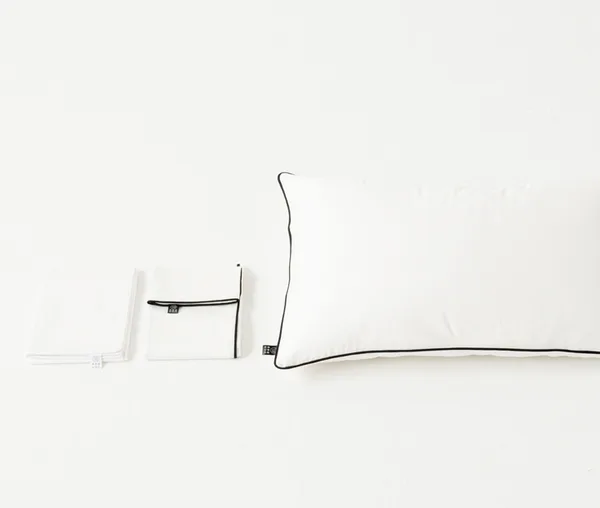
| Piping color | Black / White |
| Price (tax incl.) | Single ¥15,800 / Semi-double ¥17,800 / Double ¥19,800 / Queen ¥21,800 / King ¥23,800 |
We also offer pillowcases and fitted sheets in the same fabric, so your whole bed can share one consistent feel. Shipping is free, and returns are accepted within 7 days.
6. Frequently asked questions
Q. Can I use a polyester-blend cover on a down comforter?
A. You can, but you're more likely to feel stuffy. Polyester absorbs less moisture than cotton, which tends to block the way down releases humidity. If you sweat easily, or you want to get the most out of your down comforter, we recommend 100% cotton.
Q. What makes a premium duvet cover different from an ordinary one?
A. The main differences are the fineness of the yarn (yarn count), the density of the weave, and the care taken in the stitching. Fabric woven densely from fine yarn is smoother, and it also keeps dust and mites from passing through. Two white covers may look identical, but one touch makes the difference obvious.
Q. How often should I wash a duvet cover?
A. Once a week is a good rule of thumb. In summer, when you sweat more, you can wash it more often. Keeping two covers on hand means you always have a spare on laundry day.
Q. What happens if the cover is slightly smaller than the comforter?
A. The down gets compressed and can't loft properly, so you lose the warmth the comforter is designed to deliver. Choose a cover in the same size as the comforter itself, and if you're unsure, measure your comforter to confirm.
Q. How many duvet covers do I need?
A. Two covers per comforter is ideal, so you always have a replacement while one is in the wash. If you switch materials by season, plan on two of each.
Down comforter covers vs. duvet covers: what's the difference?
A "down comforter cover" and a "duvet cover" are, in almost every case, the same thing under two different names. Whether it's sold for down comforters or for comforters in general, the purpose is identical: protect the shell fabric from soiling and give you a pleasant surface against your skin. The criteria for choosing one are the same four points covered above — material, yarn count, weave and size.
How to choose a cover that keeps down from escaping
Down is extremely light, so a few feathers can work their way out through loosely woven fabric or frayed seams. As noted above, fabric with a high yarn count and a dense weave has tighter gaps between threads, making it much harder for down to escape. How neatly the seams are finished is another key sign of a cover that holds the down in.
What to do when a duvet cover is see-through
Thin white fabric can let the pattern or color of the comforter inside show through. If that bothers you, choose a fabric with a dense weave even at a high yarn count, or pick a cover in a color or print other than white. Checking the fabric's weight and weave density before you buy is the surest approach.