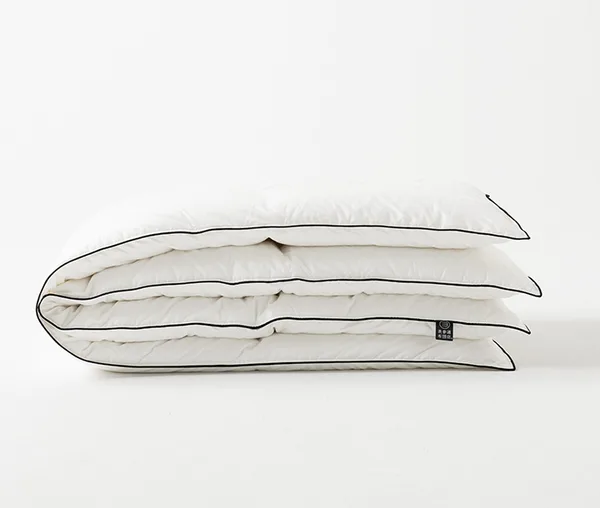
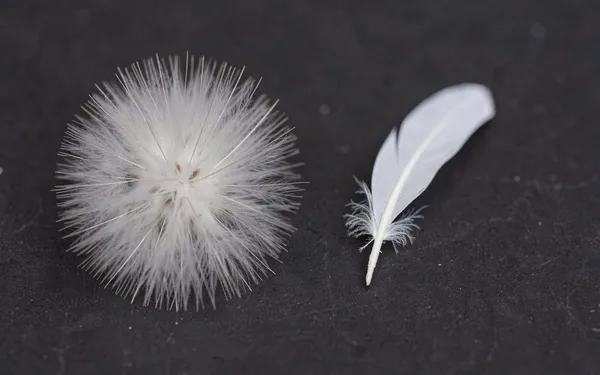
Store your summer bedding the wrong way and you'll find yellowing, odors, and mildew waiting for you next year. Put another way, just follow three rules before you store it — wash it, dry it completely, and put it in a breathable bag — and it will be ready to use as-is next season.
This article explains the right way to store summer bedding — lightweight summer comforters (down blankets), towel blankets, and mattress pads — by material and step by step. We also answer the common question of whether vacuum storage bags are safe to use.
What you'll learn in this article
- Three steps to take before storing summer bedding
- How to wash each material, and what to do when it isn't washable
- Which bedding can go in a vacuum storage bag — and which can't
- Where to store it and how to stack it
- When to put summer bedding away
In short: three steps before you store
- Wash: Launder all covers. Wash the comforter itself only if the care label says you can
- Dry it completely: Dry it all the way through, not just the surface. This is the critical step
- Put it in a breathable bag and store it somewhere dry: A non-woven fabric bag is the standard choice. Never use vacuum bags on down
Follow these three rules and you'll avoid almost every problem next season. Skip even one of them, and trouble follows.
Nearly every problem with summer bedding comes down to one thing: moisture. Perspiration, humidity, and leftover dampness after washing. Keeping all three out of your bedding is what storing it properly is really about.
Step 1 | Wash
Why you should wash before storing
After a summer of use, bedding holds sweat, body oils, and dead skin cells. Even when nothing looks dirty, these residues oxidize over time and turn into yellowing and odor. Body oils also feed dust mites and mold.
If you tell yourself "I'll just wash it when I take it out next year," you'll be storing that soil for six months straight — and by then the yellowing has set in for good.
How to wash, by material
| Bedding | Whether you can wash it at home | Things to watch for |
|---|---|---|
| Summer-weight (light) comforter (down ket) | Depends on the care label; most can be washed | Drying matters most — dry it all the way through |
| Towel blanket | Washable | Wash on its own, separately from other laundry |
| Mattress pad | Washable | Use a mesh laundry bag; watch for elastic wearing out |
| Duvet covers and sheets | Washable | A normal wash cycle is fine |
| Igusa rush-grass and linen mats | Not washable | Wipe with a well-wrung cloth, then air-dry in the shade |
How to wash a summer-weight comforter (down blanket)
A down summer-weight comforter can be washed at home if the care label says it is safe for water washing or machine washing. Because the fill weight is low, it's far easier to wash than a winter-weight comforter.
- Remove the cover and check the care label
- For any visible stains, dilute a neutral detergent and dab the spot clean
- Accordion-fold it and place it in a large mesh laundry bag
- Use a neutral detergent for delicates and run the "bulky items" or "blanket" cycle
- Rinse at least twice. Leftover detergent makes the down clump
- Keep the spin cycle short (about 1 minute)
If your washing machine isn't big enough, you can use one of the large machines at a laundromat (coin laundry). For full details, see The Complete Guide to Washing a Comforter at the Laundromat | Down, Comforters, Correct Steps and Precautions, and for advice specific to down blankets, see How to Wash a Down Blanket (Summer-Weight Comforter) | At Home, at the Laundromat, or Professionally Cleaned — Explained by a Specialty Store.
What to do when it can't be washed
If the care label says it is not safe for water washing, or if you'd rather not risk it, choose one of the following.
- Air it out: Hang it in the shade for about half a day to drive out moisture. It won't remove soiling, but it does prevent odors and mold
- Send it out for cleaning: Choose a cleaner experienced with down. See What to Watch Out for When Sending a Down Comforter to a Specialty Cleaner
- Wash the cover only: If a cover has been protecting the comforter, this is often all you need
Step 2 | Dry it completely
This is the most important step — and the one people get wrong most often.
Why drying matters most
When down absorbs moisture, it clumps together and hardens. Even if the surface feels dry, any moisture left inside will be sealed in for six months. The result: when you open the bag next year, you find a comforter that's clumped, smells musty, or has mold.
In fact, insufficient drying is the single most common cause of problems with down comforters.
How to dry it properly
- After the spin cycle, spread it out right away and reshape it.
- Hang it across two drying poles in an M shape, so more surface area is exposed to the air.
- Dry it in a well-ventilated shaded spot. Avoid direct sunlight.
- Turn it over and shift its position every 2–3 hours.
- A few times along the way, loosen and redistribute the down by gently working it apart with your hands — don't beat it.
- Allow a full day at minimum, ideally two.
How to check that it's really dry
Press your palm over the comforter and run it across every corner. Any spot that feels cool or firm and clumped still holds moisture. The four corners and the areas along the quilted seams are the slowest to dry, so check them especially carefully.
If you're unsure, a short finishing cycle in a laundromat dryer on low heat (20–30 minutes) makes it certain. High heat for a long time damages the fabric, so always use the low setting.
"Cool to the touch = still damp." A dry down comforter feels faintly warm all over, and light in the hand.
Why you should avoid direct sunlight
UV rays strip the natural oils from down and make the fibers brittle. The shell fabric also degrades and starts to yellow. The idea that "airing out" means "putting it in the sun" comes from cotton futons — it doesn't apply to down comforters.
For details, see How to Care for a Down Comforter — Airing It Out the Right Way to Prevent Mold.
Step 3 | Storing it away
Choosing a storage bag
Use a breathable non-woven storage bag. It lets air circulate so moisture doesn't build up. The bag your comforter came in when you bought it is usually this type.
Two things to avoid:
- Plastic bags and airtight plastic containers: Moisture can't escape, creating a breeding ground for mold
- Vacuum bags (for down): More on this below
Are vacuum storage bags OK?
It depends on the type of bedding.
| Bedding | Vacuum bag | Why |
|---|---|---|
| Down summer-weight comforter | Avoid for long-term storage | The down fibers break and the loft never fully comes back |
| Towel blanket | Fine to use | Cotton fibers rarely lose their shape permanently from compression |
| Synthetic summer-weight comforter | OK short-term | Long-term storage causes it to go flat |
| Mattress pads (cotton or synthetic) | Fine to use | Even if the loft doesn't bounce back, performance is barely affected |
If you absolutely must compress a down comforter, don't squeeze all the air out — stop at about half its original thickness, and keep it compressed for no more than 1 to 2 months. For more on down comforters and vacuum storage bags, see Is It Safe to Vacuum-Compress a Down Comforter? Why It's a Bad Idea, Correct Storage, and How to Restore the Loft — Explained by a Specialty Store.
How to fold it
With a down summer-weight comforter, the rule is a loose, airy tri-fold — never a tight crease. Sharp creases push the down away from the folded area. Once it's in the storage bag, leave some room rather than cramming it in.
Where to store it
Moisture settles at the bottom. In a Japanese closet (oshiire), choose the upper shelf; in a wardrobe closet, choose a high position.
- Place a slatted wooden rack (sunoko) underneath so the comforter never touches the floor or walls directly
- Leave about 5cm of space from the wall
- Don't stack heavy bedding on top (it crushes the comforter underneath)
- If you use a moisture absorber, place it beside the comforter rather than underneath (moisture sinks downward)
- Open up the storage space and let air circulate once or twice a year
How to use moth repellents
Down and cotton bedding can be damaged by insects. If you use a moth repellent, keep it from touching the comforter directly and place it at the top of the storage space. The active ingredients vaporize and drift downward, so a high position works most efficiently. Mixing different types of moth repellent can cause the ingredients to react, so stick to one type only.
When to put summer bedding away
The answer isn't a particular month — it's "once you've stopped using it, on a clear, dry day."
| Region | Rough guide to when you'll stop using a summer-weight comforter |
|---|---|
| Hokkaido & Tohoku | Late August to early September |
| Kanto, Tokai & Kinki | Mid to late September |
| Kyushu & Okinawa | Early to mid-October |
What matters most is the weather on the day you put it away. Storing it on a rainy or humid day traps damp air inside the bag. Choose a dry day after several days of clear weather.
It's also worth not rushing to put everything away at once. Early autumn brings big day-to-day temperature swings, so keep your summer-weight comforter within easy reach until October to be safe.
For guidance on switching to winter bedding, see also How to Choose an All-Season Comforter | The Best Down All-Season Comforters for Spring and Fall, Explained by a Specialty Store.
Points to watch for each storage location
Even with identical storage methods, where you put the comforter changes its condition next year. That's because moisture is heavier than air and collects at the bottom.
| Location | Suitability | Things to watch for |
|---|---|---|
| Upper shelf of a Japanese closet (oshiire) | ◎ | The best option. Don't stack heavy items on top |
| Lower shelf of a Japanese closet (oshiire) | △ | Lift it off the floor with a slatted wooden rack (sunoko). Use a moisture absorber as well |
| Top shelf of a wardrobe closet | ◎ | High position, so there's little moisture |
| Under the bed | △ | Close to the floor. Lift it with a slatted rack and air it out once a month |
| On top of furniture | ○ | Little moisture. A storage bag is essential to keep dust off |
| Storeroom or utility closet | △ | Depends on ventilation. Avoid spots prone to condensation |
| Outdoor shed | × | Wide swings in temperature and humidity. Risk of mold and insect damage |
| Storage next to water sources | × | Humidity is high right next to a bathroom or washroom |
Rules that apply everywhere
- Never place bedding directly on the floor — use a slatted rack or a shelf
- Leave about 5cm of space from any exterior-facing wall (to avoid condensation)
- Don't stack heavy items on top
- Open the doors and air out the space once or twice a year
How to use moth repellents and moisture absorbers
Moth repellents
Cotton and wool bedding can be eaten by pests such as the varied carpet beetle. Down is no exception.
- Keep them off the comforter: The active ingredients can transfer to the fabric and cause stains
- Place them at the top of the storage space: Insect-repellent vapors sink, so positioning them high works more efficiently
- Don't mix types: Combining different active ingredients can trigger a chemical reaction, liquefy, and leave stains
- Mind the expiration date: An expired mothball does nothing
Moisture absorbers
- Place it beside or under the comforter: Moisture sinks, so placing it on top is far less effective
- Check it regularly: Once a moisture absorber is saturated, it stops working. It runs out especially fast in summer.
- Pair it with a slatted base: Physically blocking moisture rising from the floor is more effective.
Don't use newspaper
You'll sometimes see advice to tuck newspaper in to absorb moisture, but the ink can transfer to your bedding. Never use it with a down comforter or covers.
Taking it out the following season: step by step
How you bring it back out matters just as much as how you put it away.
- Take it out of the bag and open it up: Spread it out flat, unfolded.
- Let the air through: Two to three hours in a well-ventilated, shaded spot. Avoid direct sunlight.
- Shake it gently to fluff it up: Hold the edges and shake up and down a few times. Never beat it with a futon beater.
- Check for odors: Smells picked up in storage are usually caused by moisture, and they disappear once it dries out.
- Inspect its condition: Look for spots of mold, insect damage, or down that has shifted to one side.
- Put on a freshly washed cover: Even if you washed it before storing, it has been collecting dust while packed away.
If you find mold
| What you see | What to do |
|---|---|
| White, powdery specks | Probably dust. Brush it off and keep an eye on it. |
| A few black spots | Dab with a cloth moistened with rubbing alcohol (disinfectant ethanol), then dry completely. |
| Black spots over a wide area | Hard to remove at home. Consider professional cleaning. |
| An odor coming from inside | Mold in the down itself. Have it professionally cleaned or replace it. |
Do not use bleach. It damages the shell fabric and causes color loss.
Preventing a repeat next year
- Replace the storage bag with a new one
- Move your storage spot to a higher shelf
- Use a slatted wooden rack to lift bedding off the floor
- Place a moisture absorber nearby and replace it regularly
How to store each type of bedding
Towel blanket
Machine wash, dry thoroughly, then fold. Items made of 100% cotton can be dried in direct sunlight with no problem. Vacuum storage bags are fine to use.
Mattress pad
Wash in a mesh laundry bag and dry in the shade. The elastic at the four corners degrades easily, so handle it without pulling. When folding, tuck the elastic sides inward to help the pad keep its shape.
Igusa (rush grass) and linen rugs and floor mats
These cannot be washed with water. Vacuum off the dust, wipe with a well-wrung cloth, then let them dry thoroughly in the shade. Store them rolled, never folded, and use a moth repellent as well.
Cooling (cool-to-the-touch) sheets and mattress pads
Most are washable, but fabric softener can reduce the cooling effect. Check the care label and skip the softener.
Frequently asked questions
When should I put my summer bedding away?
Once you've stopped using it, put it away on a dry day after several days of clear weather in a row. In the Kanto plain, mid to late September is a good guide, but it's wise to keep it somewhere easy to reach until October arrives.
Can I store it without washing it?
We don't recommend it. If sweat and body oils sit in the fibers for six months, the yellowing sets in and won't come out. Even if the comforter itself can't be washed, always wash the cover and air out the comforter before storing it.
Can I put a summer-weight (light) down comforter in a vacuum storage bag?
Not for long-term storage. The down fibers break and won't loft again the following year. Fold it loosely and place it in a breathable non-woven storage bag.
My closet gets damp — what should I do?
Set a slatted wooden rack on the floor to lift the bedding off it, and leave about 5cm of space from the wall. Place moisture absorbers beside the comforter. Even just opening the doors to air the closet once or twice a year makes a difference.
My comforter smells after being in storage
In most cases it's simply trapped moisture. A few hours in a well-ventilated shaded spot will clear it. If the musty mold smell won't go away, consider professional cleaning. We cover the causes and fixes in Why Your Down Comforter Smells and How to Get Rid of It: A Specialist Explains.
How many years does a summer down comforter last?
Because the fill weight is lower, it takes less strain in use than a winter comforter, and with proper care it can last around 10 years. That said, summer means more perspiration, so washing and drying it thoroughly every year is essential.
Is storage the same for guest bedding?
Yes, exactly the same. In fact, guest bedding needs extra attention, since it's used rarely and often sits in storage for years at a time. Take it out and air it once or twice a year.
Even bedding you never use can absorb moisture in storage and develop mold. "It's fine because no one sleeps under it" simply isn't true.
What if my apartment doesn't have a closet (oshiire)?
The upper shelf of a closet is the best spot. High positions hold less moisture and make it easier to keep air moving. If you store under the bed, raise the comforter off the floor on a slatted board, use a breathable bag, and air it out once a month.
Will a comforter stored in a vacuum bag recover its loft?
It depends on how long it was stored and how tightly it was compressed. If it was only a few months and the air wasn't fully removed, spreading it out and airing it for a few hours will often bring the loft back.
If it was fully compressed for six months or more, the down fibers may be broken and never recover. In that case, down comforter refurbishing lets you have the down washed and topped up.
Does down need mothballs too?
Not as much as cotton or wool, but down can suffer insect damage as well. Mothballs aren't essential in well-sealed storage, but they're a safer bet in a traditional wooden chest or an older closet. Keep them from touching the comforter directly and place them at the top of the storage space.
Summary
- Three things to do before storing summer bedding: wash it, dry it completely, and put it in a breathable bag
- Drying is the most important step. Check by hand that the inside is dry, not just the surface
- Keep down out of direct sunlight and air it in the shade for a full day or more
- Never use vacuum bags on a summer-weight down comforter. Towel blankets and mattress pads are fine
- Store it on the upper shelf of the closet. Lay down a slatted board and keep it away from the wall
- Choose a dry day that follows several days of clear weather for putting bedding away
Every summer-weight comforter at Omotesando Futonten is made with a 100% cotton shell fabric. Because cotton absorbs and releases moisture, the comforter resists trapping humidity through the summer and stays easy to care for.
Shop summer-weight (light) comforters at Omotesando Futonten
When your down starts to go flat | Down comforter refurbishing / Clean Cycle Reform