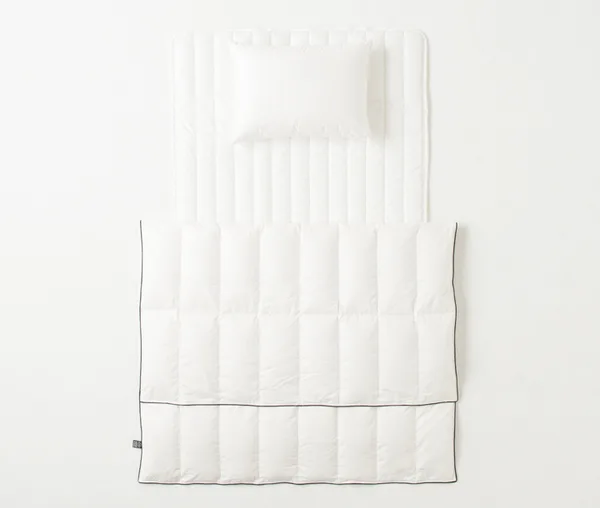
That sharp zap you feel when you slip under a down comforter in winter isn't really caused by the down itself — it comes from dry air plus the materials of the bedding you layer with it. The short answer: pairing a down comforter with synthetic covers or blankets makes static more likely, but switching to a cotton cover and keeping indoor humidity up will reduce it in most cases. Let's start with how it works.
How static builds up in a down comforter
Static electricity occurs when different materials rub against each other, electrons transfer, and positive and negative charges become unbalanced. Each material has its own tendency to hold a charge: down and wool tend to take on a positive charge, while synthetics such as polyester tend to take on a negative charge. In winter the air is dry, so the charge can't dissipate into the air as easily — which is why static feels much stronger than in summer.
In other words, it isn't that "down comforters cause static." The main factor is combining down, which charges positively, with synthetic covers or blankets, which charge negatively, in dry air. It has essentially nothing to do with the quality of the down or its fill power.
Shell fabric material changes how much static builds up
The shell fabric (the outer fabric) of a down comforter comes in several types, including 100% cotton, cotton-polyester blends, and high-density synthetics designed to block dust mites. Checking the shell fabric listed on the label when you buy is a good guide to how much static to expect.
| Shell fabric material | Tendency to build static | Notes |
|---|---|---|
| 100% cotton | Relatively unlikely | Highly moisture-absorbent, so charge dissipates easily |
| Cotton-polyester blend | Somewhat likely | Varies with blend ratio and weave |
| High-density dust-mite-proof fabric (mainly synthetic) | Tends to build static | Dust mite control and static control tend to be a trade-off |
Differences in weave and yarn count are covered in detail in 60 Sateen vs. 80 Sateen: How to Choose a Down Comforter Shell Fabric. It's worth a read alongside this guide.
How covers and blankets pair with your comforter
What you actually feel usually depends less on the down comforter itself and more on the materials you layer on top of it. Here's a rough guide to which combinations work:
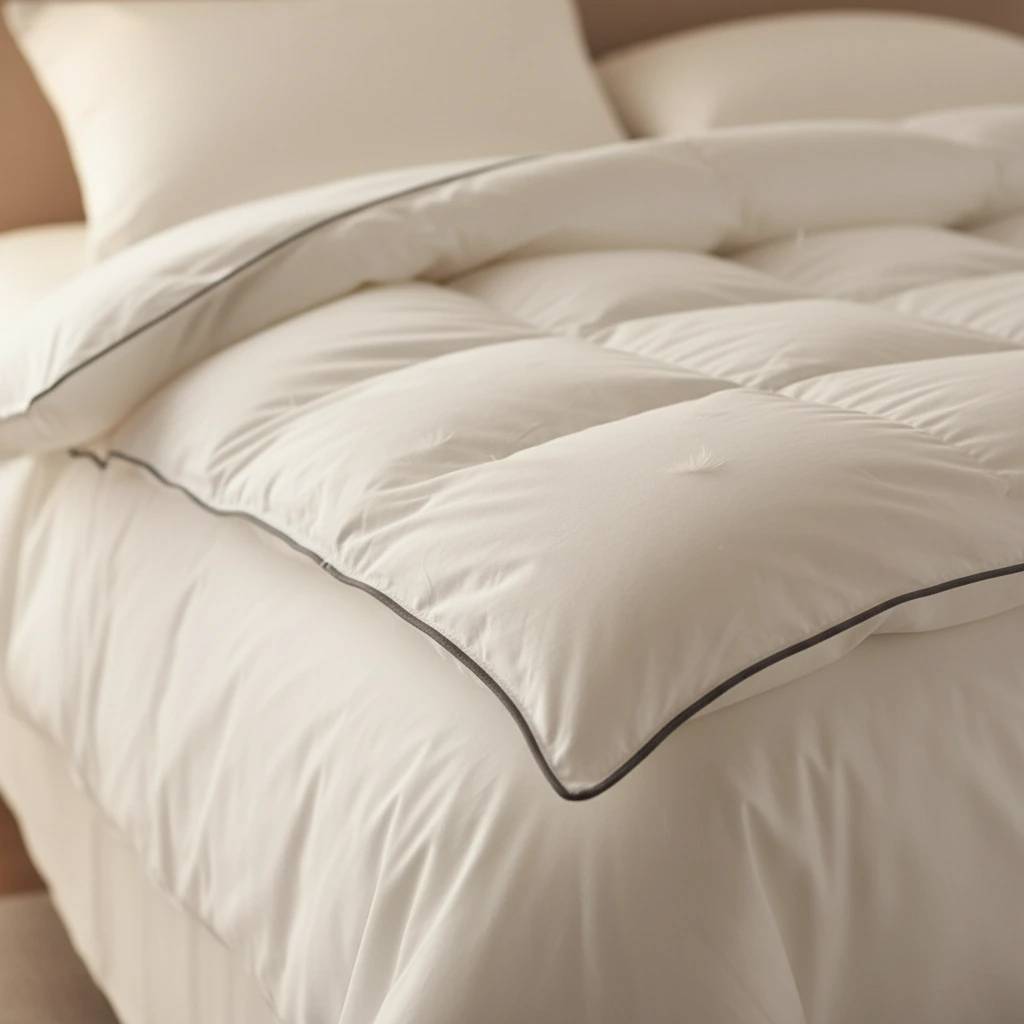
- Down comforter (cotton shell) + cotton cover… a combination that rarely builds static
- Down comforter + synthetic cover (in dry winter air)… static is likely
- Down comforter + synthetic blanket layered on top… more friction, so static becomes more likely
For how to layer a blanket together with a down comforter, see also The right order for blankets and down comforters: which goes on top?. If static bothers you, it's worth switching at least the cover that touches the down comforter directly to cotton. We explain how to choose a cover in detail in How to choose a duvet cover: luxury covers come down to fabric, yarn count and weave. Cotton-based fabrics like our crisp white duvet covers are an easy choice from a static-prevention standpoint, too.
Can static damage the down or make it leak out?
Some people worry that static will make down escape, but it's highly unlikely that the static generated in a normal home would damage the shell fabric or cause down to leak. Down leakage has far more to do with a loose weave in the shell fabric (whether it has down-proof treatment) and with fabric deterioration than with static itself. With a tightly woven fabric, even if static makes the down shift and cling to the fabric a little, there's essentially no risk of it escaping.
Practical humidity targets
Static builds up as the air dries out, so keeping your bedroom at around 40–60% humidity is the basic fix. If you use a humidifier, check the reading on a hygrometer, start humidifying before bed and adjust so the level doesn't drop sharply by morning. Running the heating as well dries the air out even faster, so see Ideal bedroom temperature and humidity in winter: is it OK to sleep with the heating on? for how to think about overnight temperature and humidity.

Using anti-static sprays and fabric softener: what to watch for
Over-the-counter anti-static sprays are rarely an issue on covers, sheets and other fabrics containing synthetic fibers, but it's safer not to spray the down comforter itself. Moisture and chemical residue can cause the down to clump unevenly or make it slower to dry, so keep the spray to the cover only, apply it when the fabric is dry, and use just a very light mist. Fabric softener used in the recommended amount when washing covers and sheets also helps reduce static, but for washing and caring for the down comforter itself we recommend sticking to standard detergent and procedures.
Summary
Static in a down comforter isn't a sign of poor-quality down. The main causes are dry winter air and friction with the synthetic-fiber covers and blankets you pair it with. Combining a few steps — switching to a cotton cover, keeping bedroom humidity at 40–60%, and using spray sparingly on the cover only — will reduce that crackle in most cases. If you're unsure about shell fabric or cover materials, our product pages and related articles are a good place to start.
Frequently asked questions
Is static related to the quality of the down?
Generally, no. The main causes are dry winter air plus friction between down, which tends to pick up a positive charge, and synthetic-fiber covers or blankets, which tend to pick up a negative charge. It's considered a separate issue from down quality or fill power.
Can static damage the down or make it leak out?
It's highly unlikely that the static generated in a normal home would damage the shell fabric or cause down to leak. Down leakage has more to do with a loose weave in the shell fabric or fabric deterioration than with static.
Can I use anti-static spray on a down comforter?
It's rarely an issue on covers and sheets, but it's safer not to spray the down comforter itself. Moisture and chemical residue can cause the down to clump unevenly or make it slower to dry. Keep the spray to the cover, apply it when the fabric is dry, and use just a very light mist.